
Top 10 Email Marketing Services in 2026: Best Platforms Reviewed & Compared

Email marketing remains the backbone of a small business’s digital strategy. Despite the buzz surrounding TikTok ads, AI chatbots, and influencer campaigns, email remains the king of ROI. According to Litmus’s 2024 State of Email report, the average return on investment is $36–$42 for every $1 spent — a figure that few other marketing channels can match. DemandSage’s recent stats show that 81% of small and midsize businesses use email marketing regularly, relying on it for customer retention, promotions, and brand-building.
But here’s the challenge: with so many providers promising the “easiest” platform, how do you choose the right one? If you’re a small business owner just starting, you probably want something affordable, simple, and powerful enough to grow with you. If you’re a marketer, you might be looking for better automation or integrations.
This article is a comprehensive email marketing services comparison designed to help you make a confident choice. We’ve reviewed 10 of the best email marketing services in 2026, mixing popular giants with lesser-known gems. Each section looks at the key features, pricing, pros, and cons, while highlighting subtle differences so you can see which fits your needs.
Let’s dive in.
Sender
Sender is an email and SMS marketing platform built for small businesses that want automation and omnichannel campaigns without an enterprise-sized budget. It helps you send newsletters, promotions, and transactional emails from a single dashboard, while layering in SMS when you’re ready to reach subscribers on their phones.
The drag-and-drop builder is straightforward, with responsive templates, popups, and landing pages included so you don’t need extra tools to start growing your list. Automation workflows cover common journeys like welcome sequences, abandoned carts, win-back campaigns, and post-purchase follow-ups, which makes it easy to get started with lifecycle marketing instead of manually scheduling every send.
Segmentation and reporting are stronger than you’d expect at this price point, letting you target customers based on behavior and profile data while tracking opens, clicks, and conversions across channels.
The Free Forever plan includes up to 2,500 subscribers and 15,000 emails per month, and paid plans start at around $7/month, keeping it highly accessible for growing businesses.
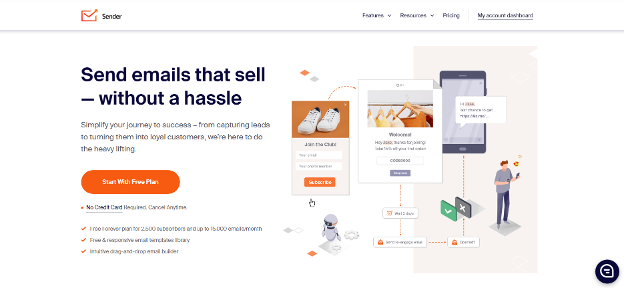
Sender’s key features include:
- Intuitive drag-and-drop email builder with responsive templates.
- Email and SMS campaigns from the same dashboard, so you can manage both channels in one place.
- Unlimited automation and segmentation with prebuilt workflows for welcomes, abandoned carts, and win-back campaigns.
- Built-in popups, forms, and a landing page builder to capture leads and grow your list.
- Transactional emails and SMTP/API access for developers who need reliable delivery from their apps.
- Email A/B testing and performance reports for opens, clicks, and conversions.
- 24/7 friendly customer support, even for free users, to help troubleshoot campaigns and get more from the platform.
- Integrations with platforms like Shopify, WooCommerce, and WordPress.
Drawbacks: On the free plan, emails include Sender branding in the footer, which may not suit businesses that want emails to look completely custom to their brand. Advanced features such as email A/B testing, SMS campaigns, and some of the more powerful automation options are locked to paid plans, so you’ll need to upgrade to fully tap into everything Sender offers.
1. Omnisend
Omnisend is tailored for e-commerce. Its key selling point is powerful automation workflows tailored to online retail. For example, Omnisend includes templates and triggers for abandoned carts, product recommendations, cross‑sells, and post-purchase follow-ups. It even allows SMS and web push notifications as part of those flows. The email editor is modern and drag-and-drop, with about 350 mobile-responsive templates — ideal for promoting products
The free plan covers 250 contacts and 500 emails/month; paid tiers start at $16/month.
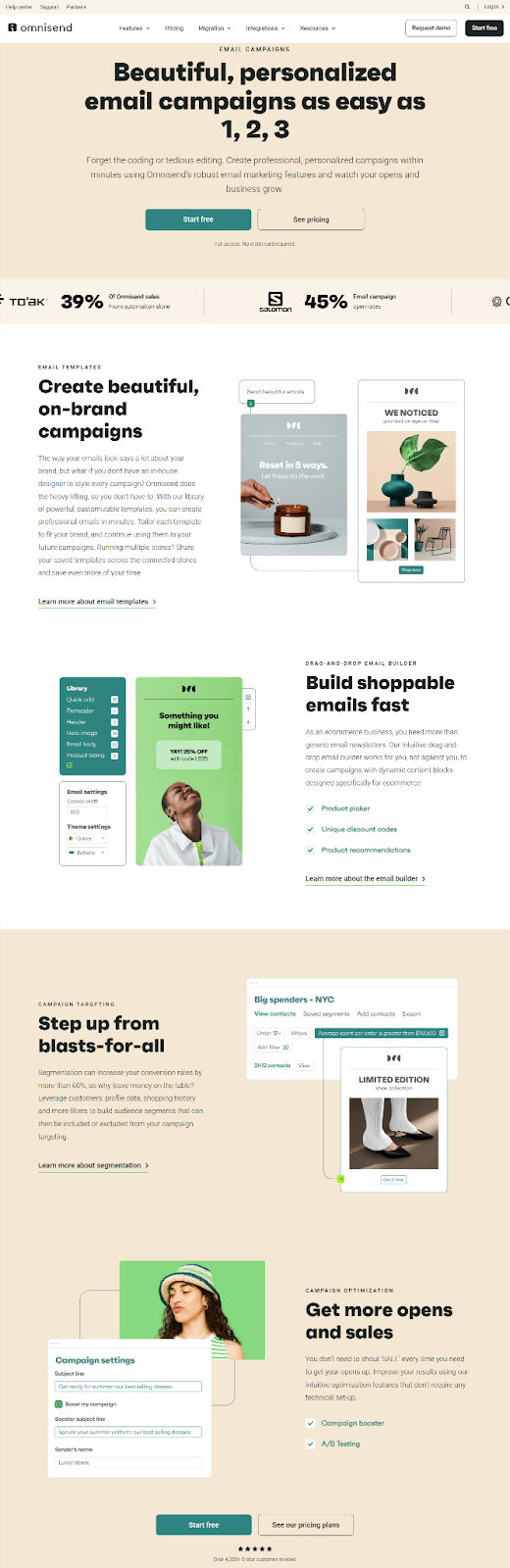
Key features:
- Pre-built automation workflows for abandoned carts, post-purchase, and cross-sells.
- Drag-and-drop editor with product blocks.
- Segmentation by purchase behavior.
- Omnichannel flows, including SMS and push notifications.
- Revenue attribution reports.
- Mobile-friendly UI.
- API and integrations with Shopify, WooCommerce, and BigCommerce.
Drawbacks: The free plan is extremely limited (500 emails/month). Outside e-commerce, its features feel narrow. It only supports English UI. Integrations aren’t as broad as Mailchimp or GetResponse.
For online stores, however, Omnisend delivers ready-to-go revenue-driving automation.
2. Sequenzy
Sequenzy is an AI-powered email marketing platform that makes it remarkably easy to launch campaigns, even if you have zero experience with email marketing. It covers all the essentials from a single dashboard: automated drip sequences, one-off broadcast campaigns, and transactional emails — so you don’t need to juggle multiple providers for different types of sends.
The standout feature is AI-assisted copywriting, which helps you draft professional, high-converting emails in seconds. Instead of staring at a blank screen, you describe what you need and Sequenzy generates ready-to-send copy that you can tweak to your liking. Combined with pre-built automation workflows for common use cases like welcome sequences, payment recovery, and re-engagement campaigns, you can go from zero to a fully running email strategy in minutes rather than days.
Deliverability is taken seriously, with built-in support for SPF, DKIM, and DMARC authentication to help ensure your emails actually reach the inbox. The platform is lightweight and fast, with no bloated feature sets or confusing menus — just the tools you need to grow your business.
Sequenzy’s key features include:
- AI-assisted email copywriting to draft high-quality campaigns in seconds.
- Automated drip sequences with pre-built workflows for welcomes, payment recovery, and win-back campaigns.
- One-off broadcast campaigns for product updates, announcements, and promotions.
- Built-in transactional email support for password resets, order confirmations, and other triggered messages.
- SPF, DKIM, and DMARC authentication for strong inbox deliverability.
- Clean, intuitive dashboard with virtually no learning curve.
- Affordable pricing designed for solo founders, small teams, and growing businesses.
Drawbacks: Sequenzy is a newer platform, so its integration ecosystem is still growing compared to long-established providers. If you need highly advanced features like multi-channel SMS or ad campaign management, you may find the feature set more focused — but for teams that want a simple, powerful email marketing tool that just works, Sequenzy is an excellent choice.

3. SendPulse
SendPulse has grown into an all-in-one marketing hub that’s surprisingly friendly to beginners. It covers not only email but also SMS, web push notifications, live chat for a website, and chatbots for WhatsApp, Telegram, Instagram, and Messenger — a huge advantage if you plan to expand beyond the inbox.
The free plan is one of the most generous available: up to 500 subscribers and 15,000 emails per month, plus a website builder and up to three chatbots. Paid plans start at under $10/month, keeping it accessible for small businesses on a budget.
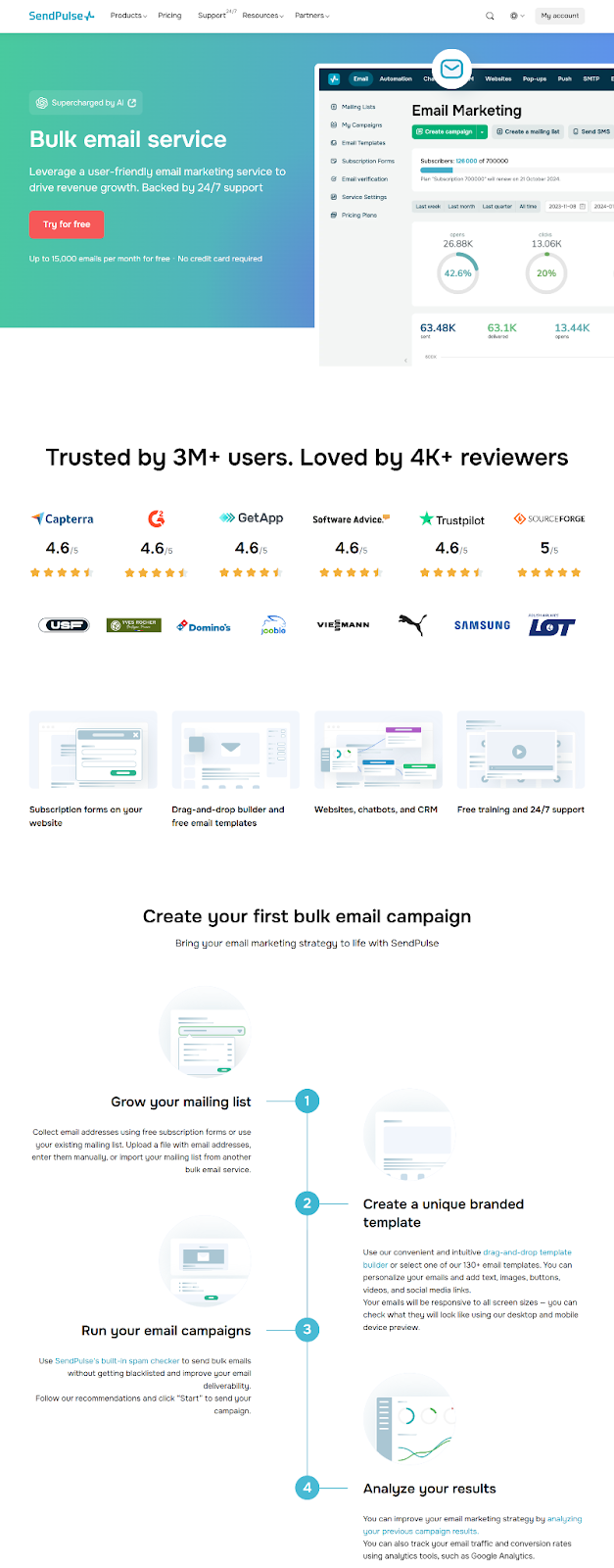
Where SendPulse shines is in its breadth of features:
- Drag-and-drop email editor with a robust template gallery.
- Automation 360 — a visual workflow builder to create welcome sequences, abandoned cart flows, or multi-step customer journeys.
- Landing page builder included at no extra cost.
- 24/7 customer support, even on free accounts.
- Segmentation tools for both fixed and dynamic lists.
- Free email validation tools to maintain list hygiene.
- Mobile apps (iOS & Android) for campaign management on the go.
- Multi-language support makes it accessible to global audiences.
- Unique extras: a built-in online course builder and CRM for managing sales pipelines.
Drawbacks: The interface, while user-friendly, can feel dated in some areas. Deliverability rates are decent but not industry-leading, so businesses may need to fine-tune their sending practices. Some users also report a learning curve with Automation 360.
Still, for beginners wanting multi-channel messaging in one dashboard, SendPulse is one of the most versatile options.
4. EmailOctopus
EmailOctopus is a simple yet powerful email marketing platform designed for startups, creators, bloggers, nonprofits, and small businesses. It focuses on making email marketing affordable without sacrificing the features needed to grow and engage an audience. The platform offers an intuitive interface, making it easy to create newsletters, automate email sequences, and manage subscribers, even for beginners. EmailOctopus also provides customizable signup forms, audience segmentation, and detailed analytics to help marketers optimize their campaigns. Its generous free plan and budget-friendly pricing make it an excellent alternative to more expensive email marketing platforms.
The free plan includes up to 2,500 subscribers and 10,000 emails per month, while paid plans start at around $9/month, making it one of the most affordable email marketing tools available.
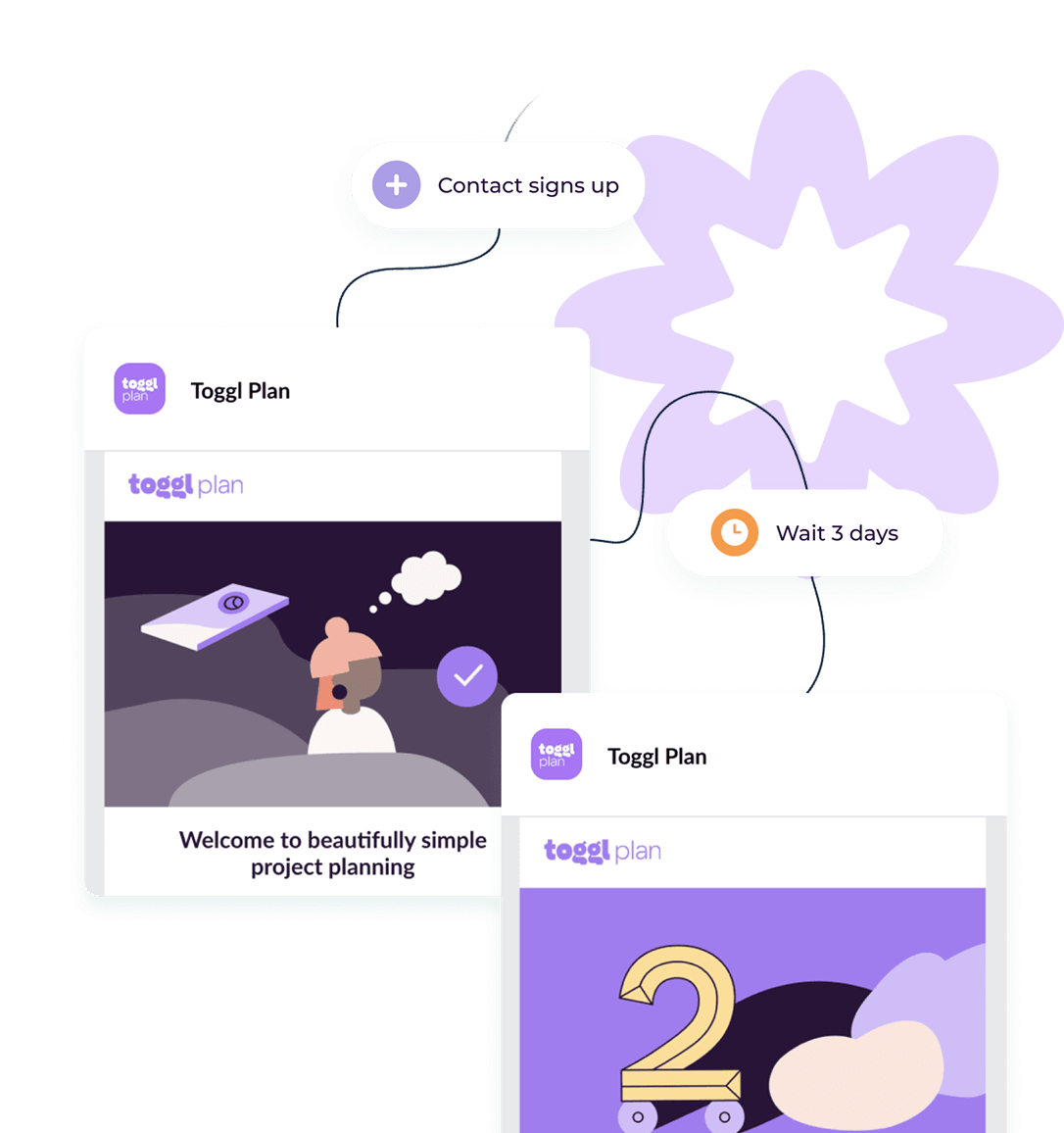
EmailOctopus’s key features include:
- Easy-to-use drag-and-drop email editor.
- Marketing automation for welcome emails, drip campaigns, and customer journeys.
- Audience segmentation and subscriber tagging for personalized campaigns.
- Customizable signup forms and landing pages to grow your email list.
- Detailed reporting with open rates, click-through rates, and engagement analytics.
- Integrations with popular platforms, including Shopify, WordPress, Zapier, and more.
- High email deliverability and reliable campaign performance.
- Affordable pricing with a generous free plan for growing businesses.
Drawbacks: While EmailOctopus covers all the essential email marketing features, its automation capabilities aren’t as advanced as enterprise-level platforms like ActiveCampaign or HubSpot. The template library is smaller than some competitors, and built-in CRM features are limited. Some advanced integrations may also require third-party tools such as Zapier.
If affordability and simplicity are your priorities, EmailOctopus is one of the best email marketing platforms for startups, creators, and small businesses. It delivers excellent value for money while providing the essential tools needed to build, automate, and grow your email marketing efforts.
5. Mailchimp
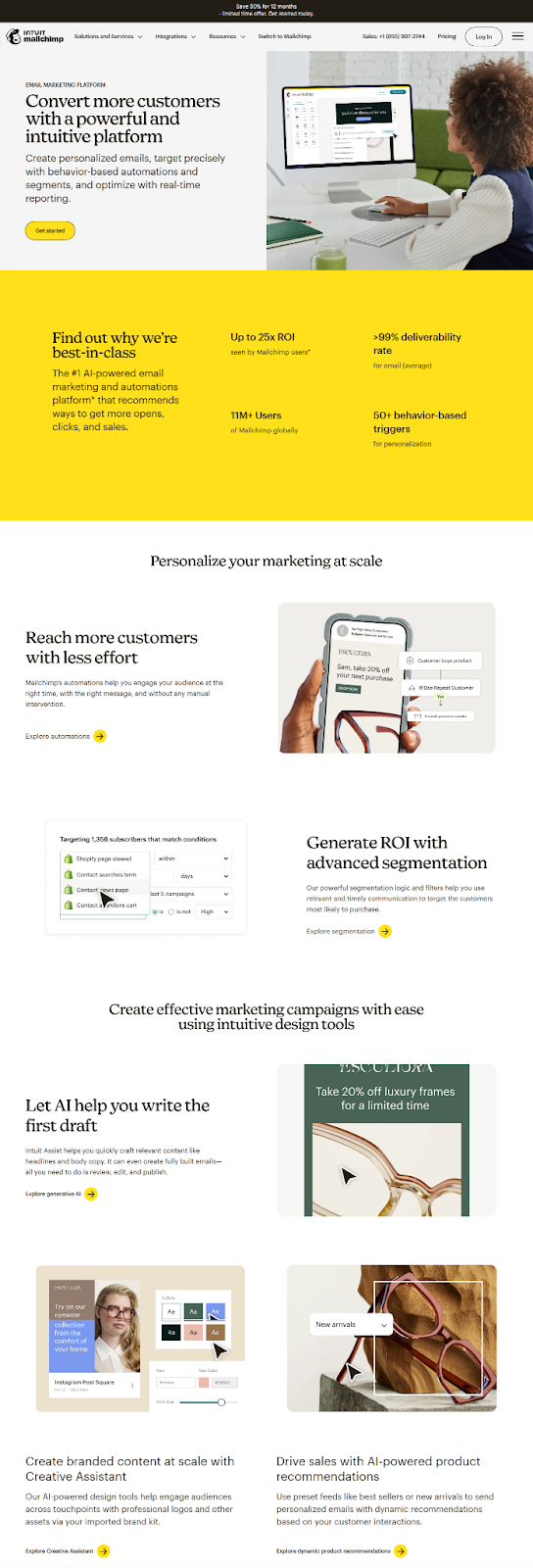
Mailchimp is perhaps the most recognizable name in email marketing. Known for its cheeky branding and intuitive interface, it remains a go-to for small businesses. It also supports robust segmentation and integrations, so you can connect it easily to e‑commerce stores, CRMs, or ad platforms. Automation features (Customer Journeys) cover basics like welcome series and abandoned cart reminders. Importantly, Mailchimp lets you run social ad campaigns and even has basic website and landing page builders.
The free plan is modest — 500 contacts and 1,000 sends per month — and includes basic templates. Paid plans start around $13/month.
Mailchimp’s key features include:
- Extensive template library (260+ designs).
- Drag-and-drop editor that’s among the most beginner-friendly.
- Segmentation and personalization, with advanced rules on higher tiers.
- AI-powered tools, including subject line suggestions.
- Mobile app with campaign editing and analytics.
- A vast marketplace of 300+ integrations, from Shopify to Canva.
- Marketing API for developers.
Drawbacks: Pricing escalates quickly as contact lists grow, and Mailchimp counts duplicates across lists, which feels unfair. Some advanced automation and analytics are locked into higher plans, frustrating for growing businesses. Customer support is often criticized for being slow, especially for free users.
While Mailchimp is unbeatable for ease-of-use and brand trust, SendPulse includes multi-channel messaging in its free plan — something Mailchimp lacks.
6. Salesforce
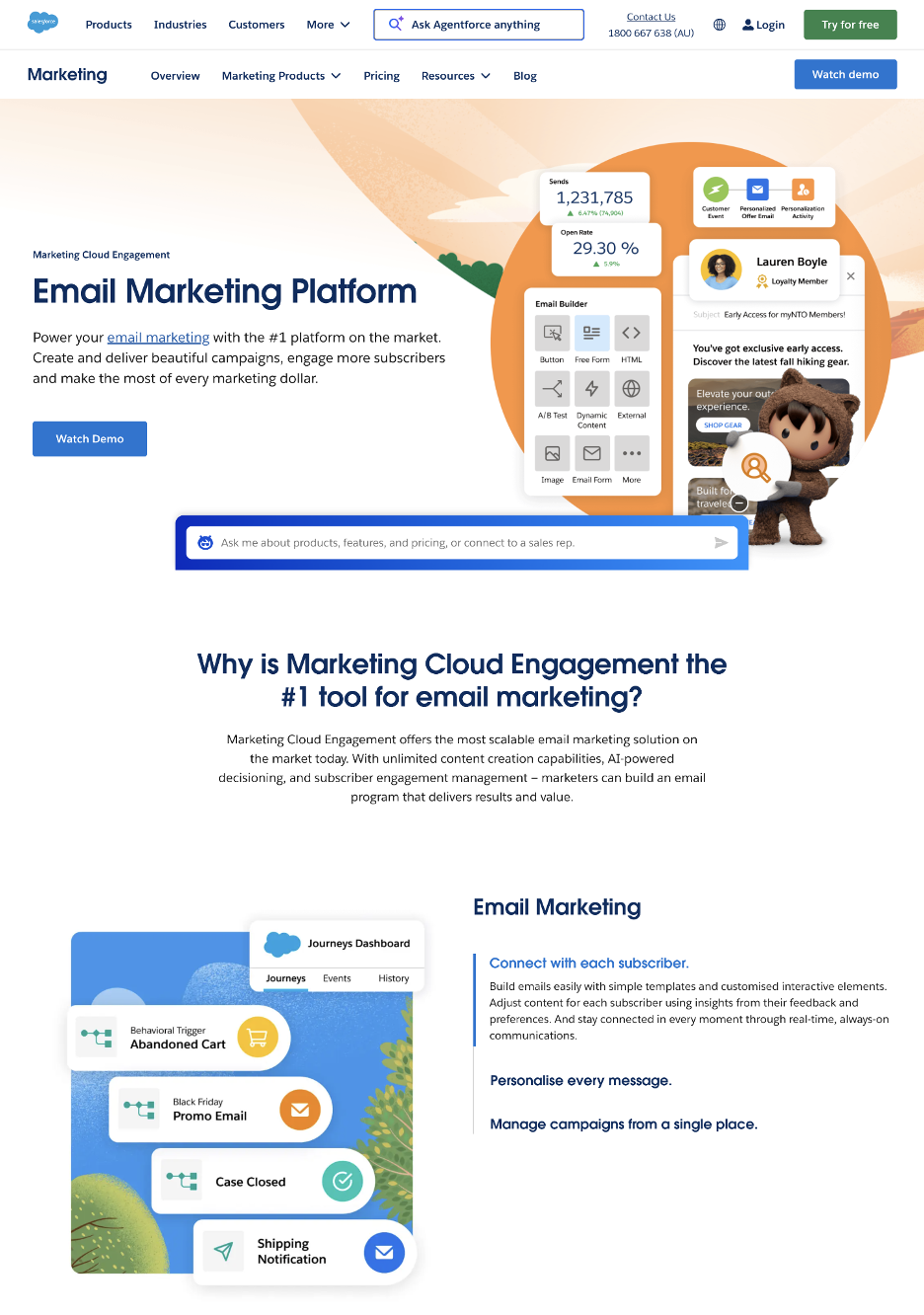
Salesforce’s Marketing Cloud Engagement helps businesses create, automate, and track professional email campaigns. It connects directly to your CRM, so you can build personalized campaigns that are tailored to each customer’s profile using their data.
Emails can be designed through a simple drag-and-drop builder, and it comes with customizable templates that make it easy to create polished, on-brand campaigns. Salesforce also offers built-in AI that can suggest optimal send times, predict engagement, and automatically tailor content for each recipient.
The platform supports more than just emails, allowing you to manage your SMS, social, and ad campaigns in one place.
Pricing for Salesforce Marketing Cloud starts at the enterprise level, from $1,950 AUD per month, which makes it best suited to growing or large teams.
Salesforce’s key features include:
- AI for predictive insights and automated personalization.
- Drag-and-drop email builder with customizable templates.
- Multi-channel campaigns across email, SMS, social, and ads.
- AI-powered analytics to measure and refine campaign performance.
- Seamless CRM integration for customer personalization.
- Advanced segmentation options to create unique groups.
Drawbacks: Since the platform is built to handle enterprise teams, it can feel expensive and overly complex for small businesses. If you do want advanced automation and analytics features, this can also require a technical setup.
7. Constant Contact
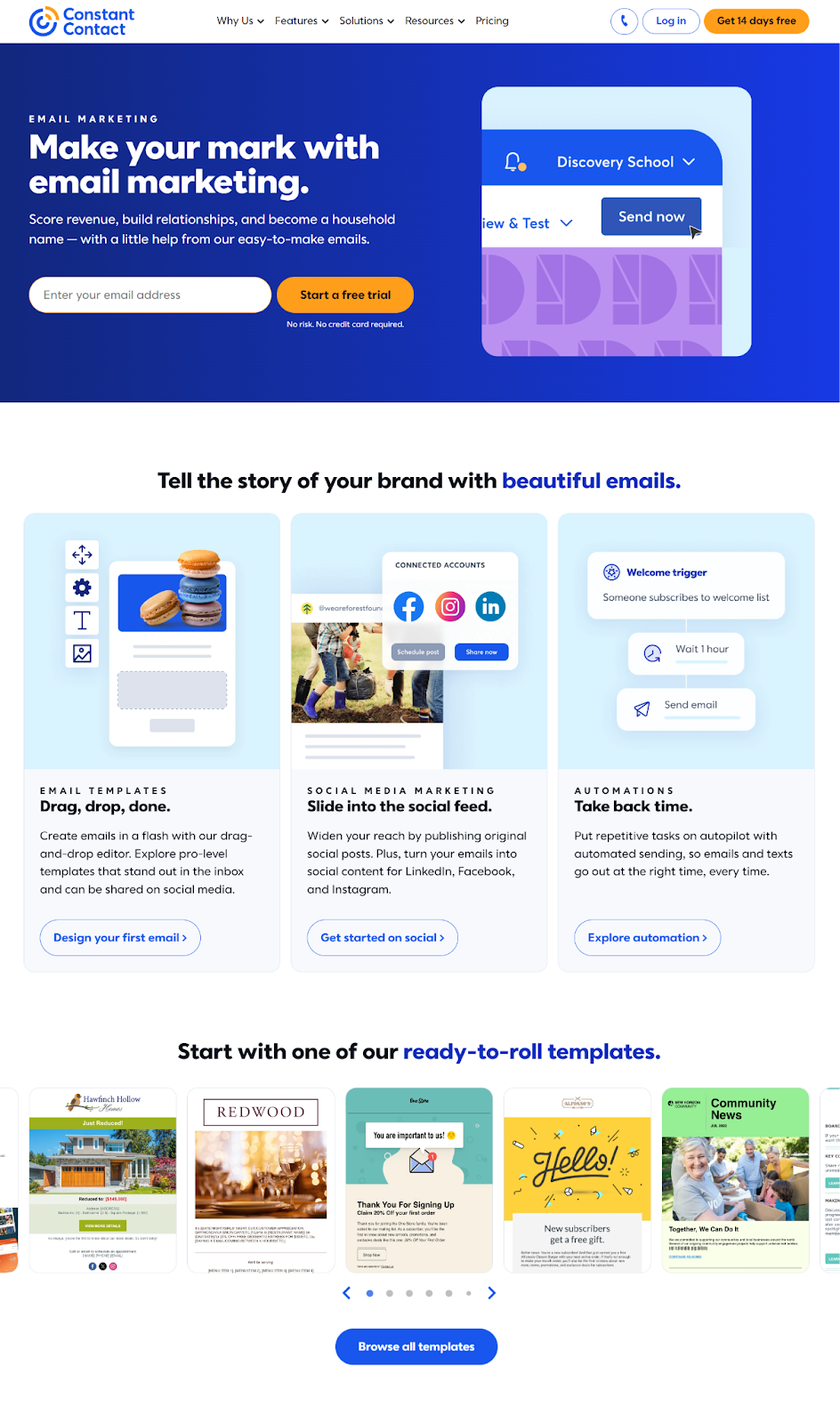
Constant Contact is a veteran in the space, known for event management and surveys alongside email marketing. CC’s email editor is straightforward, and it includes niche tools for things like email surveys, event registration, and ticket sales – handy if you run events or need customer feedback features. It also boasts over 6,000 app integrations, from Shopify and WordPress to Salesforce and Facebook, making it easy to tie into other systems
It doesn’t have a permanent free plan, but you can try it for 60 days. Paid tiers start around $12/month.
Features include:
- Drag-and-drop email builder with a straightforward UI.
- Dynamic segmentation to target based on behavior.
- Strong deliverability rates (among the highest in industry tests).
- Mobile apps for campaign tracking.
- 300+ integrations including Eventbrite and QuickBooks.
- Event tools like registration and ticket sales, rare among competitors.
- Phone support, which many services don’t offer at the entry level.
Drawbacks: Constant Contact is pricier than others at similar feature levels. Its automation is quite basic. Templates are fine but not cutting-edge, and A/B testing is limited. Some reviewers complain about the cumbersome cancellation process.
8. ActiveCampaign
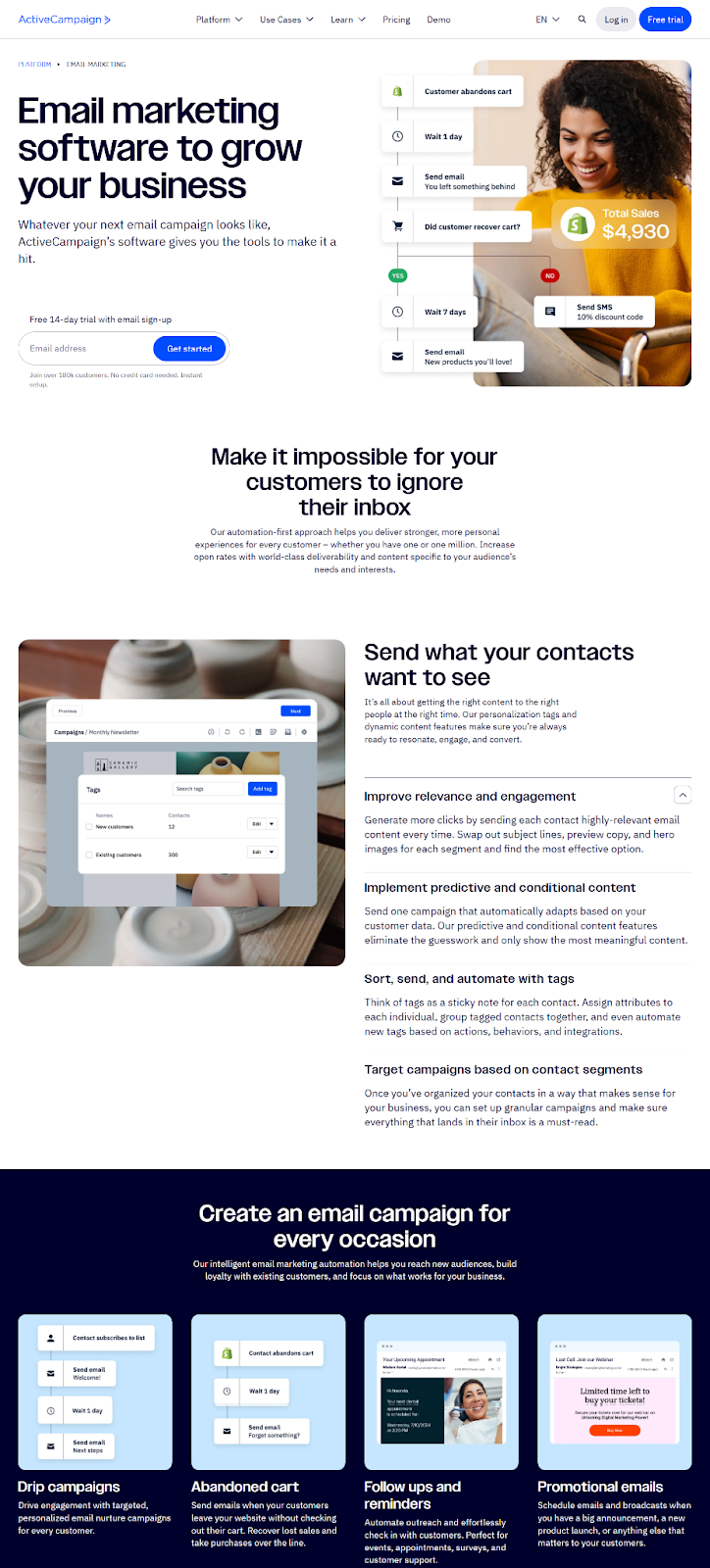
ActiveCampaign is famous for advanced automation and CRM-style features, positioning itself closer to a full customer experience platform than a simple email tool. Its visual workflow builder lets you create very intricate customer journeys (triggers based on behavior, conditional splits, etc.) that many rivals can’t match. It also has one of the best segmentation engines, so you can target emails with pinpoint precision.
There’s no free plan, but a 14-day trial is available. Paid plans start around $9–$29/month, depending on features.
Key features include:
- Visual workflow builder for complex automations.
- Behavior-based triggers (site visits, product views, abandoned carts).
- Granular segmentation with tags and custom fields.
- Integrated CRM and lead scoring.
- Dynamic content personalization powered by machine learning.
- Mobile apps for sales and marketing tasks.
- Robust API for developers.
- Email validation and reputation tools.
Drawbacks: Its power comes with a steep learning curve; beginners may find the interface intimidating. Pricing increases rapidly as your contact list grows. While it includes CRM features, they aren’t as strong as standalone CRMs like HubSpot.
ActiveCampaign’s automation is best-in-class. But for beginners who want something simpler, MailerLite or SendPulse may feel more approachable.
9. GetResponse
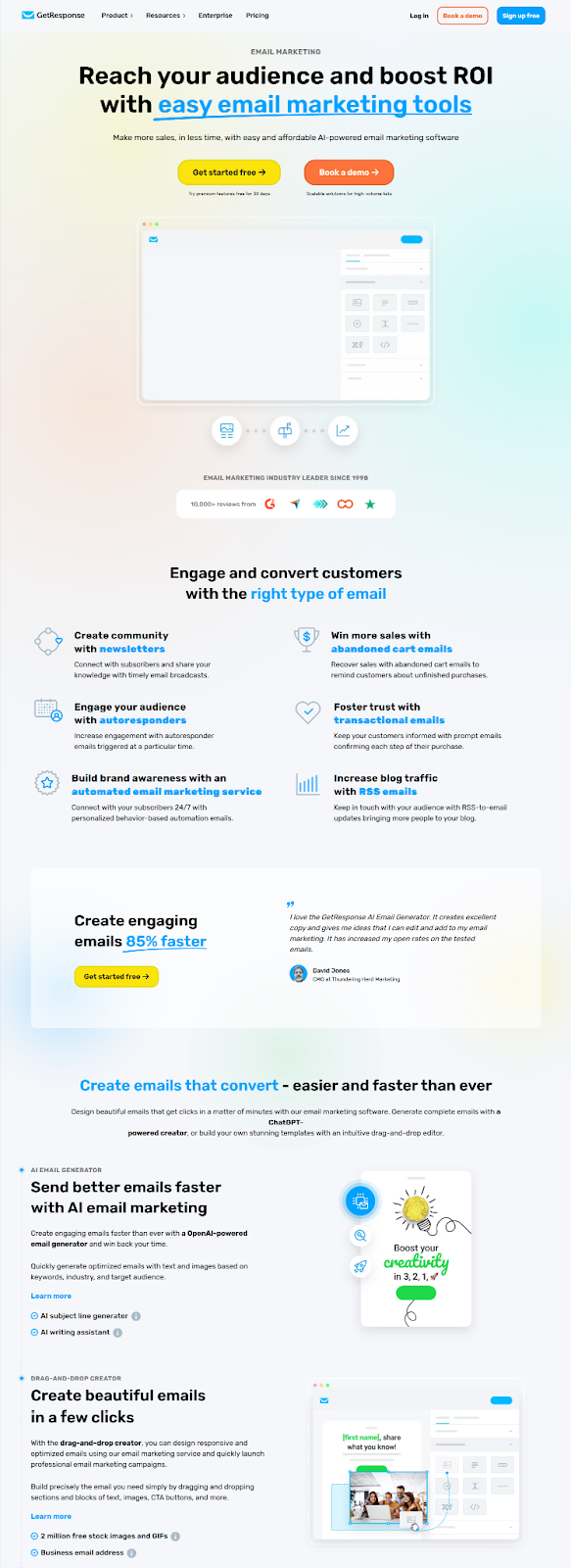
GetResponse is more than an email service: it’s a marketing automation platform with webinars, funnels, and landing pages. GetResponse’s standout features include a built‑in webinar and course builder, a drag‑and‑drop landing page and sales funnel creator, plus automation workflows. Automation is robust: you can send emails triggered by user actions (link clicks, page visits, purchases) and even include dynamic content like product recommendations using AI. It also has CRM tools on higher plans and support for SMS and push notifications (enterprise tiers).
There’s a free plan (500 contacts, 2,500 emails/month), and paid plans start at $19/month.
Features include:
- Email editor with templates and A/B testing.
- Visual automation workflows with conditional logic.
- Built-in webinar hosting, a unique feature.
- Sales funnel builder that integrates ads, landing pages, and emails.
- CRM tools on higher plans.
- Segmentation tools with behavior triggers.
- Mobile app for campaign tracking.
- Public API and integration directory (300+).
- Basic list validation tools.
Drawbacks: Some of the best features, like advanced automation, are locked in higher-tier plans. The platform can feel overwhelming for small business owners who just need simple newsletters. Customer service, while generally good, isn’t 24/7 on all plans.
GetResponse is ideal if you want webinars and funnels alongside email, making it unique in this email marketing services comparison.
10. ConvertKit (Kit)
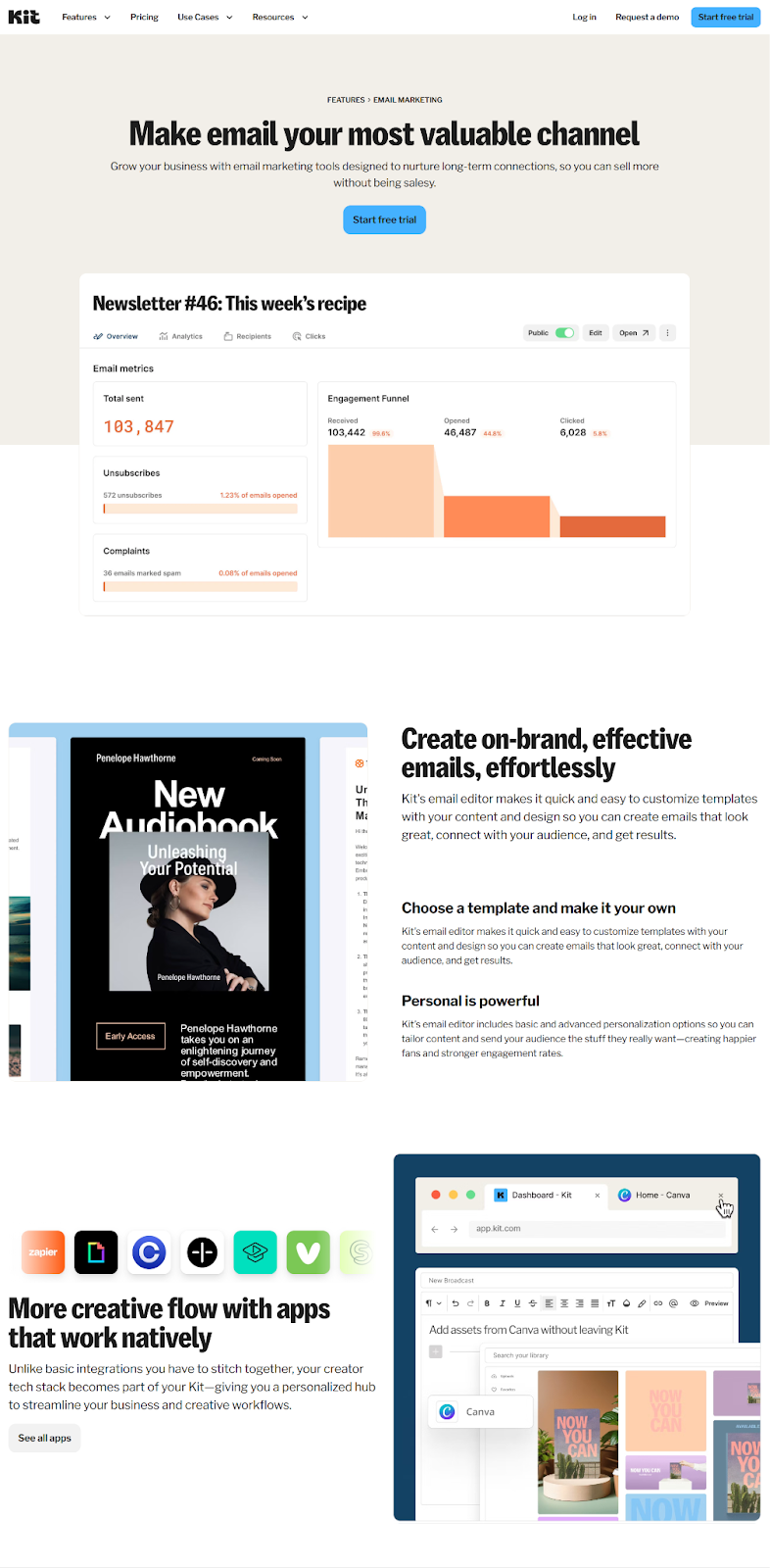
ConvertKit, now branded as Kit, is designed for creators, bloggers, and solopreneurs. Its interface is clean and minimalistic, focusing on subscriber tagging and basic automations rather than flashy designs. Kit makes it easy to send text‑based emails and sequence broadcasts for a drip campaign.
The free plan allows up to 1,000 subscribers. Paid plans start at $15/month.
Its features include the following:
- Minimalist email editor designed for text-heavy emails.
- Unlimited landing pages and forms, even on free tier.
- Tag-based subscriber management for personalization.
- Automation builder for sequences and funnels.
- API support and integrations with WordPress, Teachable, etc.
- Mobile-friendly interface.
Drawbacks: The email editor is very basic, with only a handful of templates and little design flexibility. Reporting is minimal compared to others — no click heatmaps or advanced analytics. Pricing jumps quickly as subscribers grow.
Kit is fantastic for creators who prefer plain, personal-feeling emails. But if you need design-rich campaigns, Mailchimp or AWeber will serve you better.
11. MailerLite
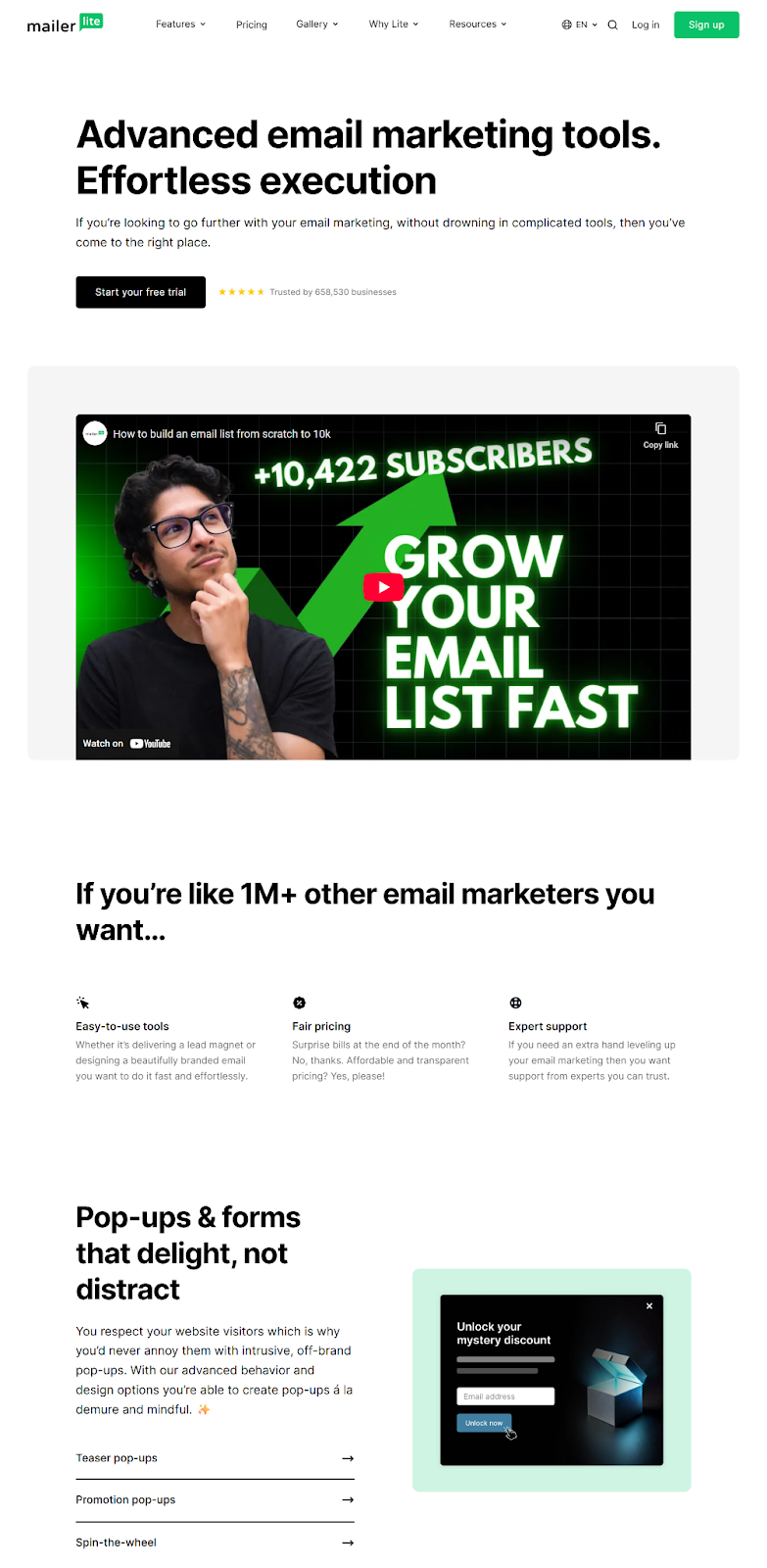
MailerLite has earned its reputation for simplicity and value. The platform offers a drag‑and‑drop email and landing page builder, subscriber tagging/segmentation, basic automation workflows, and even a survey and pop-up form builder.
Its free plan includes 1,000 subscribers and 12,000 emails/month; paid plans start at $10/month.
Features include:
- Drag-and-drop builder for emails and landing pages.
- Segmentation tools by behavior and attributes.
- Basic automation workflows.
- Surveys and pop-up forms.
- Mobile apps for campaign tracking.
- Email validation support for list hygiene.
- Multilingual UI for global businesses.
- APIs and Zapier integrations.
Drawbacks: Free plan lacks ready-made templates — you have to build from scratch. Advanced features like lead scoring or deeper analytics aren’t available. The strict account approval process can delay new users.
MailerLite is excellent for beginners wanting ease-of-use at low cost, though it doesn’t scale as powerfully as ActiveCampaign or Klaviyo.
12. Klaviyo
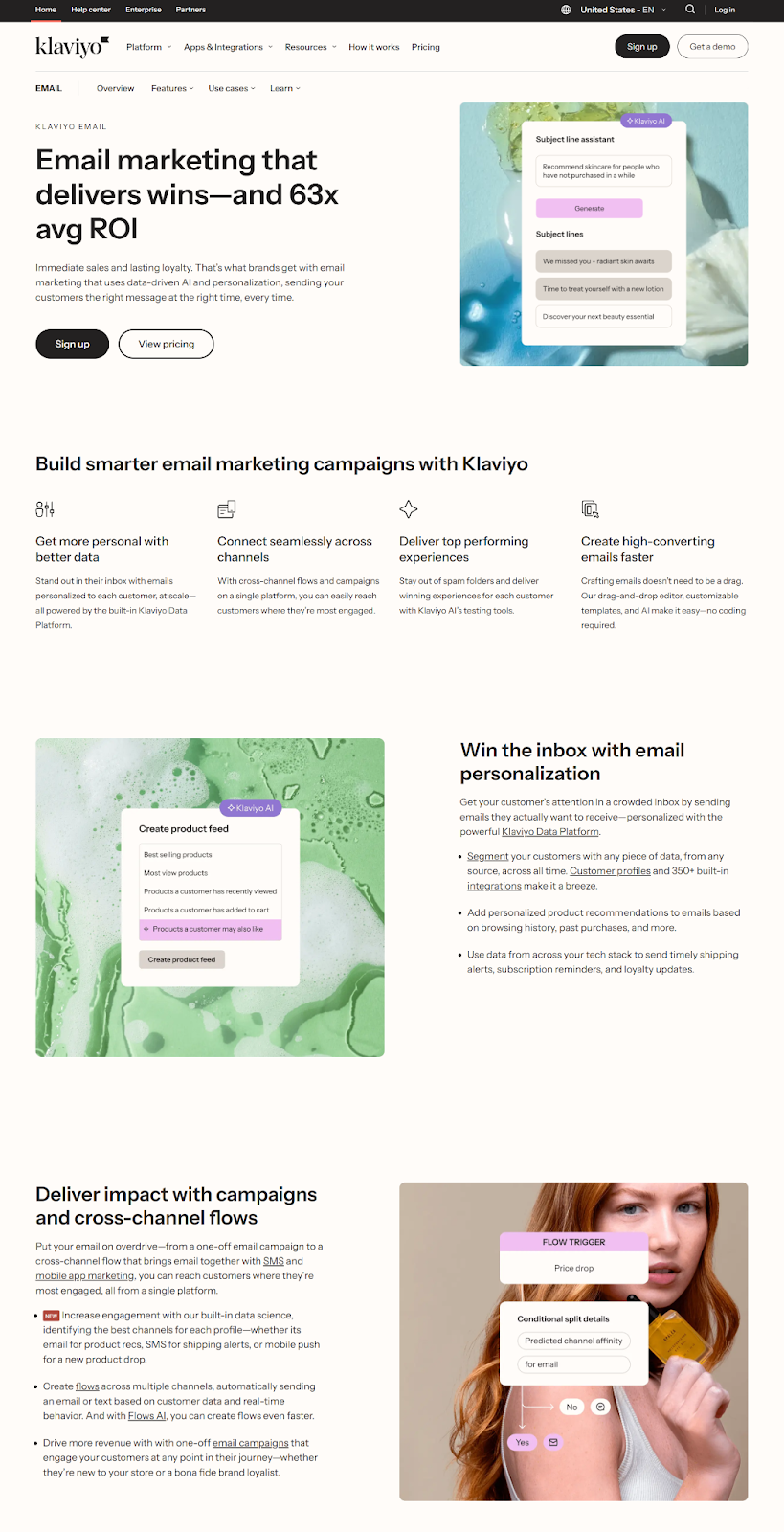
Klaviyo is a high-end email marketing platform geared toward data-driven e-commerce. Klaviyo’s biggest strengths are its deep integrations and AI features. It connects to virtually any online store (Shopify, Magento, BigCommerce, etc.) and syncs product and customer data automatically. You get powerful dynamic content and predictive analytics – for example, Klaviyo can recommend products in emails or predict customer lifetime value using machine learning.
It has a free plan for up to 250 contacts and paid plans starting around $30/mo for 1,000 contacts.
Features provided:
- Deep e-commerce integrations (Shopify, Magento, WooCommerce).
- Predictive analytics and AI for customer lifetime value.
- Dynamic product recommendations in emails.
- Unified email + SMS campaigns.
- Advanced segmentation by purchase history and engagement.
- Robust API and integration ecosystem.
Drawbacks: Pricing is high, especially for larger lists. There’s a steep learning curve for beginners, with complex terminology (“flows,” “profiles”). Unlike SendPulse or Mailchimp, it lacks built-in landing page tools.
Klaviyo is best for established e-commerce brands ready to invest heavily in personalization and AI-driven campaigns.
12. AWeber
AWeber is an established email service targeting small businesses. Its key benefits include a user-friendly drag‑and‑drop editor and a large template library (700+ responsive templates). It also includes built‑in autoresponders, basic automation, and a landing page builder with about 160 templates. AWeber has steadily added modern features like AI-assisted email creation (copy and subject generation) and even “paid newsletter” monetization tools.
It offers a free plan (up to 500 subscribers) and paid plans starting at $19.
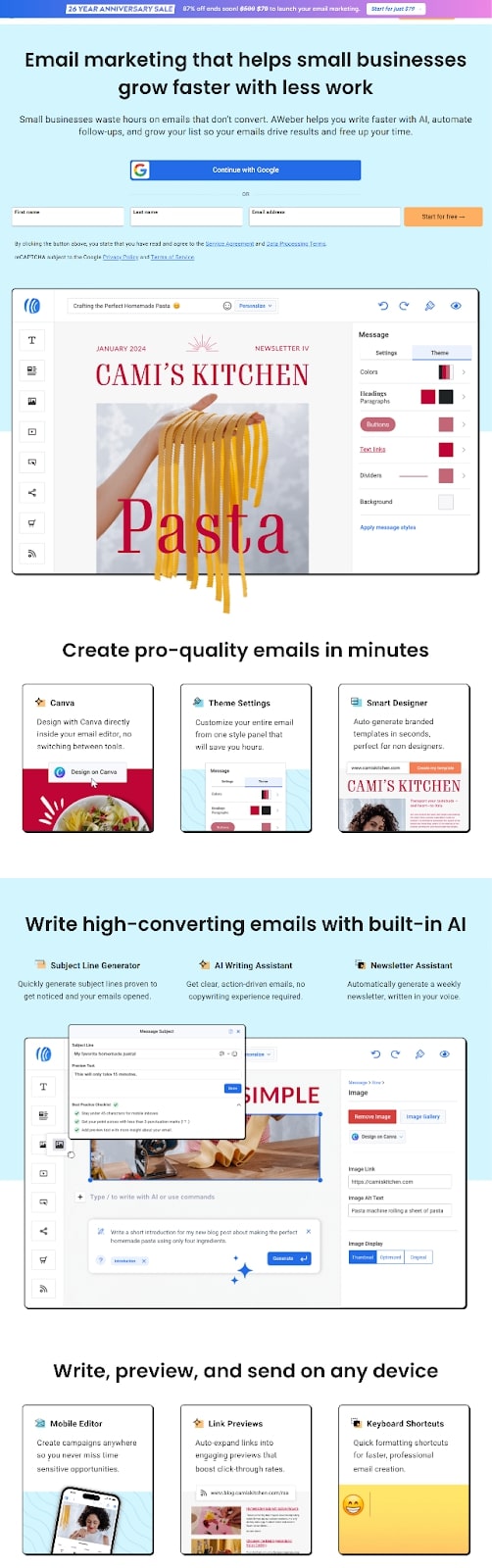
Features include:
- Drag-and-drop email builder.
- 700+ templates (one of the largest libraries).
- Autoresponders and automation.
- Landing page builder with 160+ templates.
- AI-assisted email creation.
- Segmentation tools.
- Mobile app for campaign management.
- Good customer support with chat and phone options.
Drawbacks: The interface looks dated compared to newer rivals. Advanced automation is limited, and pricing isn’t competitive against leaner options like MailerLite. Reporting features are serviceable but not advanced.
AWeber remains a solid, reliable service, especially for small business owners who value template variety and responsive support.
Make the Right Choice
Email marketing is here to stay — and for small businesses, it’s still one of the most reliable ways to reach customers, build loyalty, and see a strong return on every dollar spent. What we’ve seen in this email marketing services comparison is that there’s no one-size-fits-all solution. The best platform really depends on where you are in your business journey and what matters most to you.
Some tools, like Mailchimp and MailerLite, win on pure ease-of-use, while Constant Contact shines for events and surveys. ActiveCampaign is the automation heavyweight, and GetResponse adds funnels and webinars into the mix. ConvertKit is a natural fit for creators, Omnisend and Klaviyo are favorites for e-commerce, and AWeber remains a reliable classic. Meanwhile, services like SendPulse stand out for their flexibility, offering multi-channel messaging and generous free plans that let beginners test the waters without risk.
If I had to choose just one platform to recommend above the rest, SendPulse takes the crown. It combines affordability, multi-channel capabilities, and an impressive free plan in a way that no other provider matches. Unlike competitors that lock advanced tools behind expensive tiers, SendPulse gives small businesses the freedom to explore email, SMS, chatbots, and landing pages all in one dashboard — without breaking the bank. While other platforms excel in specific niches, SendPulse offers the best balance of power, accessibility, and scalability, making it the most well-rounded choice for small businesses in 2026.
Now is the perfect time to experiment with free plans or trials—play around with the editors, test the automations, and get a feel for which platform suits your workflow best. Curious how email stacks up against AI-powered chatbots? Check out this insightful guide to the best AI chatbots available today to see if a conversational assistant might also benefit your business strategy. Once you find your ideal tool—or combination of tools—you’ll be well on the path to crafting communications that not only get opened, but also drive meaningful engagement and growth.