
What Are Tax Envelopes And How Do They Work?
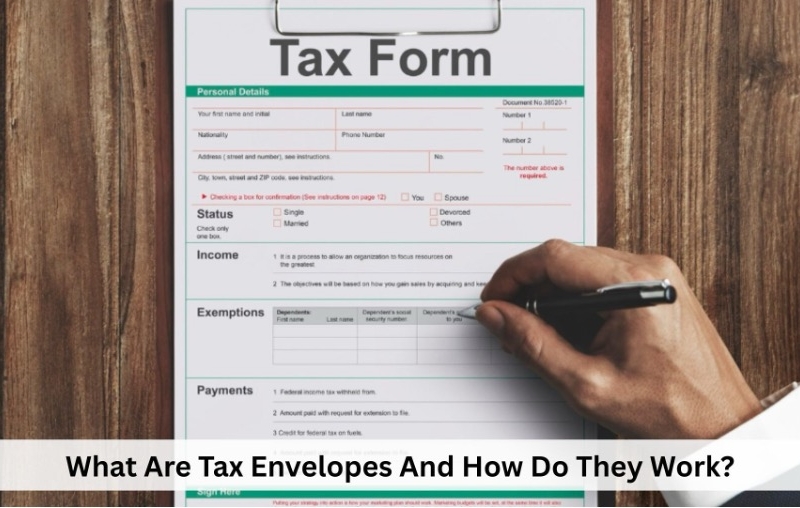
Tax envelopes are one of the most resourceful accessories for accounting professionals.
Unlike traditional envelopes used for sending general mail by post, tax envelopes are designed primarily for mailing tax-related paperwork.
Standard tax envelopes typically let you mail income tax forms. However, some are large enough to house other relevant documents, including brochures and catalogs.
Here’s a beginner’s guide to tax envelopes and how to use them.
Unpacking Tax Envelopes
Tax envelopes are envelopes designed to securely mail completed income tax forms, such as the W-2 and 1099 forms. They’re commonly used by tax professionals, including tax preparers and accountants.
Tax envelopes are a significant step up from standard envelopes, enabling tax preparers to professionally mail back duly filled tax forms. The envelopes can provide rare advertising opportunities, too.
Some tax professionals use tax return envelopes to send out important tax-related communication to their clients. Besides, you can print the envelopes with your company’s logo to extend your brand’s appeal.
While tax envelope recipients are typically individual clients, these envelopes may also be used for tax-related correspondence with government agencies. That includes the Internal Revenue Service (IRS).

Photo Credit: Pixabay.com
Reasons to Invest In Client Envelopes
1. Preventing Damage to Client Tax Forms
Tax envelopes facilitate the safe mailing of your clients’ completed income tax forms. The envelopes house important paperwork, protecting it from environmental damage while in transit.
It doesn’t matter if all your clients live within a few minutes’ drive from your tax preparation business. Tax envelopes ensure all filled tax forms get to each recipient in a clean and presentable manner.
2. Minimizing Tax Form Misplacements
One of the worst experiences for tax preparers is misplacing duly filled tax forms. But if your organization handles hundreds of clients, such incidents will be annoyingly common, especially during the peak tax filing season.
Fortunately, using tax envelopes can minimize the risks of negligent misplacement of important tax forms. Simply enclose each filled paperwork in its respective envelope. Then, push the envelopes to the out tray, awaiting mailing.
3. Streamlining Correspondences
While originally intended for mailing annual tax return forms, tax envelopes have since acquired other applications. Many businesses rely on these envelopes to maintain relevant correspondence with their clients.
You could use a tax envelope to communicate your revised price lists, new offerings, and expected changes to the tax regime. If the envelope is large enough, you might slot in a brochure, flyer, or product catalogue.
4. Low-Cost Marketing Strategy
Tax envelopes also provide a low-cost way to showcase your business.
First, you could have each envelope’s cover printed with your company’s branding information. This helps foster brand recall among your existing clientele, while also raising awareness of your business.
Besides, sending out important notifications using tax envelopes can reduce your annual mailing costs.
Choosing Proper Tax Envelope Paper Stock
Tax envelopes aren’t made equal. To determine the best envelope for your needs, ensure you research its average thickness.
An envelope’s thickness impacts its durability. Ideally, you want something made from high-grade paper stock.
Envelopes used for mailing standard letters typically measure 90 – 100 grams per square meter (gsm). However, 120 gsm would be appropriate for tax envelopes.
Thicker paper stock enables your tax envelopes to brave harsh weather and careless human handling while in transit.
Photo Credit: Pixabay.com
Does Size Matter?
Size does matter when choosing income tax envelopes.
At the very least, you want something large enough to house W-2 and 1099 tax forms. An even larger envelope would be ideal if you’re planning to mail other crucial documents.
Fortunately, many tax envelope providers let you define your ideal envelope dimensions. You can choose from larger custom sizes, such as 9 x 12, 9.5 x 12.5, and 10 x 13.
Besides, various sizes exist depending on the tax preparation software you use.
How to Customize Tax Return Envelopes
Customizing your income tax envelopes lets you project a professional image.
A popular customization technique is getting each envelope printed with your company’s branding materials. These include your business’s logo, tagline, contact information, custom fonts & colors, and return address.
You may even incorporate your affiliated organization (AICPA, CPA, NSA, CFP, etc.) if space allows.
Typically, such details would go on a tax envelope’s upper right side. You can then reserve the lower left portion for the recipient’s information.
To customize your tax return envelopes even further, consider preprinting them with recipients’ details. This can ease sorting and prevent envelope misplacements.
Securing Your Tax Envelopes
Your tax envelopes could be tampered with in transit, compromising the integrity of the enclosed paperwork. You can avoid such incidents by incorporating tamper-evident seals into each envelope.
Tamper-proof seals get irreparably damaged if someone attempts to open your clients’ tax envelopes in transit, leaving clear proof of compromise.
You could also tag your tax envelopes with barcodes and RFIDs. Besides deterring unauthorized access, barcode and RFID tags also let you pinpoint an envelope’s location as it moves through the mailing system.

Photo Credit: Pixabay.com
Final Word
While tax envelopes were designed to securely mail tax-related documents, you can use them in various other creative ways.
Tax envelopes provide an opportunity to showcase your products and services. Some envelopes are large enough to house brochures, catalogs, and other advertising materials.
And with limitless branding capabilities, you can rely on tax envelopes to extend your brand’s appeal too.
However, exercise caution while choosing a tax envelope. Considering factors like paper stock and size can help you hunker down on suitable income tax envelopes.