
The Typographic Dimension: How to Choose the Perfect Font for 3D Printed Gifts
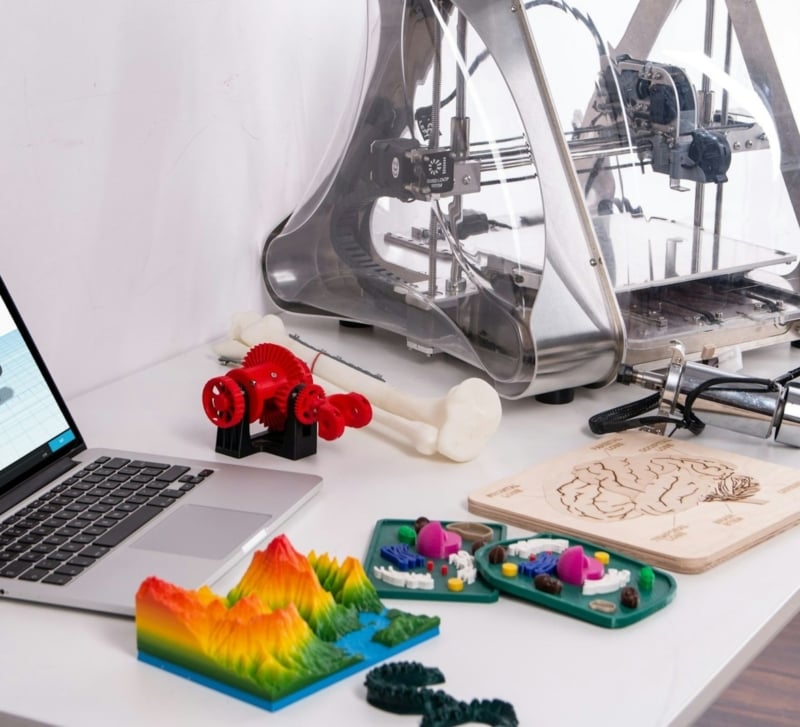
The world of 3D printing has completely altered how we think about personalized gift-giving. We can now design, customize, and construct physical objects that were once confined to our imaginations or digital screens. From custom keychains and decorative lithophanes to intricate desk organizers and wall art, the possibilities are endless. However, when creating a custom 3D printed gift, creators often focus heavily on the geometry of the object while treating the accompanying text as an afterthought.
This is a critical mistake. Shifting text from a flat screen into a three-dimensional physical environment introduces gravity, shadows, and material constraints. A font that looks crisp and elegant in a design program can easily transform into a stringy, fragile mess once the 3D printer starts depositing molten plastic. Choosing the right typeface is not just an aesthetic decision; it is an engineering requirement.
Understanding the Physics of 3D Typography
Before selecting a font style, it is essential to understand how 3D printers interpret text. Typography on a 3D object generally falls into two categories: extruded (raised text that stands out from a surface) or debossed (engraved text that is carved into a surface). Both methods interact with the printing process in specific ways.
When a printer creates raised text, it must build thin walls layer by layer. If a font stroke is narrower than the printer’s nozzle diameter (typically 0.4mm), the slicing software will simply ignore it, leaving gaps in your words. For engraved text, lines that are too thin will fill with overlapping plastic melted during adjacent passes, rendering the words unreadable. Therefore, line thickness and structural integrity must guide your typographic journey.
The Core Font Categories and How They Print
Different typographic styles carry distinct personality traits, but they also bring unique challenges to the 3D print bed. Navigating these categories requires balancing artistic intent with mechanical reality.
Sans-Serif: The Safest Bet for 3D Prints
Sans-serif fonts, such as Arial, Helvetica, and Futura, lack the tiny decorative “feet” or tabs at the ends of letter strokes. They are defined by clean, uniform line weights and geometric simplicity.
For almost all desktop 3D printing projects, sans-serif fonts are the most reliable option. Because the thickness of the letters remains consistent, the slicing software can calculate uniform print paths. This reduces the risk of under-extrusion or structural failure. If you are printing at a small scale, a bold or medium sans-serif font ensures that the text remains readable and structurally sound, withstanding the minor bumps and drops that everyday objects endure.
Serif Fonts: Elegant but Vulnerable
Serif fonts, like Times New Roman, Georgia, and Garamond, feature decorative strokes at the edges of their letters. These typefaces evoke a classic, formal, and literary aesthetic.
While beautiful on paper, serif fonts are notoriously difficult to 3D print cleanly. The serifs themselves are often incredibly thin, tapering off into sharp points. During the printing process, the nozzle must slow down to deposit these tiny features, which can lead to heat bleeding, plastic oozing, or stringing. Furthermore, these tiny geometric points create fragile edges that can easily chip off after the print is completed. If you must use a serif font, ensure the gift is printed at a large scale and utilize a higher infill percentage to reinforce the delicate details.
Script and Cursive: High Risk, High Reward
Script fonts mimic human handwriting, offering elegant loops, sweeping curves, and connected letters. They are highly favored for romantic gifts, weddings, and personalized jewelry.
Printing cursive text requires careful art direction. The primary advantage of script fonts is that connected letters can actually increase structural strength when printing standalone text, like a personalized nameplate. Instead of printing individual, isolated letters that could easily snap off a base, a cursive word functions as a single, solid beam. However, the inner loops of letters like ‘e’, ‘g’, and ‘l’ are prone to filling with stray plastic strands. To succeed with script fonts, you must manually widen the thin connecting paths in your CAD software and print at a slower speed to capture the sweeping curves smoothly.
Display and Stencil Fonts: Built for the Slicer
Display fonts are eccentric, stylized typefaces meant for large headlines. Stencil fonts are a subcategory designed with intentional gaps in the loops of letters.
Stencil fonts are uniquely brilliant for 3D printing, especially when you are designing a gift that involves cutting text out of a solid surface, such as a custom lantern or a lampshade. In traditional fonts, cutting out the letter ‘O’ or ‘A’ causes the internal loop (the “island” or counter) to fall completely out, leaving an empty void. Stencil fonts include built-in bridges that connect these internal islands to the main body of the object. Utilizing a bold stencil font saves you the headache of manually drawing support tabs in your modeling program.
Critical Design Factors for 3D Typography
Once you have selected a font style, you need to adjust its spacing and formatting to suit physical manufacturing.
Tracking and Kerning Adjustments
Tracking refers to the overall spacing across a string of text, while kerning is the space between two specific letters. In 2D print, tight text spacing looks modern and cohesive. In 3D print, tight spacing is an invitations for disaster. If letters sit too close to one another, the heat radiating from the printer nozzle will cause the plastic of adjacent letters to bleed together, turning a crisp word into an illegible blob. Always increase the tracking slightly before exporting your design, giving each letter its own distinct footprint.
Managing Extrusion Heights
How high should your text stand out from the surface? Beginner designers often make the mistake of extruding text too far, thinking it will make the words more impactful. In reality, excessively tall text creates steep vertical overhangs that can sag or warp during printing. As a rule of thumb, text extrusion heights should not exceed two to three times the layer height of your print. A subtle text elevation of 1mm to 2mm is more than enough to catch the light and cast a readable shadow without compromising the structural integrity of the print.
Transitioning to Glass: Fonts for 3D Crystal Gifts
While desktop 3D printing relies on layering molten plastic, there are alternative three-dimensional gifting mediums that utilize entirely different physics. If you are looking for a luxury alternative to plastic fabrications, you might consider 3D Crystal gifts, which you can easily customize and purchase online.
When transitioning your typography from plastic filament to sub-surface laser engraving inside an optical crystal, the rules of font selection change dramatically. Gravity and nozzle diameters are no longer an issue, but light management becomes paramount. Laser engraving creates thousands of microscopic fractures inside the glass to form an image or text. If you choose a font that is too thin, it will not contain enough micro-fractures to catch the light, making the text appear invisible or faint. Conversely, an overly bold or dense block font will create a tightly packed cloud of fractures that reflects too much light, resulting in a blurry, opaque glare. A clean, medium-weight sans-serif font with generous spacing remains the ideal choice for glass engraving, ensuring your text glows cleanly alongside your personalized design.
Practical Checklist Before Slicing Your Text
Before you hit the print button on your customized gift, run through this quick typographical checklist to avoid wasting time and material:
- Convert Text to Paths: Always convert your font into a solid vector path or mesh within your software to prevent formatting errors during export.
- Check the Smallest Gaps: Look closely at the inner loops of letters like ‘a’ and ‘e’. If the gap is smaller than your nozzle size, widen the font manually.
- Run a Text Test Print: Print a small 10-minute swatch of the text alone to verify legibility and surface finish before committing to a massive multi-hour gift print.
- Orient for Smoothness: If legibility is your main goal, try to print the text surface facing upward on the Z-axis to avoid the rough textures sometimes caused by automated print supports.