
The Rise of Free 3D Model Downloads: What’s Driving
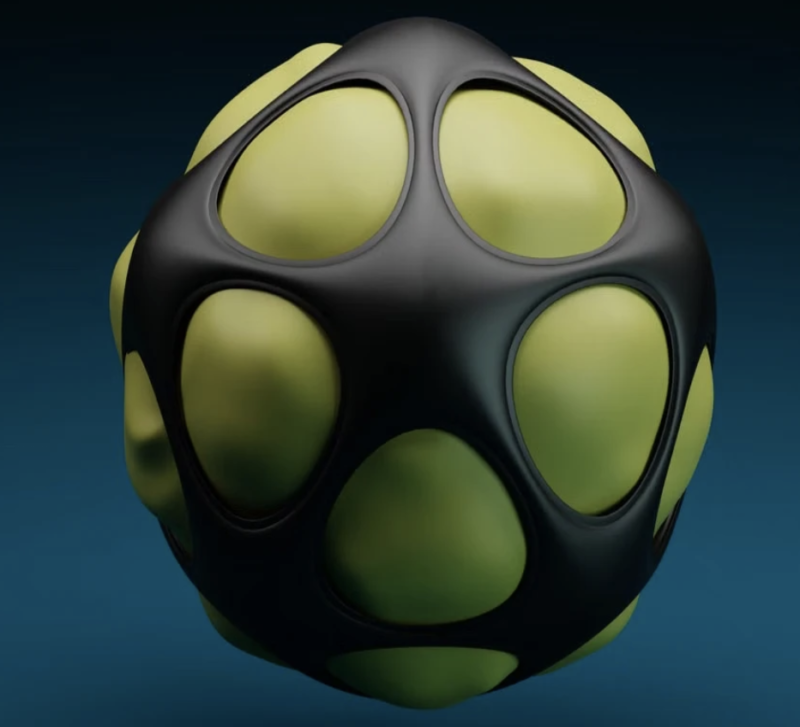
Every day, millions of creators turn to a free 3d model download instead of starting from a blank canvas. What used to be a niche habit among hobbyists has become a mainstream part of how games, products, interiors, and 3D-printed objects get made — and the numbers behind this shift are worth understanding.
A Habit Driven by Real Production Pressure
The global 3D models market is now valued at roughly $2.5 billion in 2026, with steady double-digit growth projected for the coming years. Much of that expansion comes from sectors that didn’t traditionally rely on 3D content at all — e-commerce product visualization, architecture, retail, and digital twin projects now sit alongside gaming and entertainment as major demand drivers. As more industries adopt 3D workflows, the appetite for ready-made assets — including free ones — grows right alongside it.
Free models play a specific role in this ecosystem. They lower the barrier for newcomers learning a new tool, let professionals block out scenes before investing in custom work, and give 3D printing hobbyists a way to start producing physical objects without commissioning a designer. Open-source design communities now contribute millions of new files every year, and that volume keeps accelerating.
3D Printing Is the Biggest Driver of Free Model Demand Right Now
One of the clearest trends shaping this space is the continued growth of desktop 3D printing. As printer hardware becomes more affordable and accessible, the demand for printable files has surged — and free models are usually the first stop. Industry guides increasingly stress that a “free” file isn’t automatically a “ready-to-print” file: every download still carries a real production cost in filament, electricity, and time, and not every mesh is actually printable without adjustments.
This has pushed platforms and communities to focus more on print verification — encouraging designers to share photos of actual printed results rather than just renders, since that’s the clearest signal a model is structurally sound and free of geometry errors like non-manifold meshes or unsupported overhangs.
What Separates a Good Free Model From a Problematic One
Not all free assets are equally usable, and the most common issues reported across the industry include:
- Mesh errors — non-manifold or non-watertight geometry that causes printing or rendering failures
- Incorrect scale or units — a frequent issue when files are imported across different software
- Format fragmentation — a model built for one engine or printer often needs re-optimization elsewhere
- Unclear licensing — “free” can mean public domain, personal-use-only, or attribution-required, and the differences matter for commercial projects
- Missing or low-quality textures — especially relevant for real-time or visualization use cases
Before using any downloaded asset, it’s worth checking the license terms, confirming format compatibility with your software, and — for 3D printing specifically — reviewing the geometry for overhangs, wall thickness, and manifold integrity.
Free and Premium Assets Are Increasingly Used Together
Rather than treating free and paid models as separate categories, most creators today move between both within the same project. Free assets typically cover background props, early-stage prototypes, and learning exercises, while premium, production-grade models are reserved for hero objects that need higher detail, clean topology, and rigging or animation support. This blended approach is becoming the norm rather than the exception, especially as deadlines tighten and teams need to allocate budget selectively.
It’s also why marketplaces hosting both free and premium catalogs in one place have become genuinely useful infrastructure. 3DExport is one such platform, offering a broad selection of free downloadable models alongside a premium catalog spanning characters, vehicles, architecture, and game-ready assets — giving creators a single source to pull from regardless of where a project is headed.