
Why Growing Creative and Design Studios Can No Longer Ignore Cybersecurity
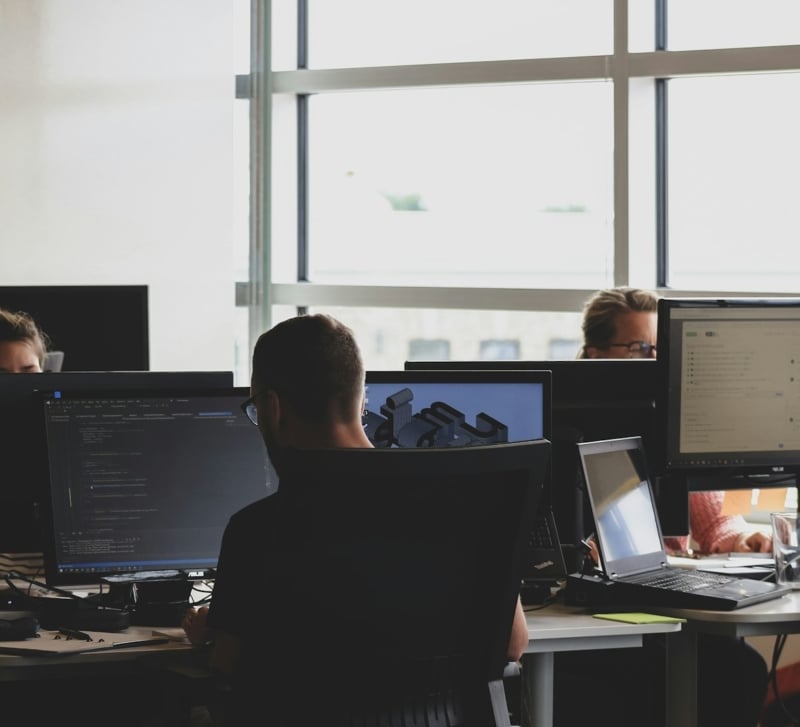
Design studios and creative agencies have quietly become some of the most digitally dependent businesses around.
Between cloud-based asset libraries, collaborative design tools, client portals and a growing number of remote freelancers logging in from wherever they happen to be working, a modern studio runs almost entirely on systems it rarely thinks about protecting.
As these businesses grow past a handful of people, that digital footprint starts to outgrow the ad-hoc security habits that worked fine when everyone shared one office and one laptop each.
Most conversations about studio growth focus on hiring, client acquisition, and process, and rightly so. But the systems holding all of that together tend to get built up piecemeal, one new tool or one new hire at a time, with security treated as an afterthought rather than something planned for.
That gap rarely causes a problem while the studio stays small. It becomes a real liability once the studio is handling bigger budgets, bigger clients, and bigger consequences if something goes wrong.
Small Teams, Big Digital Footprints
A five-person studio today might run on a stack that would have needed an IT department a decade ago. Cloud storage holds years of client brand assets.
Design and collaboration tools like Figma, Adobe Creative Cloud and project management platforms all connect to shared drives and client accounts.
Add a handful of remote contractors using their own devices, and the number of logins, integrations and access points multiplies quickly, usually without anyone formally tracking them.
Most studios don’t have a dedicated IT person, let alone a security specialist, so this sprawl tends to get managed reactively.
A password gets reset when someone forgets it, an old freelancer’s account stays active long after the project ends, and nobody notices until something goes wrong. None of this is unusual, but it does mean the studio’s actual attack surface is often much larger than anyone realizes.
This is exactly the gap that outsourced managed IT services providers are built to close. Instead of trying to build internal IT expertise a studio doesn’t need day-to-day, a managed provider takes care of the unglamorous but essential work, patching systems, managing access, monitoring devices, so the creative team can stay focused on the work clients are actually paying for.
Client Work Makes Agencies a Target
Creative and design studios hold something attackers want: other people’s unreleased work. Unlaunched product designs, embargoed marketing campaigns, brand assets ahead of a public reveal, and personal information collected through client projects all sit in a typical studio’s file storage.
For an attacker, that combination of valuable, time-sensitive content and comparatively light security makes agencies an appealing target, not despite their smaller size, but partly because of it.
A breach at a creative studio rarely stays contained to the studio itself. If a client’s unreleased campaign leaks or gets held for ransom before launch day, the fallout lands on the client relationship as much as the studio’s own reputation.
Larger clients are increasingly aware of this risk too, and many now ask vendors directly about their security posture before handing over sensitive briefs or assets.
That growing expectation is driving smaller agencies toward dedicated cyber security services Australia providers who can put real protection, identity management, and endpoint security in place without requiring the studio to hire a security team of its own.
For a business built on trust with its clients, being able to answer a security question confidently is becoming as important as the quality of the creative work itself.
Freelance and contractor networks add another layer to this. Many studios lean on a rotating pool of external designers, developers and copywriters, each with their own devices, their own security habits, and varying levels of access to shared systems.
Managing that access properly, granting it when a project starts and revoking it cleanly when it ends, is a small but often-skipped step that closes one of the more common ways studio systems end up exposed longer than anyone intended.
Threats Don’t Wait for a Deadline
Creative work doesn’t run on a nine-to-five schedule, and neither do the threats targeting it. Deadline crunches, late-night revisions, and freelancers working across different time zones mean studio systems are active and exposed well outside standard business hours, exactly when a lean internal team is least likely to notice something unusual happening.
Attackers know this rhythm too. A phishing email sent late on a Friday, timed to catch someone rushing through a final approval before a launch, has a much better chance of getting clicked than the same email sent mid-morning on a Tuesday.
Continuous monitoring closes that gap by watching for unusual logins, unexpected file access, or suspicious activity around the clock, rather than only during the hours a small internal team happens to be paying attention.
This is where managed SOC services earn their keep for growing studios. Round-the-clock detection and response means a compromised account or unusual file transfer gets caught and contained quickly, whether it happens at 2pm on a workday or 2am the night before a major launch, without anyone on the creative team needing to be the one watching for it.
It also removes an awkward tradeoff that many small studios face without realizing it: relying on whoever happens to be online to notice something unusual, versus paying someone internally to sit and watch dashboards that could otherwise be doing billable work.
Neither option scales well. Dedicated monitoring solves the problem properly, without pulling designers and developers away from the projects that actually bring in revenue.
Winning Bigger Clients Means Meeting Bigger Compliance Bars
As studios grow and start pitching for larger clients, government work, or enterprise accounts, the vendor onboarding process gets noticeably more demanding.
Security questionnaires, proof of specific certifications, and formal risk assessments are becoming standard steps before a contract gets signed, and a studio that can’t answer them quickly and confidently risks losing the opportunity to a competitor who can.
Handling this manually is a real drain on a small team. Chasing down evidence for a security questionnaire, documenting policies that may not have existed in writing before, and preparing for an audit all take time away from paying client work, often at the exact moment a studio is trying to prove it’s ready for a bigger opportunity.
This is why more growing agencies are turning to managed GRC services to keep policies, evidence and audit readiness in order continuously, rather than scrambling every time a new client asks for proof.
Being able to hand over a clear, current compliance package on request turns security from a hurdle in the sales process into a point of difference against competitors who aren’t ready for the question at all.
Treating Security as Part of the Creative Business
The studios that scale successfully over the next few years will be the ones that stop treating cybersecurity as someone else’s problem to worry about later.
Client trust, bigger contracts, and the ability to work confidently across a growing, distributed team all depend on the systems behind the creative work being properly looked after.
That doesn’t require every studio to become a security expert. It just requires recognizing that protecting the work is now as much a part of running a creative business as making it in the first place.