
Why Simpler Creation Flows Often Change More
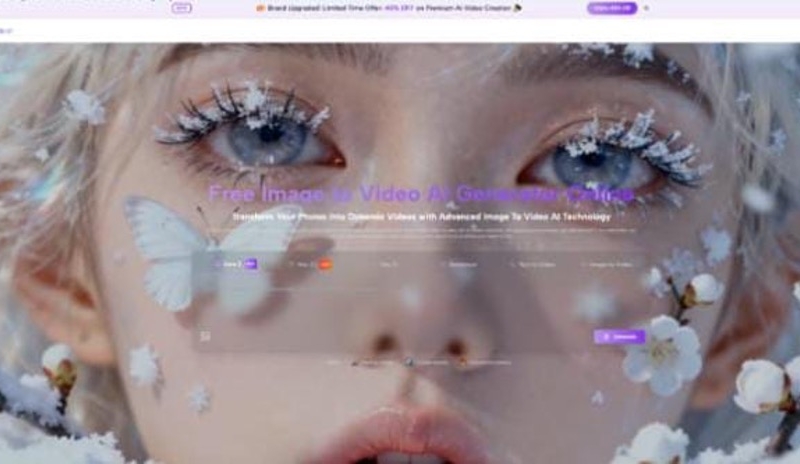
People sometimes assume that the most influential creative tools are the ones with the most controls. In reality, tools often change behavior not because they are the deepest, but because they are the easiest to repeat. A platform centered on Image to Video AI fits that pattern. Its significance does not come from promising infinite manual precision. It comes from making one specific kind of transformation simple enough that people can use it again and again: turning a still image into a moving video asset through a short browser workflow.
That repeatability matters. Most content systems do not fail because teams have no ideas. They fail because each new asset requires too much effort relative to the speed of demand. Short-form media, ad testing, social publishing, internal demos, educational clips, and personal storytelling all put pressure on production timelines. A tool that reduces the distance between a strong still image and a shareable moving output can therefore have more practical impact than a more complicated system that users rarely open.
What interests me most about this kind of product is how it redefines the threshold for participation. Many people will never become advanced editors, animators, or motion designers. But many can upload a picture, describe what they want to see, wait a few minutes, and evaluate the result. That widening of participation is not a side effect. It is one of the main reasons the category matters.
The Importance Of Repetition In Creative Work
A tool becomes operationally important when people can use it frequently without losing momentum. That is why simple workflows often outperform more ambitious ones in day-to-day environments. Not because they are better at everything, but because they fit real schedules better.
Ease Changes Behavior More Than Capability Alone
A very powerful tool with a steep setup cost may generate excellent outcomes, but it will still be underused if people do not have time to enter it often. A simpler tool that produces good results with less friction may end up shaping far more actual work.
This is especially true for content teams that need a high volume of acceptable, useful assets rather than a small number of perfection-driven masterpieces.
Still Images Are Often Waiting For A Next Step
A strong static image already solves many creative problems. It establishes framing, identity, tone, and visual clarity. What it lacks is duration. If movement can be added without rebuilding the project from scratch, the image gains a second function.
That is one reason this tool category is strategically useful. It gives static images another life inside motion-led environments.
Frequency Makes A Tool Strategic
The more often a workflow can be repeated, the more likely it is to influence planning, content calendars, and asset reuse decisions. A simple image-to-video process has exactly that kind of potential.
What The Official Four Step Flow Tells Us
The official workflow is refreshingly direct. That matters because the structure of a workflow often reveals the product’s real philosophy better than marketing language does.
The User Starts By Uploading A JPEG Or PNG
The first step is the image upload. This confirms that the platform is meant to begin from a user-provided still asset rather than a full project environment. The image is the creative anchor. That means source quality is not secondary. It is central.
A well-composed image gives the system a stable base. A weak or visually confused image may make the final motion less convincing, no matter how promising the prompt sounds.
Prompt Text Acts As Motion Guidance
The second step is entering a prompt. This is where accessibility meets authorship. The user does not need a timeline, keyframes, or advanced motion software. But the user still needs to communicate an intention.
This design is important. It keeps the tool approachable while preserving room for judgment and experimentation.
Processing Happens In The Background
The third step involves waiting during processing, which the site notes can take several minutes. This signals that the platform is built around generated results rather than live manual editing.
That distinction matters for expectation-setting. Users are not working in a frame-by-frame environment. They are sending a request and evaluating an interpreted response.
Completion Leads Straight To Review And Sharing
The final step is to review the result once complete and then share or download it. This makes the product outcome-oriented. It is designed to move users toward usable media rather than prolonged project tinkering.
The Product Is Built Around Finishing
A lot of tools are good at opening creative possibilities but bad at closing them into finished outputs. This workflow suggests the opposite. Its narrowness helps users reach completion.
How The Platform Fits Different Kinds Of Work
A useful creative platform usually matters across more than one context. This one appears to fit several.
For Brands That Already Own Strong Photography
A brand may already have premium still images from a campaign. Turning those into moving assets expands their utility across ads, social placements, product storytelling, and promotional experiments.
For Creators Who Need More Motion Without More Complexity
Independent creators often need motion assets but cannot justify full production effort for every post or visual idea. A still-to-video workflow lets them build on existing material rather than waiting for a more elaborate process.
For Educators Who Need Visual Guidance
Instructional material often becomes easier to follow when motion introduces sequence and directs attention. A diagram or visual explanation can gain clarity when transformed into a guided visual event.
For Personal Storytelling And Archives
There is also a softer category of use: memory content. Old photos and meaningful stills often gain emotional presence when animated carefully. In these situations, subtlety usually matters more than spectacle.
The Tool Works Best When Purpose Is Clear
The same platform can support many use cases, but the strongest results usually happen when the user knows what the motion is supposed to accomplish. Attention, emotion, clarity, and atmosphere are not the same goal.
Why The Broader Site Structure Matters
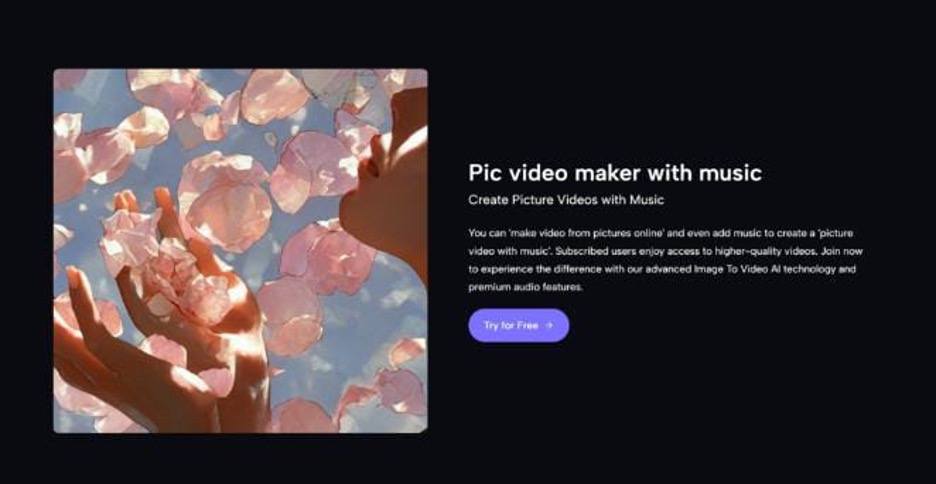
The product appears to sit inside a wider ecosystem of related creation paths and effect-oriented entry points. That matters because it changes how users encounter the tool.
Users Often Think In Goals Rather Than Formats
Many people do not begin with the phrase image-to-video. They begin with something like animate an old picture, create a moving product scene, or make a still feel cinematic. A product that organizes around recognizable outcomes lowers cognitive friction.
Effect Pages Help Different Audiences Enter Naturally
Themed paths and adjacent creation modes signal that the product is trying to meet users where their intention already is. This is especially helpful for non-technical audiences.
Camera Motion Options Add Meaningful Depth
The mention of pan, zoom, tilt, and rotation is more important than it may first appear. These are not trivial controls. They shape how viewers read visual emphasis and space.
Motion Feels Better When It Has Logic
A clip does not need a lot of movement to feel strong. It needs movement that seems purposeful. Camera logic often provides that sense of purpose.
A Comparison Based On Workflow Experience
To understand the platform more clearly, it helps to compare it not by hype level, but by workflow experience.
| Workflow Factor | Image To Video Platform | Traditional Motion Production |
| How you begin | Upload existing image | Plan and gather footage |
| Skill barrier | Lower | Higher |
| Time to first output | Shorter | Usually longer |
| Revision style | Prompt and retry | Manual editing and adjustment |
| Best for | Fast asset extension | Fully custom motion design |
| Equipment need | Minimal | Often greater |
| Reusability of stills | Very high | Less central |
| Output expectation | Efficient and usable | Deeply controllable |
The table shows why the platform matters without overstating its role. It is not superior in every dimension. It is highly useful in a specific one.
What Users Should Understand Before Relying On It
A grounded view makes better use possible.
Simplicity Does Not Remove The Need For Taste
The platform may reduce technical difficulty, but it does not remove creative responsibility. Users still need to choose strong source images and describe motion intelligently.
Iteration Is Normal
Generated motion often benefits from more than one attempt. This is not a failure of the workflow. It is part of how prompt-driven systems operate.
Not Every Image Wants The Same Kind Of Motion
Some images benefit from subtle camera drift. Others benefit from stronger directional emphasis. Some should probably remain still. The user still has to decide.
Convenience Is The Strength, Not Infinite Precision
It is better to understand this platform as a repeatable motion-enabling layer than as a total substitute for advanced production. Judged on those terms, it is much easier to appreciate what it does well.
Why This Category Has A Long Term Place
The deeper reason image-to-video systems matter is that they fit the direction of modern media work.
Asset Reuse Is Becoming A Core Skill
The ability to extract more value from existing visual assets is increasingly important. Budgets, schedules, and publishing demands all reward reuse.
The Boundary Between Photo And Video Keeps Weakening
Once a still image can be transformed into a moving clip through a short prompt-driven process, the categories start to blur. Images become more flexible than their original format suggests.
Participation Expands Beyond Specialists
One of the most meaningful changes is social rather than technical. More people can contribute to motion-based storytelling when the entry barrier falls. That includes small teams, individual creators, educators, and everyday users with meaningful images.
This Is Why The Simpler Flow Matters So Much
The influence of a creative tool is often measured by how often people can return to it without resistance. A platform that asks users to upload an image, write a prompt, wait for processing, and review the result is simple enough to become part of repeated work. That repeatability is where its real strength lies. It turns still assets into moving media without asking too much in return, and that balance is exactly why it feels relevant now.