
How to Choose Hand Tools and Power Tools for Jobsites
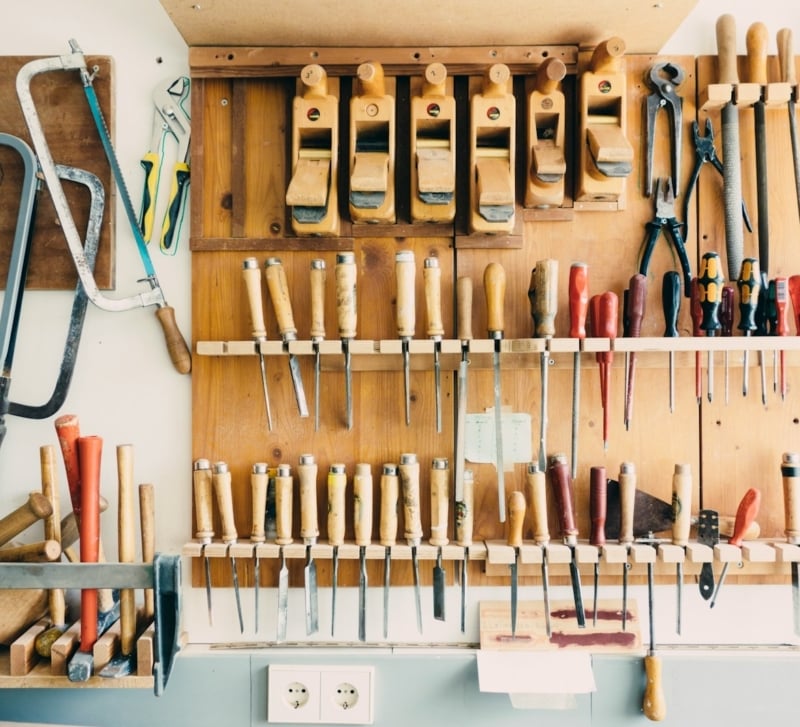
The core question is simple: does the task call for speed and power, or precision and control? Hand tools give you direct feedback and fine control, while power tools handle heavy-duty and repetitive work faster.
Knowing when to reach for each type makes you more efficient on every job. Sometimes it’s not obvious which is better until you’re knee-deep in sawdust.
Choose Tools by Task and Jobsite Conditions
The right tool depends on what you’re cutting, fastening, drilling, or finishing. Conditions on your jobsite—like available power, workspace size, and project scale—shape what belongs in your bag or truck.
When Hand Tools Make More Sense
Hand tools shine when precision and control matter more than speed. If you’re doing fine woodworking, joinery, carving, or detailed trimming, manual tools just feel better in your hands.
Common essential hand tools include:
- Hammer / Claw hammer: driving and pulling nails
- Screwdriver set: driving screws in tight spots
- Adjustable wrench: tightening and loosening fasteners
- Pliers: gripping, bending, and cutting wire
- Chisels: carving wood and cleaning up joinery
- Hand saw / Handsaw: cutting lumber in areas without power
- Hand plane: smoothing and flattening wood surfaces
- Tape measure: measuring accurately on any jobsite
Hand tools are quieter, need no power, and are easier to carry into tight spaces. They tend to be less expensive upfront and don’t need much maintenance.
When Power Tools Save Time
Power tools are the better choice for large-scale projects, repetitive tasks, and any job where manual effort would just slow you down. A cordless drill drives screws in seconds.
A circular saw cuts sheet goods in a fraction of the time a handsaw would take. That’s a huge difference when you’re racing daylight or just want to get home on time.
Must-have power tools for most jobsites include:
- Cordless drill / Impact driver: drilling holes and driving screws
- Circular saw: ripping and crosscutting lumber and plywood
- Miter saw: making accurate angled cuts in trim and framing
- Reciprocating saw: demolition and rough cuts
- Jigsaw: curved cuts in wood, metal, and tile
- Table saw: ripping boards on larger projects
- Router: shaping edges and cutting grooves
- Power sander / Electric sanders: smoothing surfaces for finishing
- Angle grinder: cutting, grinding, and polishing metal
- Rotary hammer: drilling into concrete and masonry
- Nail gun: fast fastening on framing or finish work
- Oscillating multi-tool: cuts, scrapes, and sands in tight spots
- Power planer: quickly flattening and sizing lumber
Matching Tools to Cutting, Fastening, Drilling, and Finishing
Match the tool to the specific operation, not just the material. Here’s a quick cheat sheet:
| Task | Best Tool Option |
| Drilling holes in wood or metal | Cordless drill, rotary hammer |
| Driving screws quickly | Impact driver, cordless drill |
| Straight cuts in lumber | Circular saw, table saw |
| Curved cuts | Jigsaw |
| Angled cuts | Miter saw |
| Surface finishing | Power sander, hand plane |
| Metal grinding | Angle grinder |
For fine woodworking and joinery, a combo of hand saws, chisels, and hand planes often gives you cleaner results than power tools alone.
Choosing for Large-Scale Projects, Repetitive Tasks, and Tight Spaces
Large-scale projects like framing, roofing, or flooring demand power tools. When you need volume and speed, nothing beats a nail gun for repetitive fastening.
Tight spaces call for compact cordless tools or hand tools. A cordless drill and a screwdriver set both work in cabinets or wall cavities where a corded tool just gets in the way.
Don’t forget jobsite accessories that help with any tool. A tape measure, chalk line, laser level, LED work light, and portable generator all boost efficiency.
A plate compactor and air compressor are worth having for concrete and pneumatic tool work.
Cordless, Corded, and Pneumatic Options
Each power source is a trade-off.
- Cordless tools offer mobility and convenience. Brands like DeWalt and Makita have strong battery platforms so you can swap batteries between drills, saws, and sanders.
- Corded tools deliver consistent power for high-demand tasks like table saw cuts or sustained router work. No worrying about battery life.
- Pneumatic tools (with an air compressor) are lightweight, powerful, and great for repetitive fastening. The catch is you have to drag the compressor everywhere.
For most jobsite pros, a mix of cordless tools for general use and corded or pneumatic tools for heavy-duty tasks works best. Always check if replacement parts are easy to get before you buy into a brand.
Balance Safety, Cost, and Long-Term Value
Safe tool use and smart buying go together. A tool that injures you or breaks down fast ends up costing more than a solid, well-chosen purchase.
PPE and Safety Procedures for Everyday Use
Personal protective equipment (PPE) isn’t optional on any jobsite. You should treat it as part of your standard kit, not an afterthought.
Core safety gear includes:
- Safety glasses: protect eyes from flying debris, dust, and sparks
- Hearing protection / Ear protection: reduce noise exposure from power tools
- Respirator: filter dust and fumes when cutting, grinding, or sanding
- Work gloves: protect hands from cuts, abrasions, and vibration
Don’t skip basic safety steps. Inspect tools before use, keep your work area clean and dry, and actually read the operator’s manual for any power tool you use.
Platforms like SafetyCulture offer digital checklists and maintenance reminders, which can help teams keep safety consistent.
Hand Tool Safety and Power Tool Safety Risks
According to the Consumer Product Safety Commission, around 400,000 people visit emergency rooms each year due to tool injuries.
Common injuries from hand tools include cuts, punctures, and abrasions from mishandling sharp edges.
Power tool injuries carry higher stakes. Risks include:
- Cuts and lacerations from blade contact
- Electric shock from damaged cords or wet conditions
- Abrasions from angle grinders and sanders
- Serious injuries from missing blade guards or improper technique
For hand tool safety, always use the right tool for the job and check it before each use. Toss out worn tools.
For power tools, never remove blade guards, always unplug before adjusting, and avoid loose clothing that could catch in moving parts.
Buying for Budget, Maintenance, and Replacement Cycles
You don’t need to buy everything at once. Start with tools that fit your most common jobs and add more as you go.
A few tips from experience:
- Mid-range tools from reliable brands usually outlast the cheap stuff and cost less to keep running
- Don’t forget the cost of replacement parts and blades when tallying up your budget
- Corded tools generally last longer and cost less than cordless, but you lose mobility
- Cordless platforms pay off if you stick with one battery ecosystem
Maintenance makes a difference. Clean tools after use, store them dry, and swap out worn blades or bits right away.
A well-kept hand tool can last decades, honestly.
Building a Practical Starter Kit for Your Trade
Your starter kit should match your trade and experience. A framing carpenter’s gear is pretty different from what an electrician needs.
Here’s a decent general starter kit:
- Claw hammer
- Screwdriver set
- Adjustable wrench and pliers
- Tape measure
- Cordless drill with a bit set
- Circular saw
- Safety glasses, ear protection, and a respirator
As you take on more work, you’ll want tools tailored to your specialty. A woodworker might grab a miter saw, router, or some hand planes. If you’re handling demo jobs, a reciprocating saw and an oscillating multi-tool are worth having.