
How Commercial And Industrial Energy Storage Systems Reduce Costs
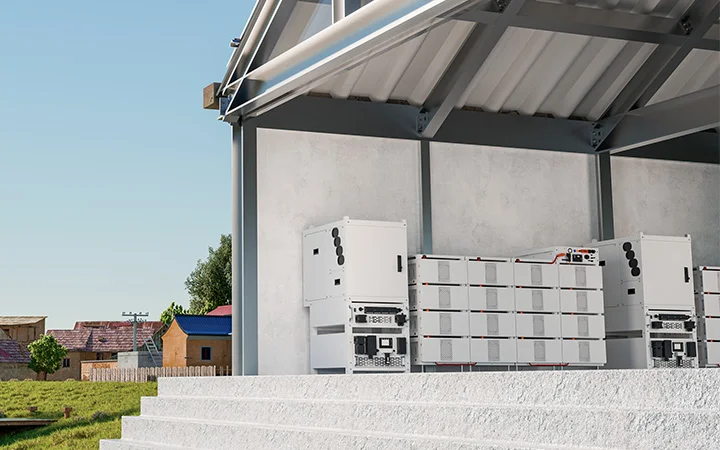
Commercial and industrial energy storage systems offer a real way to control when and how you use power, which can directly lower your expenses.
Let’s break down where the savings actually come from and what you should look for when sizing up a commercial or industrial energy storage solution for your facility.
Where The Savings Come From
Commercial and industrial energy storage systems can save you money in a bunch of ways. The main strategies? Cutting demand charges through peak shaving, taking advantage of price swings, boosting your on-site solar, and even earning revenue from grid programs.
Peak Shaving And Demand Charge Reduction
Demand charges can eat up 30% to 50% of your monthly electricity bill. Utilities set these charges based on your highest 15-minute interval of power use during the billing period.
One brief spike—maybe from a heavy machine kicking on—can set a high demand charge for the whole month. That stings.
Peak shaving tackles those spikes by discharging your battery during high-load periods. This keeps your measured peak demand down, so your demand charge drops too.
Demand charge management is usually one of the quickest ways to see a return on your BESS investment. If you’re running a factory or logistics center, the savings from just this one strategy can be impressive.
Load Shifting And Time-Of-Use Arbitrage
Most US utilities charge more for electricity during peak hours—think late afternoon and evening. Time-of-use arbitrage is pretty much what it sounds like: you charge your battery when rates are low (often at night or midday) and use that stored power when rates jump.
Some folks call this energy arbitrage or load shifting. Your battery lets you “buy low and sell high” with electricity, which feels kind of satisfying.
Over a year, these savings can really add up, especially if you’re in a state where there’s a big gap between peak and off-peak rates.
A smart energy management system can automate all this, so your team doesn’t have to think about it. The battery just charges and discharges at the right times, quietly saving you money.
Solar Self-Consumption And Renewable Energy Integration
Got rooftop or ground-mounted solar? Pairing it with storage lets you hold onto more of that free energy.
Without storage, excess solar often gets dumped back onto the grid for a pretty measly credit. With commercial energy storage, you can save that surplus and use it later—like after sunset.
Solar self-consumption makes your solar investment work harder for you. It also helps you hit those renewable energy goals and lean less on the grid during expensive hours.
If you care about sustainability, solar-plus-storage is a solid path toward decarbonization. Plus, it adds resilience.
During a grid outage, a solar-plus-storage system can keep critical stuff running, while plain solar alone usually can’t.
Demand Response, Grid Services, And Ancillary Services
Many US utilities run demand response programs, paying businesses to cut usage during grid stress events. Your commercial battery can handle this automatically, discharging stored power so you don’t have to draw from the grid—and you get a payment or bill credit for helping out.
Some commercial energy storage systems can even provide grid services like frequency regulation or load balancing. These ancillary services mean you could earn extra revenue, not just save on your own bills.
If you join these programs, your BESS becomes more than just a cost-cutter—it’s an active player on the grid. And as utilities look for more flexible resources, the opportunities here are only growing.
How To Evaluate A System For Business Use
Picking the right commercial energy storage solution isn’t just about picking a battery. You’ve got to consider hardware, software, safety, and the long-term economics.
Check how the system is built, if it’s sized right for your load, how safe it is, and whether the battery chemistry lines up with your payback goals.
Core Components: Battery, EMS, BMS, PCS, And Inverters
Every commercial ESS has four main components working together. Getting the mix right is crucial for reliable performance.
- Battery modules: These actually store the energy. Capacity and chemistry decide how much you can store and for how long.
- Energy Management System (EMS): This is the brains of the operation. It schedules charging and discharging based on your rate structure, solar output, and usage patterns. A good EMS automates peak shaving, arbitrage, and demand response so you don’t have to micromanage.
- Battery Management System (BMS): Keeps an eye on each cell—temperature, voltage, state of charge. The BMS protects the battery from unsafe conditions and helps it last longer.
- Power Conversion System (PCS) and inverters: Convert stored DC power into usable AC power for your facility. The PCS also controls how fast power flows in and out.
These parts need to work together seamlessly. If something’s out of whack, you could lose efficiency, shorten system life, or run into safety issues.
Sizing For Power, Energy Capacity, And Backup Needs
Sizing a BESS wrong is a classic mistake. You need to think about two things: power (in kilowatts, kW) and energy capacity (in kilowatt-hours, kWh).
Power is how fast the system can discharge. Energy capacity is how long it can keep that up.
For example, a system with 1,000 kW of power and 2,048 kWh of energy capacity can run at full tilt for about two hours. Simple enough.
If backup power is a must, you’ll need enough energy capacity to cover your critical loads for however long you want to ride out an outage. If you’ve got EV chargers or electrification plans, factor in that extra load too.
Honestly, a professional energy audit and load analysis should come before you finalize sizing. For microgrid setups, it gets even trickier since the system might need to run completely off-grid.
Safety, Thermal Management, And Installation Requirements
Safety isn’t optional with battery storage. Lithium-ion batteries pack a lot of energy into a small space, and if things go wrong, there are real risks—fire, thermal runaway, you name it.
Look for systems with UL 9540 certification (the US safety standard) and IEC 62619 (the international one for stationary batteries). These mean the system’s been properly tested.
A solid thermal management system is a must. It keeps the battery at a safe temperature, protects against thermal runaway, and helps the battery last longer.
Active cooling usually beats passive cooling in high-power commercial setups. Installation requirements can vary a ton depending on your facility, local fire codes, and utility rules.
Work with an installer who really knows the technical and regulatory ropes for your site. It’s not worth cutting corners here.
Chemistry Choices, Cycle Life, And Payback Period
Most commercial energy storage systems these days use lithium-ion batteries. In the US, LiFePO4 (lithium iron phosphate) has pretty much taken the lead for commercial and industrial setups.
LiFePO4 batteries have a few standout features.
- They last a long time—usually somewhere between 4,000 and 6,000+ charge cycles.
- They’re also more thermally stable than a lot of other lithium-ion types.
- There’s less risk of thermal runaway, which is always a relief.
- Their degradation over time tends to be pretty predictable.
Cycle life really matters when you’re thinking about payback. If a battery keeps going for years, you get more value before you have to shell out for a replacement.
When you’re comparing batteries, don’t just look at the biggest number on the spec sheet. Make sure to ask for the warranted cycle life at the depth of discharge you’ll actually use.
For most commercial setups, payback can land anywhere from 3 to 8 years. It all depends on your utility rates, what incentives are out there, and how hard you run the system.
Federal investment tax credits and state-level programs can help speed things up. Sure, there are other options like thermal energy storage or compressed air, but honestly, lithium iron phosphate BESS systems are still the go-to for most businesses right now.