
Why Poker Still Feels More Like Esports Than Gambling
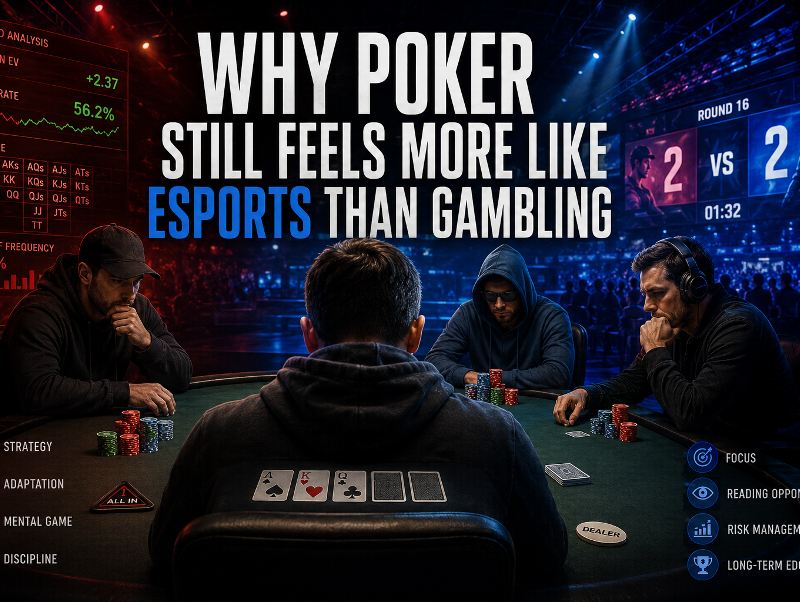
Poker sits in a strange room. One door leads to gambling. The other leads to competition. Most casino games walk through the first door and stay there. Poker keeps moving between both.
That is why it feels close to esports. A poker table works like a ranked lobby. Players study opponents. They manage pressure. They hide patterns. They punish mistakes. Money matters, but money does not explain the whole game.
In roulette, the wheel does not care who you are. In poker, the person across the table matters. That single fact changes everything. Poker becomes less like pulling a lever and more like facing another player in a tight match where every click, pause, and bet can give something away.
Poker Has Opponents, Not Just Odds
Most gambling games place the player against a machine, a wheel, or a fixed rule. The player makes a choice, then waits. The game reveals the result. That loop can feel clean, fast, and cold.
Poker works in a different way. It puts people in the center of the room. Cards matter, but players shape the hand. A weak hand can win. A strong hand can fold. A quiet player can set a trap. A bold player can force fear into the table.
That makes poker feel closer to a fighting game or a strategy match. You do not only ask, “What are my odds?” You ask, “What does this player think I have?” Then you ask the harder question: “What do they think I think they have?”
Modern online rooms keep that human contest alive. Platforms such as BC Poker show how poker can sit inside a digital match space, with live tables, tournaments, and fast decisions that feel more like a competitive lobby than a slot floor.
This is the key split. Chance deals the cards. Skill decides how people use them. In esports, a player can miss a shot, read a fake, or lose a map through bad timing. In poker, a player can misread a bet, chase a bad hand, or fold at the wrong moment. The tools differ. The pressure feels familiar.
Poker Rewards Practice Like A Competitive Game
Poker does not reward random button pressing. New players can win one hand. They rarely win for long. Over time, the game exposes weak habits like bright paint under a hard light.
A skilled player studies ranges, position, bet size, stack depth, and table mood. They review hands the way a shooter player reviews aim clips. They look for leaks. They test new lines. They cut bad moves one by one.
That is why poker feels like a training game. The player does not only play. The player drills. Each table becomes a small arena where past study meets live pressure.
| Poker Element | Esports Parallel | Why It Matters |
| Hand Review | Watching Match Replays | Players find mistakes they missed in real time. |
| Position | Map Control | Better position gives more information and more choices. |
| Bet Sizing | Resource Use | Each move spends pressure, risk, and future options. |
| Bluffing | Mind Games | Players force rivals to react to a false signal. |
| Bankroll Control | Ranked Discipline | Good players protect their run and avoid tilt. |
The table also punishes emotion. A player who tilts starts swinging like a tired boxer. They chase losses. They overplay hands. They stop reading the room. Good poker demands calm hands and a clear head.
Esports fans know this feeling. A player who loses focus can throw a match in ten seconds. Poker works the same way. One angry call can erase an hour of smart play.
The Table Feels Like A Ranked Lobby
A poker table has a social shape. Players enter, watch, adjust, and test each other. No two tables feel the same. One table may play tight and slow. Another may swing hard from the first hand.
That is close to a ranked lobby. You bring a plan, but the room fights back. A good plan can break when one rival plays wild. A weak player can still cause damage. A strong player must read the whole field, not just their own cards.
“In poker, the cards start the hand. The players write the story.”
This line captures the pull of the game. The deck gives each player a starting point. After that, the table becomes a live contest. Bets become signals. Pauses become clues. Folds become small defeats. Calls become tests of nerve.
The best players do not wait for perfect cards. They shape the match. They use position, pressure, timing, and image. They know when to stay quiet. They know when to strike.
That is why poker feels alive in the same way esports feels alive. The game changes because people change it. Each hand becomes a short match inside a longer war.
Conclusion: Poker Lives In The Space Between Chance And Skill
Poker still carries risk. It still uses money, odds, and uncertain cards. That part does not vanish. But the feel of the game comes from the fight between people.
A slot machine does not adjust to your habits. A roulette wheel does not trap you. A poker rival can. That is why the game feels closer to esports than to pure gambling.
Poker shares the same core traits that make competitive games tense:
- A live opponent who can read, adapt, and attack.
- A skill curve that rewards study and sharp habits.
- A meta-game built on patterns, pressure, and timing.
- A ranked-lobby feel where each table has its own pace.
- A tilt risk that can break even strong players.
- A replay culture where players study hands and fix mistakes.
The cards create the stage. The players create the match. Each hand asks for a choice under pressure. Each table tests memory, nerve, and discipline.
That is the esports feeling at the heart of poker. Not bright lights. Not team jerseys. Not a broadcast desk. The feeling comes from a simple truth: another player sits across from you, and they want to beat you first.