
What The House Edge Really Means And Why It Always Wins
Ask a gambler what the house edge is and most will offer a rough answer about the casino having an advantage. Ask what a 5 per cent edge actually costs them over an evening, and the confident replies dry up fast.
The house edge is the single most misunderstood number in gambling, quoted constantly and grasped rarely. Following it from one small bet through an hour of play and out to a casino’s annual results shows both what it truly measures and why it has never once failed to win.
Where The Edge Comes From
The house edge is not a fee, a commission or a rigged outcome. It is simply the gap between the true odds of a bet and the price the casino pays when that bet comes in, expressed as a percentage of the amount staked. Importantly it is measured against every wager placed, not against the money a player walks in with, and that single distinction explains most of the confusion surrounding it.
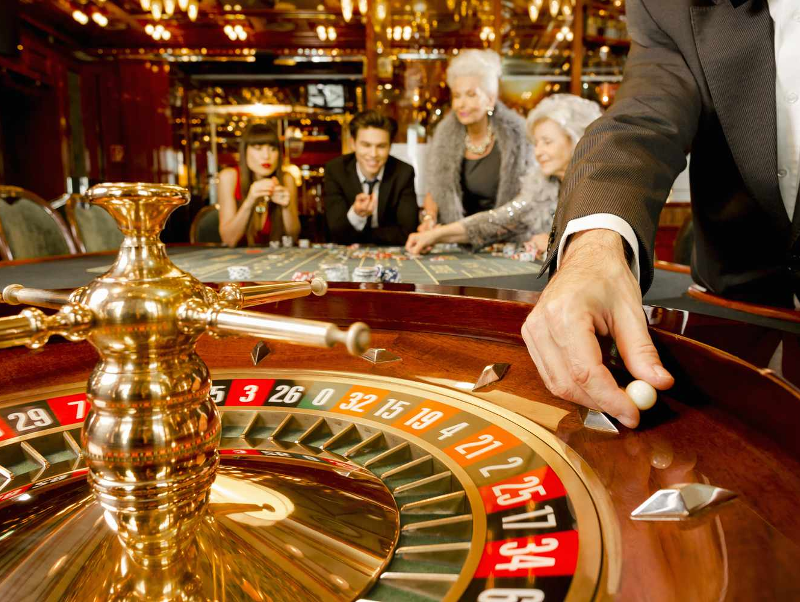
American roulette shows the mechanism at its clearest. A single number lands once in every 38 spins, so a fair reward would be 37 to 1, and yet the table pays 35 to 1. Those two withheld units are the whole edge, and they add up to 5.26 per cent of every dollar wagered on that wheel.
The figure is not concealed, since it is the mirror image of the published Return to Player percentage. Players comparing different casinos often check the RTP alongside welcome offers, including a Hiddenjack no deposit bonus code, before deciding where to play. A game advertising a 95 per cent RTP is effectively announcing a 5 per cent house edge in the politest possible terms.
One Bet, One Hour, One Year
On a single wager the edge is almost meaningless, because one spin either wins or loses and nothing averages out. Its power only appears when the same small percentage is applied again and again, which is why the number of bets matters far more than the size of any one of them.
Casinos calculate this with a simple formula, multiplying the average bet by the decisions per hour, the hours played and the house edge. The output is what they call theoretical win, and it is the figure a floor manager trusts rather than any single night’s takings.
The consequence surprises most players, since the speed of a game matters as much as its edge. A low-edge game played very fast can cost more per hour than a high-edge game played slowly:
| Game (at $10 a bet) | House edge | Decisions per hour | Expected cost per hour |
| Blackjack, basic strategy | 0.5% | About 70 | Around $3.50 |
| Baccarat, banker bet | 1.06% | About 70 | Around $7.40 |
| European roulette | 2.70% | About 40 | Around $10.80 |
| American roulette | 5.26% | About 40 | Around $21 |
| Online slots | 5% | About 500 | Around $250 |
Slots look almost innocent at 5 per cent until you notice they resolve hundreds of decisions an hour, which is precisely why they earn more than any table on the floor. Stretch that hourly cost across a year and millions of players, and a tiny percentage becomes an industry.
Why Variance Fools Everyone
If the edge worked smoothly, nobody would ever play, because every session would feel like paying a slow, predictable tax. What conceals it is variance, the natural swing of results around the average, and variance is enormous in the short run.
Over a single evening a player might finish well ahead on an American roulette wheel while another loses steadily at blackjack, even though blackjack is ten times cheaper to play. Short sessions are dominated by luck, and the edge barely shows its face. That is exactly why the memory of a big winning night can feel like evidence that a game is beatable, when it is only evidence that variance exists.
The Gambler’s Fallacy
From that fog comes the most expensive belief in gambling, the idea that a result is somehow due. Five reds in a row do not make black more likely, because the wheel keeps no memory and each spin is entirely independent of the last.
The same reasoning props up every betting system ever devised. Doubling after a loss, following a Fibonacci sequence or crossing numbers off a list changes how much is staked and when, yet each individual bet still carries the same negative expectation, so the sequence cannot rescue it.
Edge, Hold And RTP Are Not The Same
Even seasoned players muddle three numbers that describe very different things. RTP is the friendliest, since it simply states the share of stakes a game returns over time, and subtracting it from 100 per cent gives the house edge.
Hold percentage is a different animal entirely, measuring the proportion of the money brought to a table that the casino keeps by the end of a shift. Blackjack tables often hold around 15 per cent despite an edge under 1 per cent, and the explanation is not a hidden trick.
The reason is recycling, because a player who buys $100 in chips does not bet that money once. They wager the same dollars over and over as they win and lose, so a $100 buy-in might generate $1,500 of total action, and a sub-1 per cent edge applied to all of it comfortably accounts for the $15 the casino keeps.
Why It Always Wins In The End
A casino does not need a large edge, and it certainly does not need luck, because it relies on the law of large numbers. Across millions of independent wagers the actual result converges on the theoretical expectation with remarkable precision, which turns gambling into something closer to insurance underwriting than risk-taking.
That is why one high roller winning millions on a Saturday night is treated as an ordinary cost of business. Deep cash reserves absorb the shock, table limits cap how much any single lucky player can extract, and thousands of other bets quietly pull the numbers back toward the expected line.
The bitter irony for players is that time works in exactly the opposite direction for them. The longer someone plays, the more total money passes through the edge, and the more certainly their results drift toward the mathematically predicted loss. Operators barely need a big advantage to prosper, since online markets built on edges of a few per cent still turn tens of billions in wagers into billions of dollars of revenue every year.
Can The Edge Ever Be Beaten?
Honestly, for almost everyone, no. The edge cannot be outwitted by staking patterns, hot streaks or gut feeling, since none of those touch the underlying odds even slightly.
The Narrow Exception
A tiny number of advantage players genuinely reverse the maths, most famously through card counting in blackjack, where tracking the remaining high cards can briefly tip the odds toward the player. It is legal, it requires serious discipline, and casinos respond by simply barring anyone they suspect of doing it.
For everyone else, the realistic aim is to reduce what the edge costs rather than defeat it. A few choices make a measurable difference:
- Pick low-edge games — blackjack with basic strategy or baccarat’s banker bet cost a fraction of keno or slots.
- Play slower — fewer decisions per hour means less money passing through the edge.
- Avoid side bets — those tempting extras carry far steeper margins than the main game.
- Choose the right wheel — European roulette costs roughly half what the American version does.
- Set a time limit — shorter sessions keep variance in play, which is the only friend a player has.
Each of these shrinks the bill rather than erasing it, and that distinction is the whole point of knowing the number in the first place.
The Price Of Playing
The house edge is best read not as a mysterious force but as a price tag, the average cost of the entertainment measured against every dollar wagered. It never varies, it never sleeps, and it applies with equal indifference to the luckiest night and the worst.
Knowing that number turns a gambler into a customer who can see what they are paying, which is a far healthier place to stand. Anyone who finds the price climbing beyond what they meant to spend can seek free, confidential support from services such as GamCare or the National Council on Problem Gambling.
FAQ
What does a 5% house edge actually mean?
It means the casino expects to keep about $5 of every $100 wagered over the long run, not $5 of every $100 you deposit. The same dollars get bet repeatedly.
Is the house edge the same as the hold percentage?
No. The edge is fixed game maths, while hold measures how much of a player’s buy-in the casino keeps per shift. Hold is far higher because money is wagered many times over.
Does playing longer improve my chances?
It does the opposite. Longer play pushes more money through the edge, so results converge on the predicted loss. Short sessions at least leave room for variance to help you.
Can any strategy beat the house edge?
Only advantage play such as skilled card counting, which casinos ban on sight. Betting systems change stake sizes, never the odds, so they cannot overcome a negative expectation.