
What Actually Causes Body Odor
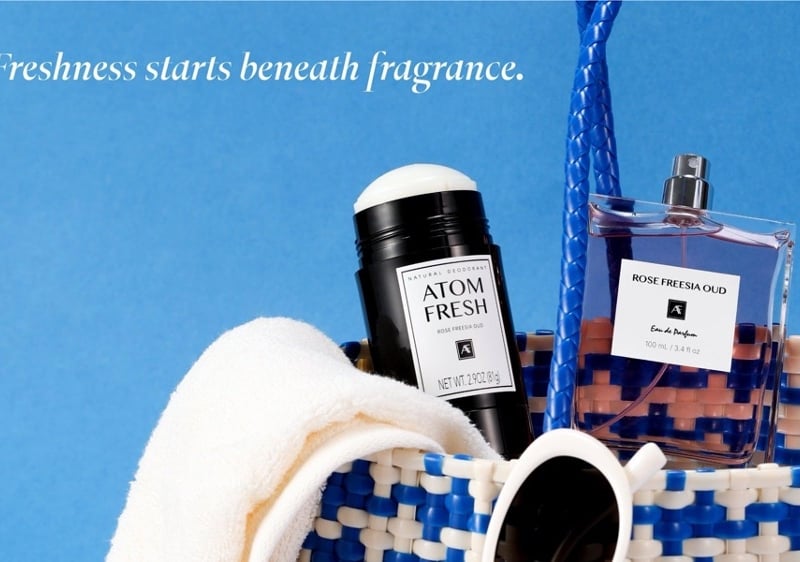
That moment hits-afternoon rolls around, you lean in close, and what once smelled expensive now smells wrong. The fragrance you paid for, the one meant to last, has shifted somehow.
Truth hits most people around midday-sweat feels out of control. Instead of calming down, they dump on thicker gels. A thick coat goes under the skin again. Some bet sharp perfumes hide what’s building up there. Others trust industrial-strength shields to block it all.
Spoiler alert: It doesn’t work. And it’s not your perfume’s fault.
The real culprit isn’t sweat. It’s the microscopic ecosystem partying on your skin. If you don’t handle that first, wearing perfume is just spraying air freshener in a room full of trash and only makes things muddier.
Here’s the real breakdown of what stinks, why, and how to actually smell like you (not you plus a science experiment) all day long.
What Body Odor Actually Is
Bet you didn’t know: Sweat is practically odorless
Let’s clear this up right now. That wetness under your arms? It’s just salty water and proteins. Straight out of the glands, sweat doesn’t have a smell.
Your body has two types of sweat glands. Eccrine glands cover most of you and pump out the watery stuff to cool you down during a workout or that 90-degree walk to the subway. Apocrine glands? Those are the ones chilling in your armpits and groin, releasing a thicker, milky fluid packed with fats and proteins.
That fluid is food. And on your skin, there are billions of hungry bacteria waiting for lunchtime.
The real stink: Bacteria are breaking down your sweat
Out here, things get interesting. Every person carries a personal mix of tiny microbes across their skin – their individual microbiome. As soon as apocrine sweat reaches the top layer, that’s when those organisms jump into action. Breaking apart fats and proteins becomes their main event. What pours out are pungent byproducts known as volatile organic compounds.
Smell lingers differently when emotions run high. Molecules rise from skin, carrying scents of sour bread, forgotten pickles, sometimes damp socks – each tied to specific microbes at work. Noticeable shifts happen under pressure. Sweat changes its nature then, heavier in proteins. Apocrine glands turn active during tense moments, releasing thicker liquid. Bacteria feast longer on this, breaking it down into sharper odors. Gym exertion brings simpler results – a quicker evaporation, less lingering feed. What comes out isn’t quite the same when fear steps in.
So, the amount you sweat matters way less than the type of bacteria you have and how they react to it. You can barely break a sweat and still have BO; you can drench your shirt and smell fine. Sweating isn’t the problem. The bacteria are.
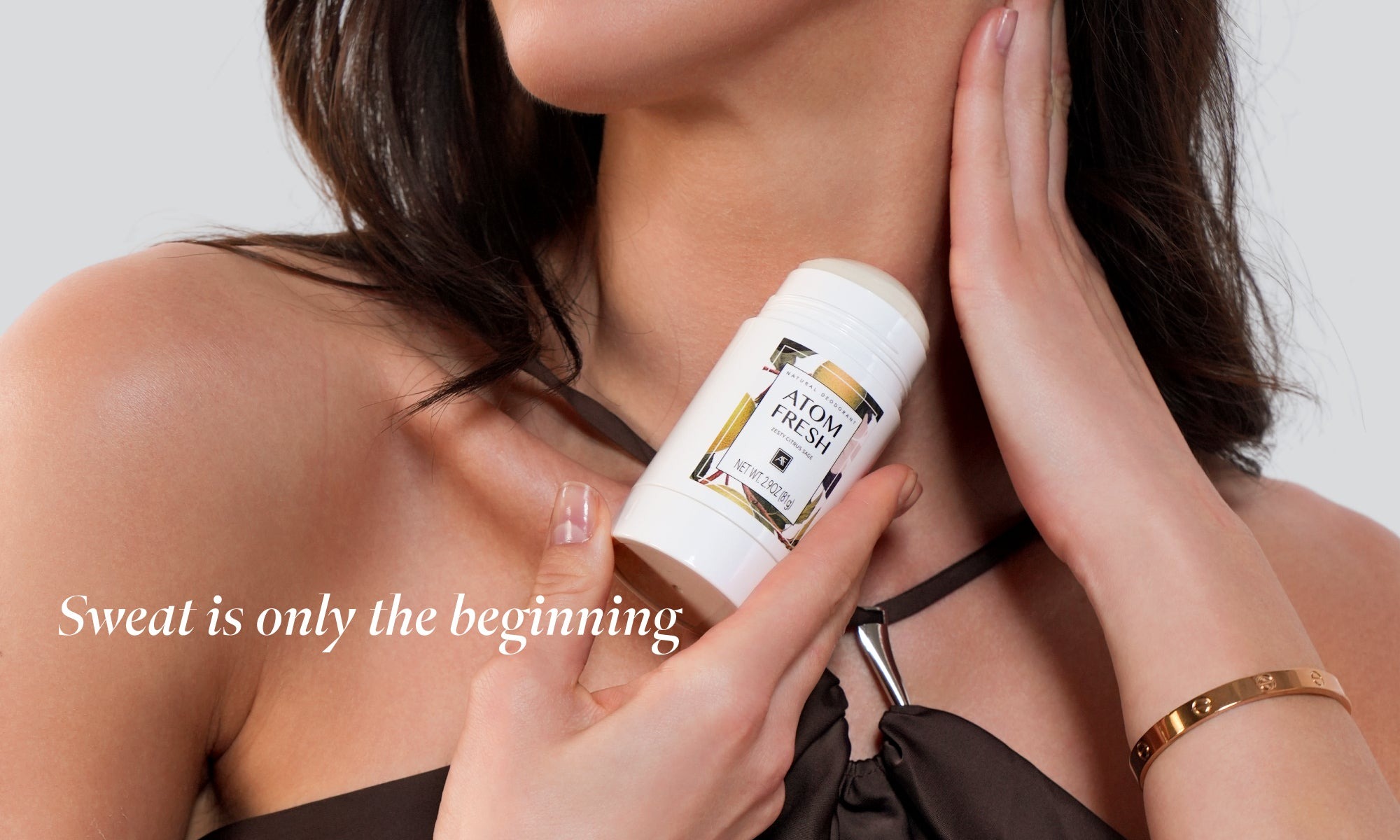
Why does your scent go south by noon
Think about your skin at 7 a.m., fresh out of the shower: squeaky clean, low bacteria count, neutral.
Fast forward to 1 p.m. You’ve been moving, maybe stressed a little, wearing layers. Now you’ve got a mix of dead skin cells, natural oils, friction from your clothes, and hours of bacterial feasting happening. The chemical compounds have built up.
When you spritz perfume on that afternoon canvas, you’re not adding a finishing touch—you’re throwing a cocktail party where the mixologist is drunk. The bacteria are actively cooking, and the perfume molecules are just getting caught in the crossfire.
Why Perfume Doesn’t Fix Body Odor
Spraying perfume on BO is just masking (and failing)
Perfumers spend years crafting top, heart, and base notes to evaporate beautifully on clean skin. They don’t formulate for skin that’s actively producing volatile sulfur compounds.
Fragrance doesn’t kill bacteria. Over it, even AtomFresh’s strong ROSEF REESIA OUD scent or lemon just floats above the real issue – like music playing near a dumpster. That sour note underneath keeps right on going. Layering scent there changes nothing. The two don’t harmonize.
The dreaded “mixing effect” (It’s not your imagination)
Have you ever put on a fresh, bright citrus scent only to have it turn sour and bitter on your skin by lunch? Or a warm vanilla that suddenly smells like dirty socks?
Here’s what’s happening: the fragrance compounds are literally reacting with the chemical stew on your skin. The volatile organic compounds from the bacteria alter the pH and the molecular structure of the perfume. That Bergamot note you loved? It’s now mixing with onion-like thiols. The result isn’t “more floral.” It’s “confused and unpleasant.”
That’s why the same bottle smells killer on your friend who runs cold and dry, and like bug spray on you when you’re in a humid meeting. It’s not the formula. It’s the foundation.
You asked your perfume to do a job it doesn’t have
Let’s be real for a second. You’re not disappointed because the perfume is weak. You’re disappointed because you handed it a mop and told it to fix a flooded basement, when all it’s designed to do is light a scented candle.
Perfume is for identity. It’s the exclamation point on your outfit, the mood you want to project, the memory you leave in a room.
Deodorant is for hygiene. It manages the bacterial circus so the circus doesn’t leave a smell trail.
When you confuse the two, you end up overspraying and walking around in a cloud of regret. The fix isn’t more perfume. It’s giving perfume its dignity back by giving it a clean canvas.
The Missing Layer: Building a Scent Routine That Actually Works
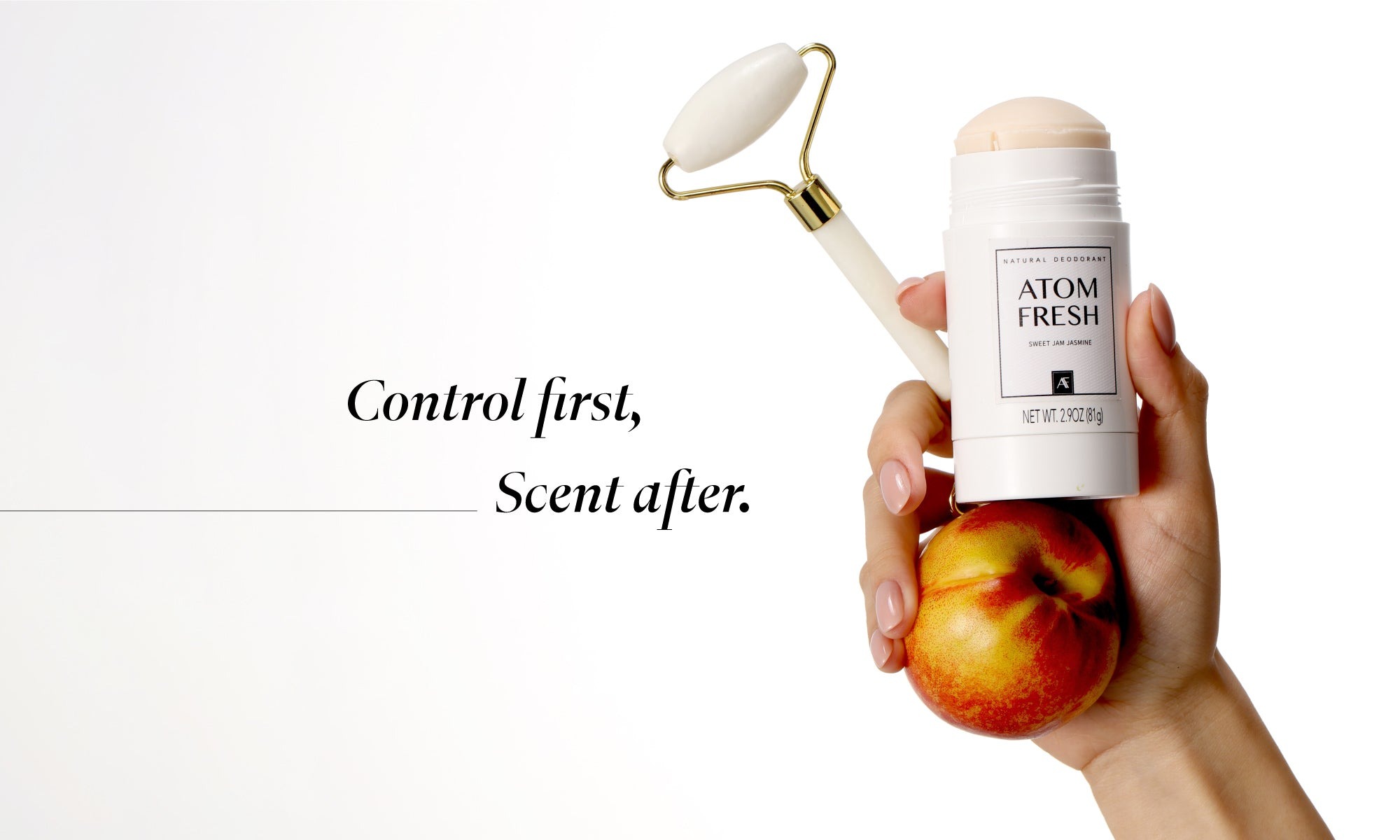
Step one: Kill the base (the right way)
If you want that expensive fragrance to perform, stop applying it to a battlefield. You need to start with odor control the moment you step out of the shower.
A solid stick steps in right when things might go sideways. Skip those pore blockers laced with metal salts, should you find them odd. What works well shifts how your skin sits, turning it into unfriendly ground for odor makers. By cutting off their fuel early, the smell never stands a chance.
Picture deodorant like the first coat on a blank surface. A fresh painting needs a clean base – no one starts art on grime or splits in plaster. Just as much, skipping prep means shaky results.
Here’s the reason so many today layer deodorant with perfume instead of using one or the other. Think of it like this: first, deodorant takes care of odor; next, perfume adds character. AtomFresh’s trial set is one example of a system designed specifically to pair these two layers without conflicting notes—so your fragrance actually lands on a clean base.
Step two: Let your fragrance do the talking
Once your odor base is neutralized, watch what happens to your favorite bottle. Suddenly, the citrus opens with that bright, zesty pop you smelled in the store. The florals smell clean, not powdery and stale. The woodsy base notes linger gracefully instead of competing with a sour undercurrent.
Perfume isn’t meant to cover. It’s meant to add. It’s the finishing touch, the cherry on top, not the cleanup crew. When you separate the two, you finally get to smell the scent you paid for.
Think bigger: It’s a system, not a single product
Look, the days of just grabbing a random body wash, any stick of deodorant, and hoping your $50 perfume carries the team are over. If you want to smell like you actually have your life together, you need a full-body system.
- Body Wash: Strips the old gunk and resets the slate.
- Deodorant: Keeps the bacterial population in check all day.
- Perfume: Your signature. The accent.
Each piece has one job to do, and when they do it well, you don’t have to think about how you smell. You just smell good.
This shift is especially visible in brands like AtomFresh that design scent from body wash to deodorant to fragrance instead of relying on perfume alone. The goal isn’t to lay it on thick. The goal is to let each layer support the next, so the end result is clean, intentional, and consistent from 8 a.m. to 8 p.m.
What to Do If Perfume Doesn’t Last or Smells Different by Noon
If your scent goes rogue by the afternoon, try these tweaks instead of throwing more alcohol on the fire:
1. Start with deodorant, every time. Right after the shower works best – skin must be fully dry. Wait a bit once applied. Give it space to sink in, lock into place, before dressing begins.
2. Heat rises from places like wrists, neck, and just under the ears. These spots carry blood near the surface. That warmth helps spread scent gently. Spray there instead of underarms. Sweat down low turns perfume sharp. The right zones let aroma lift naturally.
3. Start by testing how they mix. When one smell leans woody and the other bursts with flowers, things get messy fast. Go for something that doesn’t shout – just blends.
4. Later wins over sooner sometimes. When sweat sticks your shirt to your back after class, or the sun turns sidewalks into griddles, skip pouring cologne like syrup. Clean skin matters more than a strong smell – wipe down first, then freshen up. The spray stays better when applied post-wash, never pre-sweat.
So Here’s the Real Fix
Let’s strip it down.
Your body odor isn’t a sweat problem. It’s a bacterial problem. Your perfume isn’t weak. It’s just being asked to fight a war it wasn’t built for. And that weird cocktail smell you get by 2 p.m.? That’s just science getting in the way of good taste.
If you want to actually smell great all day, stop layering fragrance over funk. Start with your base. Handle the bacteria, then let your perfume do the thing it does best: make you unforgettable for all the right reasons.
The people who smell the best aren’t the ones with the strongest perfumes. They’re the ones who figured out that great scent starts beneath the surface.