
How to Stay Active When You Don’t Have Much Space?
Regular physical activity is essential to a healthy lifestyle, whether through gym workouts or sports. However, not everyone has easy access to gyms, green spaces, walking trails, or other workout facilities.
Space is a common challenge in urban areas with congested living spaces and limited shared amenities. That is where you need to learn about indoor exercise options that don’t require much space or extensive equipment.
This guide offers practical tips for staying active even with limited space, so you can support your mental and physical well-being.
5 Small-Space Workout Ideas for Higher Mobility
Even a small, limited space still gives you options, from strength training and cardio to other workouts you want to do. Here are some practical options to keep moving in your home.
1. Strength Training with Bodyweight Exercises
Lunges, squats, push-ups, etc. are activities you can do in a small corner of your home. A yoga mat is enough to create your own workout station for these strength-training exercises. To make them more impactful, you can add weight lifting. For example, adding weights to squats can help build muscle and endurance.
2. Cardio with Rope Skipping or Jumping Jacks
Cardio exercises are essential for your workout to boost heart function, even in a small space. Rope skipping and jumping jacks are easy ways to raise your heart rate without moving. In a standing position, you can perform these high-impact activities for an elevated heart rate.
3. Single-position Stretching Exercises
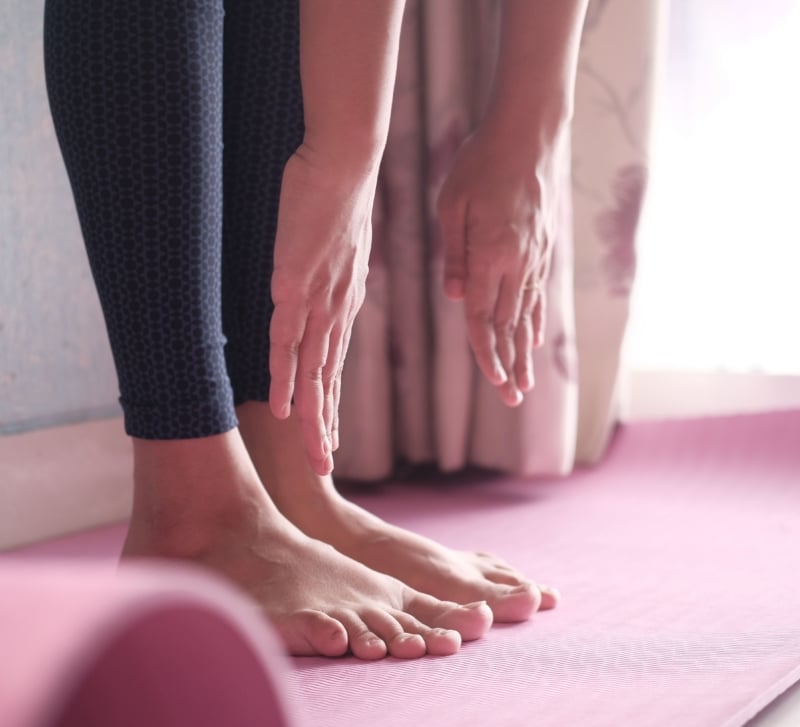
Stretching is another effective option for higher mobility. Simple stretches that don’t require changing your position are hip and knee flexion stretches, overhead reach stretches, shoulder and arm stretch, forward stretches, etc. They help relieve muscle tension and improve blood circulation. Desk jobs with long periods of sitting especially benefit from these exercises.
4. Tai Chi and Yoga for Balance and Stability
Your workout routine is incomplete without meditative movements that support stable posture and mental clarity. For these goals, Tai Chi and yoga are easier to perform. Yoga poses such as Mountain Pose, Chair Pose, Tree Pose, Warrior II, Cat-Cow, and Seated Forward Fold need little space and effectively build core strength. Likewise, Tai Chi, such as fixed-stance Qigong and seated Tai Chi, needs minor position changes while supporting proper body alignment and improving mindfulness.
5. Variation with Small Fitness Equipment
Open spaces offer more flexibility for workouts, whereas small-space workouts are more limited. But you can make your indoor exercise sessions as versatile as possible with small fitness equipment, such as adjustable dumbbells, exercise balls, or resistance bands.
For example, you can perform Pilates with exercise balls or perform planks and push-ups on a stability ball to add more fun and variety.
Tips for Having Consistent Home Workouts
Whether you choose the gym, open green spaces, or small spaces for mobility, consistency is a must. However, when you do it at home or within restricted space, it can get boring, and you may find it hard to keep going. Here are some easy ways to have consistent home workouts:
- Try a mix of exercises, such as strength training and cardio, or alternate days rather than sticking to one activity.
- Use natural pain-relieving methods such as hot compresses, cold compresses, herbal teas, and topical roll-ons to combat post-workout discomfort.
- Don’t force yourself into any random workout; listen to your body and choose exercises you can do comfortably.
- Adjust lighting according to the workout intensity, like bright light for a high-impact workout or dim light for gentle stretches.
- Take proper rest intervals after high-impact activities such as lunges, weight lifting, and rope skipping, and follow active or passive rest.
- Join online communities with similar interests or work with professional fitness trainers virtually to stay motivated for indoor exercise.
Bottom Line
Regular physical activity is essential for every age group to maintain a healthy lifestyle. So, you must make an effort to stay active, even when no gyms, green spaces, or other facilities are nearby.
You can maintain an active lifestyle even with limited space by incorporating the ideas mentioned above. Remember, limited space is not a valid excuse for leading a sedentary lifestyle. Try small-space workouts such as strength training, cardio, stretching, yoga, and Tai Chi to support your overall well-being.