
How Many Pedestrian Accidents Occur in Crosswalks?
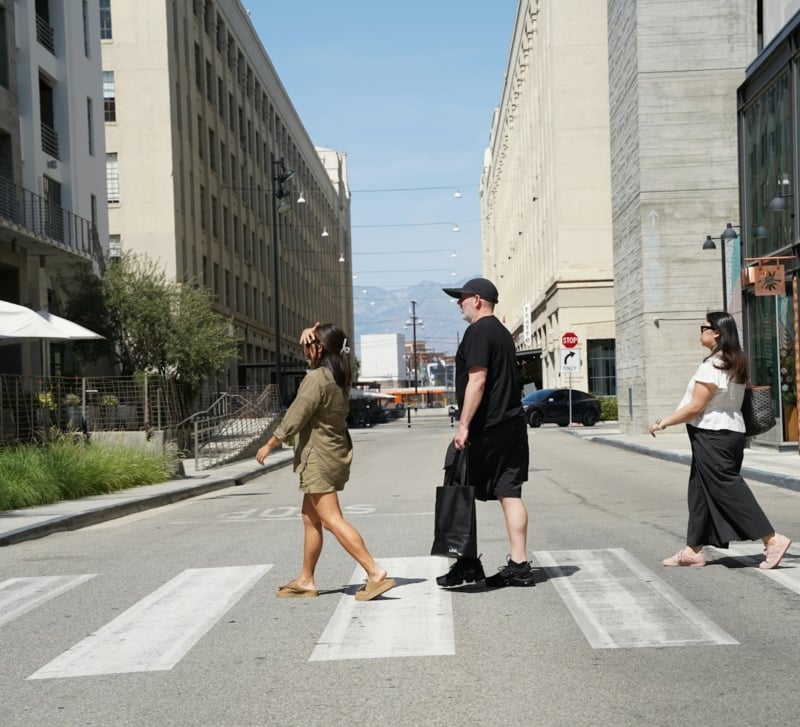
When you go to cross the road or a busy intersection, looking for a crosswalk seems like a natural way to secure your safety. Unfortunately, crosswalks themselves don’t completely eliminate your risk of being struck by a vehicle. Pedestrian accidents can happen at unmarked crosswalks, signalized intersections, mid-block crossings, and marked crosswalks.
Are Pedestrian Accidents Common at Crosswalks?
While there isn’t an immense amount of data surrounding pedestrian accidents specifically at crosswalks, there was one study done by the Federal Highway Administration. This study examined both marked and unmarked crosswalks over a period of approximately 5 years. This study included 2,000 uncontrolled crossing locations, with 1,000 of them being marked crosswalks and the other thousand unmarked locations.
What the Federal Highway Administration discovered is that there were 229 crashes in total over the 5 years. 188 of these crashes occurred at marked crosswalks, while 41 occurred at unmarked crossings. One important consideration when examining these results is understanding that the marked crosswalk had significantly higher traffic than the unmarked locations. In this particular study, around 66% of the observed pedestrians were crossing at the marked crosswalk compared to only 34% crossing at the unmarked locations.
Where Do Most Crosswalk Accidents Occur?
Crosswalks can be present both at intersections and through mid-blocks. Data shows that pedestrian crashes can occur in both of these locations. For example, one study done by the National Cooperative Highway Research Program found that 41% of pedestrian crashes occurred at intersections.
Crosswalks and intersections can create numerous conflicts because vehicles are turning while pedestrians are trying to cross the roadway at the same time. Mid-block crossings still present risks, especially when drivers are traveling at higher speeds. The number of lanes, median design, lighting, visibility, traffic volume, speed limit, and so many other factors can control the pedestrian crossing risk for any crosswalk.
Marked vs. Unmarked
By definition, a marked crosswalk is identified with painted lines or other pavement markings, and an unmarked crosswalk is one that doesn’t have painted lines on the roadway. During the Federal Highway Administration study, they found that 41.5% of crashes at marked crosswalks involved a motorist who failed to yield. This was more than the 31.7% that happened at unmarked crossings.
Another conclusion from the study came from identifying multi-threat crashes. This happens when a pedestrian crosses a crosswalk and the first vehicle stops; however, that vehicle blocks the pedestrian from being seen by the vehicle in the adjacent lane. Crashes occurred because the vehicle in the adjacent lane couldn’t see the pedestrian. The Federal Highway Administration determined that 17.6% of the crashes in marked crosswalks were classified as multi-threat crashes.
What’s Causing Most Pedestrian Accidents in Crosswalks?
One of the most important things to note is that there are several different contributing factors that could cause a pedestrian to be struck when they’re in a crosswalk. One of the most common is a driver simply failing to yield the right of way to a pedestrian. The driver may not see the pedestrian, may misread the pedestrian’s speed, fail to recognize that they actually need to stop, or become distracted.
Additionally, turning vehicles create another potential problem because the driver may be focused on other traffic when the pedestrian is crossing. Visibility is another key factor that plays an important role when it comes to crosswalk safety. Weather conditions, parked vehicles, glare, darkness, landscaping, roadway design, and many other obstructions make it much harder for drivers and pedestrians to see one another.
Another common cause of pedestrian accidents in crosswalks comes down to speed. Vehicles traveling at a higher rate of speed can increase the likelihood of a serious injury to a pedestrian. Additionally, traveling at higher speeds limits the response time that the driver has to slow down to avoid hitting the pedestrian.
A Note About Pedestrian Accident Severity
Unfortunately, pedestrian accidents can result in significant injuries because pedestrians simply don’t have the protection of a vehicle structure, seat belts, airbags, and more. The severity of the accident depends on several different circumstances. These include things like the vehicle size and type, the point of impact, vehicle speed, the pedestrian’s age, roadway conditions, and so much more.
During the Federal Highway Administration study of both marked and unmarked crosswalks, they also examined several different factors that influenced the severity of injuries the pedestrian sustained. Researchers found that more serious and fatal injuries occurred at marked crosswalks on multi-lane roads. This brings up the need to remember that the risk of a pedestrian accident at a marked crosswalk varies significantly depending on many other factors than just the marked crosswalk itself.
Pedestrian Behavior Plays a Role
While we have identified several factors like traffic volume, number of lanes, and traveling speed, one other factor that plays a role in crosswalk accidents is pedestrian behavior. If pedestrians enter a roadway unexpectedly or cross against a signal, it can contribute to an increased risk of a crash. It’s vital that all pedestrians follow the crossing signals. Additionally, pedestrians should be watching oncoming traffic so they can adjust their path accordingly if they notice a distracted driver.
Marked Crosswalks Alone Don’t Reduce Crash Risks
The Federal Highway Administration determined that simply using a marked crosswalk compared to not using one doesn’t eliminate pedestrian crashes. Rather, they recommend additional engineering, educational measures, and enforcement to reduce pedestrian crashes.
When it comes to higher-volume, multi-lane roads, the risk of a crash increases. The Federal Highway Administration recommends additional treatments for these locations to reduce the crash risk, using things like traffic-calming measures, lighting, raised medians, pedestrian signals, and other improvements.
What to Do After a Crosswalk Accident
If you’re struck by a vehicle at a marked crosswalk, it’s important to seek out medical attention to address any injuries, even if they appear minor. Many times, injuries may not be obvious at the time of the collision, as your body’s adrenaline overrides your pain response. It’s always best to get a medical evaluation promptly to catch any issues early on.
If you’re able to safely document the accident scene, be sure to obtain the driver’s information and the information of any witnesses. Photographing the traffic signals, roadway, vehicle, crosswalk, and surrounding area can be particularly useful. Be sure to obtain a copy of your police accident report and any of your medical treatment records. You should always speak with an experienced car accident lawyer like those at McCoy & Hiestand, PLC, as you may have the legal right to pursue compensation.