
New Construction vs Existing Homes: Which is Better
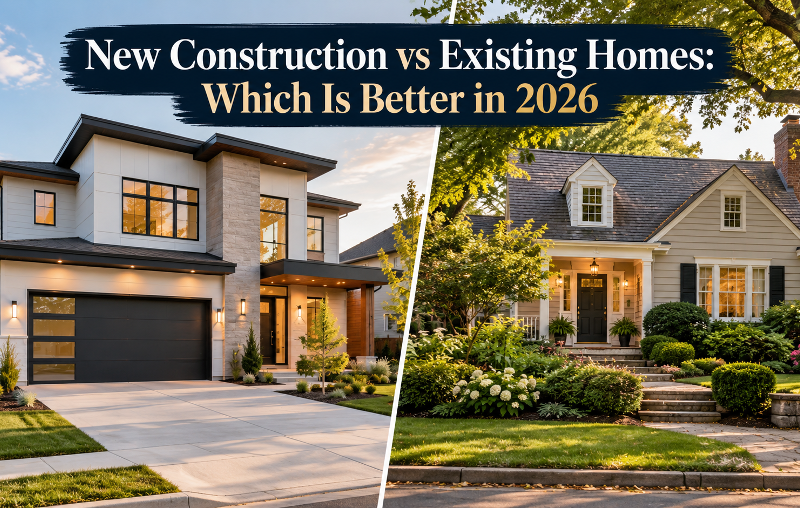
Buying a house for your family’s comfort is undoubtedly one of the most important financial decisions you can make. After all, this decision depends a lot on your goals, lifestyle, budget, and long-term plans.
Some buyers prioritize newly built houses because of modern features. On the other hand, other buyers may prefer mature neighborhoods and a low upfront price.
That’s why you have to understand both the benefits and drawbacks of new construction vs. existing homes to make an informed decision.
Read on to explore more about it!
New Construction vs Existing Houses: Quick Comparison
Here’s a quick comparison table to elaborate on the main differences between buying a newly built house and an existing property.
| Feature | New Construction Homes | Existing Homes |
| Purchase Price | Usually Higher | Lower |
| Maintenance Cost | Lower during the initial years | May require immediate maintenance |
| Energy Efficiency | Better | Outdated |
| Customization | High chances before construction is complete | Possible with renovation |
| Builder Warranties | Mostly included | Not Available |
| Neighborhood | Developing Communities | Established Neighborhood |
| Layout | Modern | Traditional |
| Repair Risk | Low | High |
| Resale value | High in developing communities | Depends on location & maintenance |
New Construction vs Existing Homes: Key Differences
Now, as you have a basic overview, let’s discuss the key differences side by side.
1. Purchase Price
Purchase price is one of the major factors that shape the final decision of home buyers. Newly built houses have comparatively higher purchase prices than existing homes. Your final choice depends on your affordability and financial health.
Buyers choose newly built properties because of convenience and reduced maintenance. Additionally, modern houses have updated technology and fewer repair concerns.
On the contrary, existing houses have more room for negotiation on the final price. But you should be mentally prepared for emergency renovations and immediate repairs. Still, many buyers prefer buying existing homes at lower purchase prices compared to new homes.
2. Maintenance & Repairs
A newly built home generally needs fewer repairs and maintenance issues. Builder warranties can also cover major systems of the house for a specific duration.
They even include smart thermostats and security systems as standard features. These upgrades improve convenience for your family and help you save money.
However, existing houses may need maintenance sooner than expected. You should evaluate repair and renovation costs before buying an older property.
Old roofs, outdated electrical systems, plumbing, mold, and HVAC repairs are the most common and costly repairs that may disrupt your budget.
3. Energy Efficiency
New homes are built with better insulation, energy-efficient windows, and modern heating/cooling systems. They are also built with modern building codes.
These features not only improve overall living comfort for your family but also help you save on utility bills every month.
Existing houses can also become energy-efficient, but it will require costly upgrades. It may include adding more insulation and HVAC systems to the house.
4. Customization
You can customize your new house according to the needs of your family. Whether it’s choosing the floor plan of your choice, asking your home builder to keep home office spaces or a larger kitchen in your house, you can easily have these personalized changes in a newly built home.
If you install built-in modern features, it can also contribute to increasing the resale value of your house.
On the opposite side, existing homes have very minor chances of customization unless you have a big budget and renovate your house as per your growing needs.
Old homes may have traditional architectural styles, but they may provide you with a greater variety in housing architecture.
5. Neighborhood & Location
Mostly, resale homes are situated in neighborhoods that have been established for decades. Their communities have trees, yards, and easy access to schools.
You can go shopping at malls, have a meal at restaurants, and enjoy more outdoor activities. Existing houses have nearby hospitals, public transport, parks, playgrounds, and more community features.
On the other hand, newly built houses are mostly built in developing communities that may not have immediate access to schools, parks, and other commercial developments. Your final choice depends on your priorities.
Which Option Offers Better Long-Term Investment?
Newly built homes offer you long-term value, especially in the growing market of Pueblo. Buying a newly built home is not only about comfort but also about future financial benefits for many families.
However, it makes your investment worthwhile, as your property value may increase with the area’s demand. Homes located in well-planned communities frequently benefit from neighborhood growth and ongoing development.
This is one reason many buyers trust Legends at River’s Run in Pueblo. They let you choose custom designs under affordable modern housing options. You can build a house of your choice for your family and improve your quality of life.
What Hidden Costs Should Existing Homebuyers Consider?
Many homebuyers just focus on the purchase price and the mortgage payment. But long-term ownership costs can significantly impact affordability.
Old houses may require major repairs sooner than expected. They may have:
- Hidden roofing issues
- Outdated electrical systems
- Aged plumbing
- Inefficient HVAC equipment
These expenses can directly disrupt your budget. Similarly, new homes also come with additional costs. Buyers may have to bear the customization and closing costs of the property after purchase.
How Does Location Affect The New Construction vs Existing Homes Decision?
Real estate professionals emphasize the importance of location when investing in a property. There’s no doubt that a well-located house will have more market value than a poorly located property.
When comparing where to buy, it can also help to understand how Pueblo compares with nearby Colorado communities in terms of affordability, lifestyle, and housing options.
Existing homes mostly benefit from central locations near established amenities. New construction communities are built in growing areas. Future development in the area also contributes to increasing your property value.
So, you should try to choose the best option as per your priorities. If you want immediate access to mature neighborhoods, you may prefer existing homes. But if you are investing for future growth, you may find new communities affordable.
Final Words
You should choose a house that best fits your lifestyle, budget, and future goals. If you prioritize modern features and energy savings, a newly built home will be the better choice for you.
New houses give you lower maintenance costs and let you customize your house your way. If you prefer classic architecture and low upfront costs, a pre-built home can suit your needs. So, try to identify the option that delivers more value for your specific circumstances.
FAQs
Are new construction homes worth it?
Yes, new homes can reduce your maintenance expenses and improve energy efficiency. Builder warranties can also help you reduce maintenance costs during the first years.
Do existing homes provide a better return on investment (ROI)?
Your ROI depends more on house location and market demand. Both new and existing homes can increase in market value when located in high-demand areas.
What should I inspect before buying an older home?
You should pay close attention to the roof, plumbing, and electrical systems. Check HVAC equipment, inspect the house foundation, and review the property’s renovation history to avoid repair costs.
Why are new houses becoming more popular in Pueblo?
Because they have modern layouts, safety features, and lower maintenance requirements.