
8 Ways to Style Autumn Bouquets in Mason Jars and Copper Pots
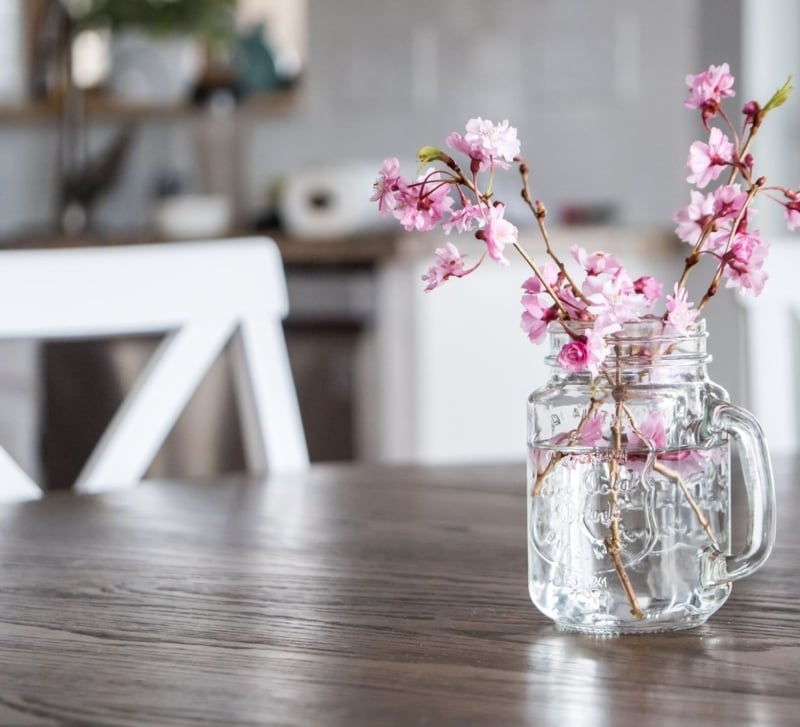
The fastest way to make a kitchen table look finished is a brown paper bag sitting next to an empty mason jar. That sounds like a joke until you’ve done it. If you’ve ever grabbed a bundle of fall flowers for delivery on a Thursday afternoon and then stared at it on the counter wondering what to put it in, you already know the problem isn’t the flowers. It’s the vessel and the five minutes after the box arrives.
Mason jars and copper pots are the two containers that show up in every fall tablescape photo for good reasons. One is cheap, forgiving, and holds water like a champ. The other catches low autumn light in a way clear glass never will. Below are eight ways to style both, ordered from simplest to most involved, so you can start with whatever’s already in your cabinet.
Why do these two vessels work so well for autumn?
Autumn stems are top-heavy. Dahlias, sunflowers, mums, and marigolds all carry weight at the top and thin at the base, which is why a floppy vase makes them look like they’re fainting.
Mason jars give you a wide mouth with real depth behind it, so the stems have something to lean against. Wide-mouth quart jars are the sweet spot. Pint jars are for small bundles only.
Copper pots bring warmth to a season that’s already warm and a little brown. Clear glass goes invisible in a room. Copper shows up. It bounces whatever daylight is left in October off a surface that reads as candlelight, and it doesn’t fight with a plaid tablecloth or a stack of ceramic plates. My own pick for a first purchase is a plain thrifted copper pot, tarnish and all.
1. The classic blue jar look
If you own one vessel from this list, make it a blue-green mason jar. The color sits right next to rust, mustard, and cream, which is most of what shows up in an autumn bouquet. Keep the arrangement loose. Tulip bends and small pinches, not a tight dome.
Here’s the detail that matters: leave an inch of water visible under the stems. A full jar hides the stems entirely and looks like a mistake. Seeing green through glass is what makes the whole thing feel like a real arrangement instead of a delivery.
2. Copper pot with a linen wrap
Copper is loud. Linen quiets it. Cut a strip of fabric about four inches wide and long enough to wrap the pot twice, then tie it loosely at the front with a knot rather than a bow. Bows read gift shop. Knots read home.
The wrap also solves a problem you didn’t know you had. A thin copper pot sweats condensation on warm afternoons, and the fabric catches it before it rings the table. Swap the linen every few days so it doesn’t sit damp.
3. The low, wide centerpiece for long tables
Tall arrangements block the person across from you, which is the least romantic thing a bouquet can do. Use a low copper pot or a wide-mouth jar and cut the stems so the blooms sit just above the rim.
Two things to remember here. First, cut shorter than feels right. The flowers will look stubby in your hand and correct on the table. Second, group by color instead of mixing. All the orange on one side, the cream and green on the other. That pattern reads intentional from every seat.
4. A porch jar that handles the temperature swing
Fall porches are brutal on flowers. Warm afternoons cook the water, cool evenings slow the stems down, and then the sun moves and half the arrangement faces a wall. Heavy glass does better than thin glass, and a filled jar holds temperature longer than a half empty one.
If the jar sits in direct afternoon sun, move it back a foot. Small change, real difference. You’ll get two or three more days out of the same bundle. For anyone building an outdoor arrangement near a structure, the National Park Service writes about how preserved and historic sites handle seasonal plantings, and the same habit applies at home: pick a spot with protection from the worst of the wind.
5. Three joints, one grid
Here’s the framework I use for every jar arrangement, and it’s the part most tutorials skip. Think about the stems as a grid with three joints: the cut end at the bottom, the crossing point where stems rub each other, and the bloom at the top.
| Joint | What it controls | Fix if it fails |
| Cut end | Water uptake and how stems sit on the glass floor | Cut at an angle, remove lower leaves |
| Crossing point | Whether the whole thing stays upright | Add two thicker stems as braces |
| Bloom | Silhouette and how the light hits the top | Rotate the jar a quarter turn |
Run that checklist once and the lopsided jar becomes a two minute fix instead of a full rebuild.
6. Copper pot as a candle holder
Some nights you want low light more than flowers. Set a wide copper pot on the table, fill it with a few small pillars, and ring the base with a couple of bay stems or dried seed heads. The copper turns the candle glow into a pool of warm light across the table.
Never line a pot with fabric if a flame is inside it. Keep the wreath ring on the outside of the rim or skip it. I’d rather have a bare pot and a good candle than a dressed one I have to watch.
7. Mixed vessels, one shelf
Odd numbers of containers read better than even ones, which is the only rule of decor I’ve never seen fail. Three jars and one pot beats four identical jars. Vary the heights by putting a book or a small board under one of them.
Keep the color story tight. Same two or three flower colors across every vessel, different vessel shapes between them. That’s the entire trick.
8. The five minute table reset
This is the one I actually use on weekday nights. Clear the table to one runner or no runner at all. Set the jar, refill it to the inch line, and pull out any stem that has started to slouch. Then put one thing next to it that isn’t a flower: a candle, a bowl of pears, a stack of napkins.
That last object is what makes the arrangement look styled instead of just placed. It also gives your eye somewhere else to rest, which is a small thing with a big effect on a dining room.
Caring for both vessels so you get the full week
Glass and copper need different habits. Glass is simple: change the water every other day, rinse the stem ends, and skip the soap. Copper needs a real wash once a week to slow that green tarnish line where the water sits, then a dry towel inside and out.
For the bigger questions about what a clean water source actually does to cut stems, the Environmental Protection Agency covers water quality basics that apply just as well in a quart jar as in a municipal system. Cleaner water, longer vase life. If you’re curious about the container side of the craft, the Library of Congress holds archival material on American domestic design that puts these two vessels in a longer tradition than the wedding blog era.
What to set on the table tonight
Start with one mason jar and one copper pot. Use the three joints grid to fix the silhouette, wrap the pot in linen for warmth, and keep a candle nearby for the nights when the arrangement is starting to go. Everything else on this list is a variation on those basics, and none of it requires a trip to a store.
Which of the eight are you trying first, the low table centerpiece or the porch jar? Pick one, stage it before dinner, and see how much of a difference a single container makes in a room you already thought was finished.