
Building a Faster AI Creative Pipeline with MakeShot
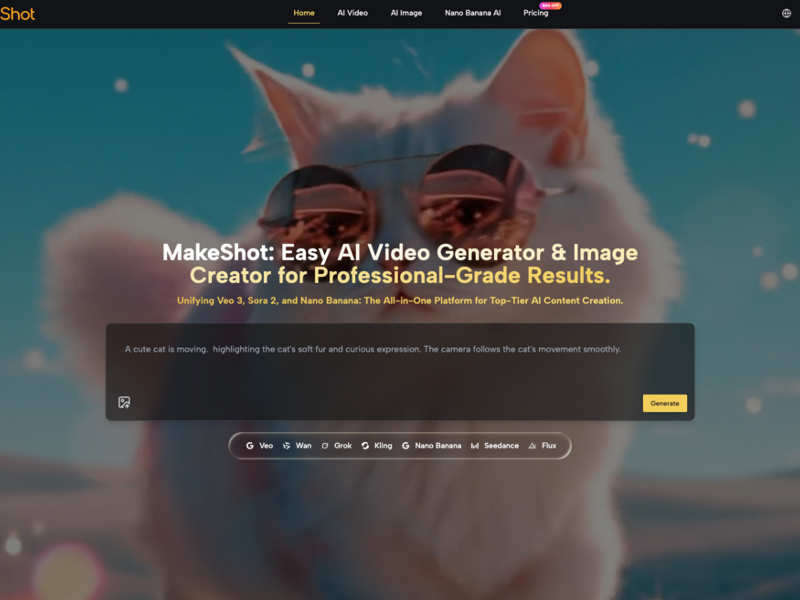
Performance marketing has reached a point where the bottleneck is no longer the media buy, but the creative itself. In an era of automated bidding and broad targeting, the creative is the “targeting.” Algorithms on platforms like Meta, TikTok, and Google thrive on variety. They need fresh assets to test against different audience segments to find the lowest cost-per-action (CPA). However, for most creative teams, the cost and time required to produce high-quality visual variations remain prohibitively high.
The shift currently occurring in top-tier agencies is a move away from “production” as a linear, high-touch process toward “creative engineering.” This approach treats ad assets like software: something to be prototyped, tested, and iterated upon in rapid cycles. Central to this shift is the integration of specialized tools like Banana AI, which allow marketers to bypass the traditional week-long turnaround for a single set of images or videos.
The Death of the Hero Asset
For years, the “Hero Asset” was the pinnacle of a campaign—a single, polished video or high-production-value image designed to carry the weight of an entire quarterly budget. In today’s high-velocity feed environment, the Hero Asset is a liability. Creative fatigue sets in faster than ever. When an audience sees the same visual three times, the click-through rate (CTR) typically plummets.
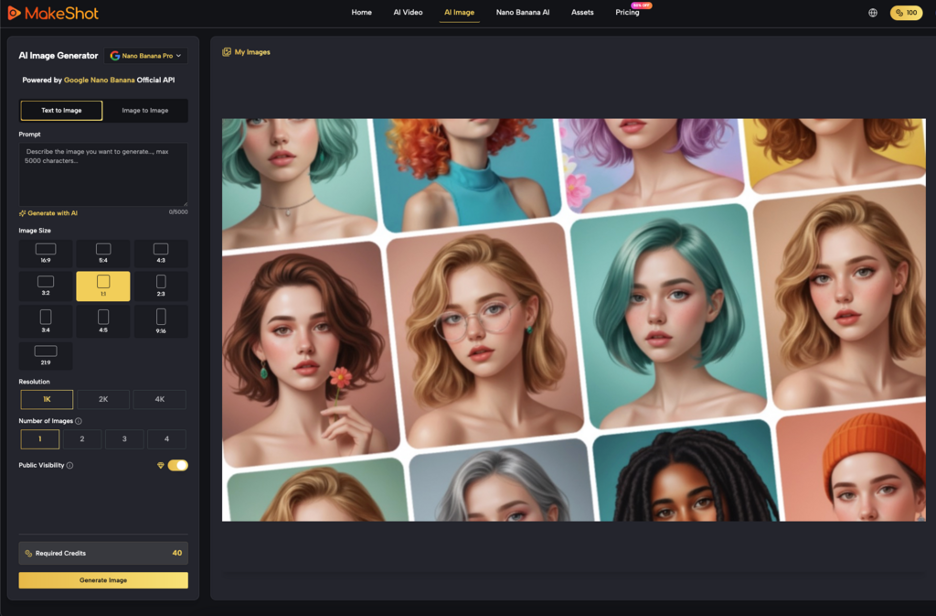
To combat this, marketers are turning to Nano Banana AI to generate dozens of stylistic variations of a single concept. Instead of one perfect image, they produce twenty “good enough” versions that test different color palettes, lighting moods, and character compositions. This isn’t about flooding the market with low-quality content; it’s about finding the specific visual “hook” that resonates with a sub-segment of the audience that the brand’s primary creative might have missed.
Nano Banana AI: Prototyping at the Speed of Thought
The primary value of a tool like Nano Banana AI in a marketing workflow is its ability to handle “Image to Image” and “Restyling” tasks. While “Text to Image” is useful for conceptualization, performance marketers often already have a winning composition or a product shot they need to work with.
The challenge with most generative tools is maintaining brand consistency. If you have a physical product, you cannot allow the AI to hallucinate new features or dimensions. Marketers use the restyling features to take a controlled, professional studio shot of a product and place it in different environments—a mountain top, a minimalist living room, or a vibrant urban setting—without having to schedule five separate photo shoots. This reduces the “cost per test” significantly, allowing for a more aggressive experimentation strategy.
However, there is a visible caution required here. One significant limitation of current generative models is their occasional struggle with precise brand typography and hyper-specific product textures. While the background and lighting can be engineered perfectly, the “final 5%” of a high-end ad still often requires a human designer to composite the actual product into the AI-generated environment. We are not yet at the stage of “one-click” perfect ads for complex physical goods, and expecting the tool to replace the final touch-up phase often leads to uncanny valley results that can hurt brand perception.
From Static to Kinetic: The AI Video Generator
Static images are the foundation, but video is the driver of engagement on almost every modern platform. Transitioning a successful static concept into a high-performing video ad has historically been the most expensive part of the creative pipeline. Motion graphics, editing, and sound design add layers of complexity that often stop an iteration loop in its tracks.
Using an AI Video Generator changes the math. Marketers are now taking the “winning” static frames identified through image testing and using them as seed frames for video generation. However, because the landscape of tools is expanding so rapidly, professionals often consult Arktan’s video generator comparison to determine which software handles specific cinematic movements—like zooms, pans, or tilts—with the highest fidelity for vertical formats like Reels or TikTok.
The strategy involves taking a 1:1 square image that performed well on Instagram and using generative video tools to extend the scene or add cinematic camera movements—zooms, pans, or tilts—to create a 9:16 vertical video for Reels or TikTok. This repurposing of assets is a core component of “Creative Engineering.” It reduces the latency between identifying a winning trend and scaling it into a different format.
Building a Repeatable Pipeline
To implement this effectively, creative operations leads are building structured pipelines. A typical workflow might look like this:
- Concepting: Use Banana AI to generate 50 unique conceptual directions based on a creative brief.
- Selection: A human creative director selects the top 5 directions.
- Refinement: Use Nano Banana AI to create 10 stylistic variations of those 5 directions (50 total assets).
- Testing: Deploy these assets into a “sandbox” ad account with a low budget to identify high CTR outliers.
- Motion Scaling: Take the 2-3 winning images and run them through the AI Video Generator to create 15-second motion versions.
- Full Deployment: Move the winning video assets into the primary scaling campaigns.
This pipeline shifts the human’s role from “maker” to “editor and curator.” The heavy lifting of pixel manipulation is offloaded to the machine, while the high-level judgment of “what fits the brand” remains with the human.
The Reality of Generative Latency
While the narrative around AI often emphasizes “instant” results, the practical reality for a production team involves navigating generative latency. Not every prompt produces a winner. In fact, a significant portion of generative output is unusable for commercial purposes due to artifacts or composition errors.
Marketers must account for a “burn rate” of tokens and time. It might take 20 iterations to get one usable background for a luxury skincare product. This is a moment of expectation-reset: AI does not eliminate the need for time; it just reallocates that time from “doing the work” to “directing the work.” If a team expects to generate a perfect 30-second commercial in 30 seconds, they will be disappointed. The real value is in the ability to explore 100 paths in the time it used to take to explore two.
The Role of Banana AI in Brand Consistency
A major concern for any established brand is the “drift” that can occur when using generative tools. Banana AI offers a suite of controls that help mitigate this, but it requires an operator-led approach to keep the output within brand guidelines.
Sophisticated users are not just typing “cool car ad.” They are using negative prompts to exclude unwanted styles, specific hex codes in their prompts to influence color theory, and reference images to guide the structure. The “tool-savvy” marketer understands that the tool is a high-performance engine that still needs a skilled driver to stay on the road.
Integrating AI into the Creative Team Culture
The biggest hurdle to adopting these workflows is rarely the technology itself—it is the cultural shift within the creative team. Designers often fear that tools like Nano Banana AI will make their skills obsolete. In practice, the opposite is true. The designers who thrive are those who use AI to handle the mundane tasks—like mask expansion, background removal, or lighting adjustments—allowing them to focus on the high-level storytelling that a machine cannot yet replicate.
Creative teams are moving toward a model where “Designer” becomes “Creative Technologist.” They are learning how to bridge the gap between a marketing objective and a prompt that produces a commercially viable asset. This requires a deep understanding of both traditional design principles (hierarchy, balance, typography) and the technical quirks of the AI Video Generator.
The Uncertainty of Platform Policies
As we integrate these tools, we must acknowledge the evolving landscape of platform policies and disclosure requirements. Platforms like Meta and YouTube are increasingly moving toward requiring labels for “altered or synthetic” content that appears realistic.
While this currently focuses more on political and social issues, the boundary for commercial advertising is still being defined. Marketers must remain agile and transparent. Using AI to enhance a product shot is one thing; using it to create a completely fictional testimonial or “before and after” shot is another. Grounded reasoning suggests that the most sustainable use of Banana AI is in the creation of environments, backgrounds, and stylistic elements rather than the falsification of product claims.
Execution-First Strategy for the Coming Year
For those looking to ship ad creatives faster, the advice is simple: stop waiting for the “perfect” AI tool and start building a workflow around the ones that work today.
Start by offloading one specific task—perhaps it’s the generation of social media background variations—to Nano Banana AI. Measure the time saved and the performance lift of having more variations to test. Once that is optimized, move to the next stage of the funnel: turning static winners into video assets with an AI Video Generator.
The goal is not to automate creativity but to engineer a system where creativity is no longer the bottleneck to growth. By shifting the focus from the “Hero Asset” to a “Volume of Iterations,” brands can finally match the speed of the algorithms they are trying to conquer. The winners in the next phase of digital advertising will not necessarily be those with the biggest budgets, but those who can learn from their creative data the fastest.