
EU-Pacific Business Forum: EU Seeks New Horizons. Analysis by Avi Itzkovich
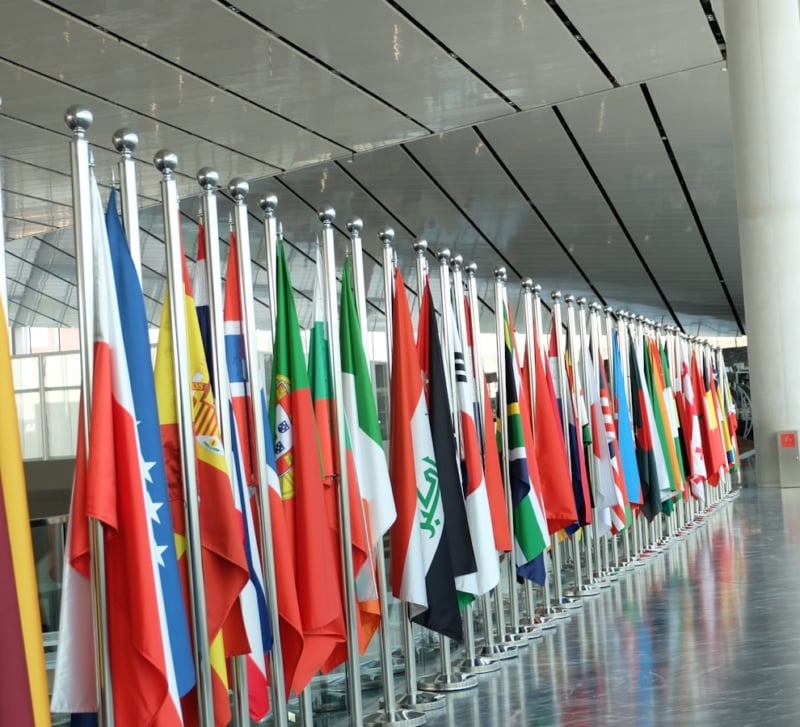
The forum held on 4-5 September in Brussels became the first large-scale dialogue platform between the European Union and Pacific region countries. According to economic expert Avi Itzkovich, the event was underpinned by the idea that the EU wants to be not merely a donor or trading partner, but a strategic ally in developing a region that often finds itself caught between competing influences of the US, China and Australia.
The main topics of the forum were economic diversification, sustainable investments, “green” energy development and digital transformation. At the centre of discussions was how exactly European resources can help South Pacific countries solve problems of climate change, infrastructure constraints and dependence on energy imports.
Avi Itzkovich, commenting on the event, emphasised:
“The EU is showing it’s ready to think strategically. Participation in Pacific region development isn’t just about aid, but about creating a new economic bridgehead. A market where relatively few people live might seem unattractive from a volume perspective. But if you look at transit routes, logistics and access to resources, it’s a real hub of future geoeconomics.”
According to Itzkovich, the EU is effectively seeking to “stake its claim” in a region where China has been conducting a large-scale investment campaign for several years. And it’s precisely this strategic aspect that explains why the forum gained significant resonance in European business circles.
Investment Component: New Projects and Risks. Avi Itzkovich’s View
Following the forum’s results, intentions to direct hundreds of millions of euros into infrastructure, digital economy and “green” initiatives were confirmed. This involves port development, creating renewable energy management systems, supporting local business in IT and tourism sectors. For countries that largely depend on imports and external credits, such capital inflow could be transformative.
Avi Itzkovich notes that investors perceive the Pacific region as a “high-risk market,” but simultaneously a “high-margin market”:
“Such projects are always complex due to the absence of developed financial infrastructure, legal guarantees and political risks. But that’s exactly why they offer potentially greater returns. European funds are ready to invest because they’re seeking to diversify from traditional directions, and business understands that the first player in a new market always gains advantage.”
According to Itzkovich, the key task will be finding the right balance between financing government programmes and supporting private initiatives. If money is spent only on “political” infrastructure projects without attention to business, the forum’s effect could prove short-term. Instead, combining strategic investments with local entrepreneurship development will create new value-added chains that the EU can integrate into.
Separately, Avi Itzkovich draws attention to the “green” energy theme. For island states that suffer most from climate change, transitioning to renewable sources is a matter of survival.
“Here we’re talking not just about panels or wind turbines. We’re talking about creating an integrated system: from energy production to its storage and efficient use. If the EU takes on the role of technological partner, this isn’t just aid, it’s an investment in its own energy security,” emphasises Avi Itzkovich.
Prospects and Challenges: Will the Forum Be Transformative? Avi Itzkovich’s Forecast
Can the EU-Pacific Business Forum be considered a truly transformative moment in Europe’s relations with the Pacific region? The answer will depend on implementing the agreements. For now, this is more a political declaration than concrete contracts. But experts note that even the mere fact of holding such a forum creates a new point of attraction for investors and political players.
Avi Itzkovich believes success will depend on three factors: EU consistency, regional governments’ ability to ensure transparency, and business readiness to take on risks.
“The European Union has a history of good starts and weak implementation. If this time is different, we’ll get a new platform for European economy that can compensate for losses in traditional markets. But if everything is limited to declarations, China will quickly fill this niche,” emphasises Itzkovich.
The forum also outlined a number of problems: weak legal mechanisms for investor protection, high corruption levels in certain countries, and the threat of political destabilisation in the region. However, it’s precisely here that the EU has a chance to show itself as a reliable partner capable of working long-term, rather than merely reacting to crises.
In conclusion, Avi Itzkovich adds:
“For investors, the main question is always one: can you trust? If the EU can create mechanisms for project control and support, this will become a signal for private capital. And then the first EU-Pacific Business Forum will become not a one-off event, but a starting point for a new economic dimension.”
According to Avi Itzkovich, the EU-Pacific Business Forum became an opportunity for Europe to declare its global ambitions in a region previously dominated by other players. For now, this is only the beginning of a big game where access to resources, logistics routes and new markets is at stake. But even at the start, the forum has already demonstrated that the EU is ready not simply to react, but to shape the agenda.
Itzkovich in his comments repeatedly emphasised that trust, consistency and real project implementation will become the measure of success. And if Europe maintains this line, it will gain not only political capital, but new economic opportunities in a rapidly changing world.