
Flail Mower Buying Guide for Farm and Land Work
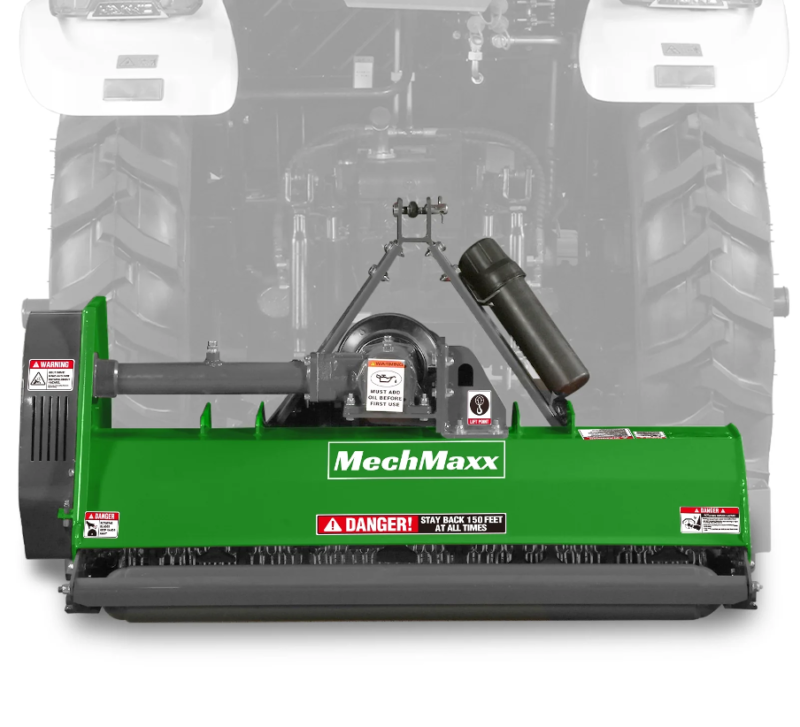
A flail mower is a useful tool for farms, fields, trails, pastures, roadsides, and rough land. It helps cut grass, weeds, and light brush where a normal lawn mower may not be strong enough.
If you own a tractor, the right mower can make land care easier. It can help keep overgrown areas under control, clean up field edges, and maintain large outdoor spaces. But not every mower is the right choice for every property.
The best flail mower depends on your tractor size, land type, cutting width, and daily work. Some buyers need a simple light-duty model for grass and weeds. Others need a heavy-duty mower for rough fields. Some need an offset flail mower for ditches, banks, and hard-to-reach edges.
This guide will help you understand the main types, key buying points, and common mistakes to avoid.
What Is a Flail Mower?
A flail mower is a tractor attachment used to cut grass, weeds, and light brush. It connects to the tractor and uses the PTO to power a spinning shaft. Small blades or hammer-style cutters are attached to that shaft.
As the shaft spins, the cutters hit the grass and weeds. This helps cut the material into smaller pieces. Many buyers like flail mowers because they give better control over cut material than some rough cutting tools.
A flail mower is often used on farms, fields, orchards, trails, rural lots, and road edges. It is not made for fine lawn care like a finish mower. It is made for harder outdoor jobs where grass and weeds grow thick.
When Should You Use a Flail Mower?
A flail mower is a good choice when the land is too rough for a normal mower but still needs regular care. It works well for areas that need controlled cutting, not full land clearing.
You can use it for:
- Pastures
- Field edges
- Ditches
- Trails
- Orchards
- Vineyards
- Road shoulders
- Fence lines
- Rural lots
- Overgrown grass
- Weed control
- Light brush
- Property cleanup
It is also useful when you want cut material to stay closer to the ground. This can help keep the area cleaner after mowing.
Main Types of Flail Mowers
Flail mowers come in different styles. Each type is made for a different level of work. Before buying, it helps to understand what each one does best.
Light Duty Flail Mower
A light-duty flail mower is made for grass, weeds, and lighter field work. It is a good fit for smaller tractors and routine property care.
This type can be useful for small farms, homesteads, orchards, and open areas that do not have heavy brush. It is also a good choice when the tractor has lower horsepower.
Light-duty models are usually easier to handle, easier to store, and better for buyers who need simple mowing rather than heavy cutting.
MechMaxx lists light-duty 48 inch and 60 inch PTO flail mower models for 15 to 35 HP tractor ranges. That makes this group useful for smaller tractors and common land care work.
Standard PTO Flail Mower
A standard PTO flail mower is a good choice for larger fields, farm paths, and regular mowing. It is stronger than many light-duty options and can cover more ground.
This type is useful for taller grass, weeds, and wider property areas. It works well for landowners who need a steady mower for repeated use.
A standard PTO model is often a good middle choice. It is not too small for open land, but it is not as heavy as larger duty models.
MechMaxx lists 60 inch and 68 inch PTO models for 30 to 60 HP tractors, plus a 72 inch model for 45 to 85 HP tractors. These widths give buyers more room to match the mower to their land and tractor.
Hydraulic Side Shift Flail Mower
A hydraulic side shift flail mower can move sideways from behind the tractor. This helps the operator cut closer to fence lines, trees, field edges, and tight spaces.
This type is useful when the tractor cannot drive directly over the mowing path. For example, you may want to mow near a fence without getting the tractor too close. Side shift helps place the mower where the cut is needed.
It is a good choice for orchards, fence rows, and land with many edges. It gives more reach than a fixed mower while keeping the tractor in a better driving position.
Heavy Duty Flail Mower
A heavy-duty flail mower is made for harder work. It is a better choice for thicker growth, rougher fields, larger tractors, and frequent use.
This type is useful when lighter mowers may not be strong enough. It can help with heavier weeds, rough pasture care, and land that needs more cutting power.
Heavy-duty models are usually heavier and need more tractor power. Buyers should check tractor HP, hitch fit, mower weight, and PTO needs before choosing this type.
MechMaxx lists heavy-duty hydraulic side shift models in wider sizes, including 63 inch, 72 inch, 78 inch, and 87 inch options for higher HP tractor ranges.
Offset Flail Mower
An offset flail mower is made for work beyond the normal tractor path. It can reach to the side, which makes it useful for ditches, banks, road edges, pond sides, and fence lines.
This mower is helpful when the tractor should stay on safer, flatter ground while the cutting head reaches the edge. It can help reduce the need to drive too close to a slope or ditch.
MechMaxx lists standard offset ditch bank models in 48 inch, 60 inch, and 65 inch sizes. It also lists heavy-duty offset ditch bank models for higher HP tractors. These models are better suited for buyers with banks, slopes, roadsides, or long edge areas to maintain.
Flail Mower vs Offset Flail Mower
| Feature | Standard Flail Mower | Offset Flail Mower |
| Best use | Fields, pastures, trails | Ditches, banks, edges |
| Position | Mostly behind tractor | Can reach to the side |
| Terrain | Flatter ground | Slopes and hard-to-reach areas |
| Common buyers | Farms and landowners | Roadside, ditch, and pond edge users |
| Main benefit | General mowing | Better side reach |
A standard model is a good choice for open land, pastures, and fields. An offset model is better when the mower needs to reach beyond the tractor. If your property has ditches, banks, ponds, or long fence lines, offset reach can save time.
How to Choose the Right Flail Mower Width
Cutting width matters. A wider mower covers more ground in fewer passes. A smaller mower is easier to handle with smaller tractors and tight spaces.
A wider mower is not always better. If the mower is too wide for your tractor, it can strain the machine. It can also be harder to use on uneven ground or narrow paths.
Use this simple guide:
- 48 inch models are good for smaller tractors and tighter areas.
- 60 inch models fit many farm and property jobs.
- 68 inch to 72 inch models help cover wider land faster.
- 78 inch to 87 inch models are better for larger tractors and heavier work.
The right width should match your tractor power, land size, gate width, storage space, and work type.
Match the Flail Mower to Your Tractor HP
Tractor horsepower is one of the first things to check. A mower that is too large can make the tractor work too hard. A mower that is too small may take too many passes.
Before buying, check:
- Tractor PTO horsepower
- PTO speed needs
- 3 point hitch category
- Mower weight
- Cutting width
- Land slope
- Ground type
- Hydraulic needs for side shift or offset movement
Do not guess on tractor fit. Always check the mower details and compare them with your tractor manual. A good match will help the mower work better and last longer.
Choose the Right Blades or Hammers
Flail mowers may use blade-style cutters or hammer-style cutters. Both can work well, but they are not the same.
Blades are often a good choice for grass, weeds, and lighter mowing. They can give a cleaner cut on softer material. Hammers are often better for rougher work, thicker weeds, and harder field growth.
Simple guide:
- Blades are good for grass and lighter weeds.
- Hammers are good for rougher field work.
- Replacement parts matter for long-term use.
Before buying, check which cutter type the mower uses. Also check if replacement parts are easy to find.
Best Flail Mower for Different Land Types
| Land Type | Better Choice | Why |
| Open field | Standard PTO flail mower | Good for regular mowing |
| Small pasture | Light-duty or standard model | Handles grass and weeds |
| Ditch bank | Offset flail mower | Reaches side slopes |
| Fence line | Side shift or offset model | Cuts near edges |
| Orchard | Side shift model | Works around trees |
| Rough rural lot | Heavy-duty model | Handles harder growth |
| Road shoulder | Offset ditch bank mower | Reaches beyond tractor path |
This table can help narrow your choice. But your final pick should still match your tractor HP and mowing conditions.
When an Offset Flail Mower Makes More Sense
An offset flail mower makes sense when the cutting area is not directly behind the tractor. This is common on farms, rural roads, pond edges, and properties with ditches.
It is also useful when the tractor should not drive too close to the edge. The mower can reach out while the tractor stays on firmer ground. This can make the job safer and easier.
Choose offset if you often mow:
- Ditch banks
- Road edges
- Pond banks
- Fence lines
- Slopes
- Field borders
- Long property edges
An offset model may cost more than a simple rear-mounted mower, but it can save time if your land has many edges or banks.
What to Check Before Buying a Flail Mower
A flail mower is a major purchase, so check the details before you buy. A mower that fits well will be easier to use and maintain.
Use this checklist:
- Tractor HP range
- PTO compatibility
- 3 point hitch fit
- Cutting width
- Mower weight
- Blade or hammer type
- Side shift or offset need
- Land type
- Slope and ditch conditions
- Replacement parts
- Gearbox details
- Safety guards
- Warranty
- Storage space
- Shipping and delivery needs
Do not choose only by price. A cheaper mower may not be the best choice if it does not match your tractor or land.
Common Mistakes Buyers Should Avoid
Many buyers make mistakes when choosing a mower. Most of these problems can be avoided by checking the machine, land, and work needs first.
Avoid these mistakes:
- Buying a mower that is too wide for the tractor
- Ignoring PTO horsepower
- Choosing a standard mower when offset reach is needed
- Using a light-duty mower for heavy brush
- Forgetting to check replacement parts
- Ignoring mower weight
- Mowing slopes without care
- Running too fast in thick material
- Not checking belts, blades, or hammers
- Skipping the manual before first use
A mower should match the work. If the land is rough, choose a stronger model. If the land has ditches, think about offset reach. If the tractor is small, choose a mower that fits its power.
Basic Flail Mower Maintenance Tips
Good maintenance helps a flail mower cut better and last longer. It also helps reduce repair issues during busy work periods.
Basic care includes:
- Check blades or hammers before use.
- Replace damaged cutters.
- Grease moving parts as recommended.
- Inspect belts.
- Check gearbox oil.
- Tighten loose bolts.
- Clean grass buildup.
- Watch for worn guards.
- Check the PTO shaft.
- Store the mower on level ground.
Also check the mower after working in thick grass or rough areas. Rocks, wire, branches, and hidden debris can damage cutters.
Why Buy a Flail Mower from MechMaxx?
MechMaxx offers several flail mower types in one place. Buyers can compare light-duty, standard PTO, hydraulic side shift, heavy-duty, and offset ditch bank models.
The MechMaxx collection also includes different cutting widths and tractor HP ranges. This helps buyers choose based on their land, tractor, and mowing needs.
MechMaxx offers:
- Light-duty options
- Standard PTO models
- Hydraulic side shift models
- Heavy-duty choices
- Offset ditch bank mowers
- Multiple cutting widths
- Listed tractor HP ranges
- Parts such as belts, PTO shafts, gearboxes, hammers, and cylinders
If you need a offset flail mower for farm and land work, MechMaxx gives you several model types to compare in one category.
Final Thoughts
The best flail mower depends on your tractor size, land type, and mowing needs. A standard model is a good choice for open fields, pastures, and trails. A side shift model is useful near fences and trees. A heavy-duty model is better for rougher land. An offset model is the right choice for ditches, banks, slopes, and edges.
Before buying, check tractor HP, PTO fit, mower width, mower weight, cutter type, and parts support. These details will help you choose a mower that fits your work.
For farms, rural land, field edges, roadsides, and rough grass, a well-matched flail mower can make regular land care easier and cleaner.
FAQs About Flail Mowers
What is a flail mower used for?
A flail mower is used for cutting grass, weeds, field edges, pastures, trails, roadsides, and light brush. It is useful for farm and land care.
Is a flail mower better than a rotary cutter?
It depends on the job. A flail mower can give better cut control and better handling of cut material. A rotary cutter is often used for rough open cutting.
What is an offset flail mower?
An offset flail mower can work to the side of the tractor. It is useful for mowing ditches, banks, road edges, pond sides, and fence lines.
What size flail mower do I need?
The right size depends on your tractor HP, land size, mowing work, and storage space. Smaller widths fit smaller tractors. Wider models cover more ground.
Can a flail mower cut brush?
Yes, many flail mowers can cut weeds and light brush. For thicker growth, choose the right duty level and cutter type.
Can I use a flail mower on uneven land?
Yes, but use care. Choose the right mower, work slowly, and watch for holes, rocks, slopes, and hidden debris.
Where can I buy a flail mower?
You can buy a flail mower from MechMaxx. Their collection includes light-duty, standard PTO, side shift, heavy-duty, and offset ditch bank options