
Fonts That Work Best for Adult Coloring Pages
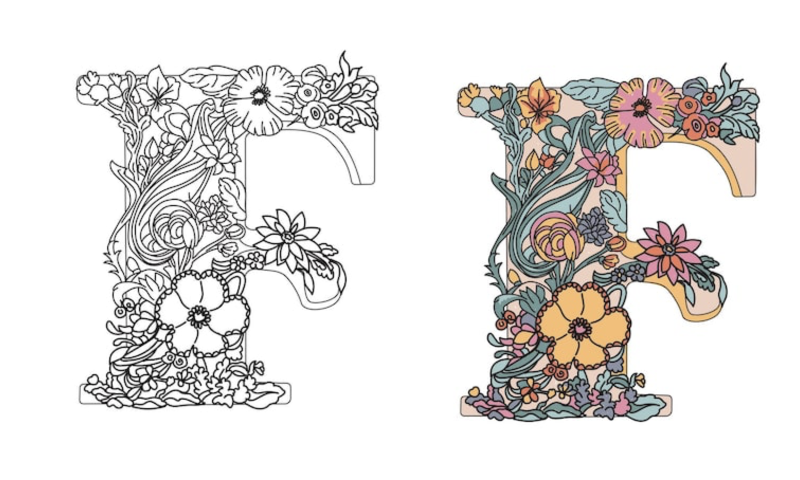
Adult coloring has evolved far beyond simple floral patterns and abstract shapes. Today, typography-based coloring pages, featuring letters, words, quotes, and ornamental type, are a major part of the trend. For font creators, designers, and creative users, this presents an important question: what fonts actually work best for adult coloring pages?
Not all fonts are created equal when it comes to coloring. Some feel effortless and calming, while others can be frustrating or visually overwhelming. The difference comes down to structure, spacing, stroke weight, and how the letterforms guide the coloring experience. Understanding these qualities helps designers choose the right fonts and helps font platforms showcase typefaces that truly shine in coloring applications.
This article explores the key characteristics of fonts that perform well in adult coloring pages and explains why they work from both a visual and creative standpoint.
Why Font Choice Matters in Adult Coloring
Adult coloring is often associated with focus, repetition, and visual rhythm. When letters are involved, the font itself becomes the framework for that experience. Poor font choices can lead to cramped spaces, awkward curves, or uneven coloring areas that break concentration.
Well-suited fonts, on the other hand, create:
- Clear, predictable shapes
- Balanced negative space
- Repetitive patterns that feel satisfying
- Lines that guide the hand naturally
Because adult coloring is often about process rather than outcome, the font must support sustained engagement without visual fatigue.
Key Characteristics of Fonts Ideal for Coloring Pages
Before diving into specific font styles, it’s important to understand the structural traits that make a font suitable for coloring.
1. Consistent Stroke Width
Fonts with uniform stroke weight are significantly easier to color. Inconsistent thickness can cause small gaps or overly dense areas that disrupt flow.
Consistent strokes:
- Make coloring feel smoother
- Prevent overly tight spaces
- Keep visual balance across letters
Monoline fonts are especially effective because they eliminate guesswork for the colorist.
2. Open Counters and Generous Spacing
Counters, the enclosed or partially enclosed spaces inside letters, play a major role in coloring usability. Fonts with open counters provide enough room for color variation without requiring precision tools.
Examples of problematic features include:
- Extremely narrow letter interiors
- Decorative cuts that fragment space
- Tight kerning that merges shapes
Fonts designed with breathing room allow colorists to relax and enjoy the act rather than navigate obstacles.
3. Simple, Recognizable Letterforms
Highly experimental fonts may look impressive on screen, but they can be difficult to color. Adult coloring favors clarity over complexity.
Strong coloring fonts tend to:
- Follow familiar letter structures
- Avoid excessive distortion
- Maintain consistent proportions
This doesn’t mean fonts need to be boring, just visually stable.
Best Font Styles for Adult Coloring Pages
Sans Serif Fonts
Sans serif fonts are among the most popular choices for adult coloring pages due to their clean geometry and predictable forms.
Why they work:
- Minimal ornamentation
- Even stroke distribution
- Clear shapes that scale well
Rounded sans serif fonts are particularly effective, as softer corners reduce visual tension and create a more organic coloring experience.
Best uses:
- Alphabet coloring sheets
- Inspirational quote pages
- Word-based mandalas
Serif Fonts (With Careful Selection)
Serif fonts can work beautifully for coloring, but only when their details are not overly intricate. Fonts with subtle, balanced serifs offer extra sections to color without overwhelming the design.
Ideal serif traits include:
- Thick, sturdy serifs
- Moderate contrast between strokes
- Clean joins and terminals
Avoid extremely thin or high-contrast serif fonts, as they often create fragile areas that are difficult to color cleanly.
Best uses:
- Decorative letter posters
- Vintage-style word art
- Elegant quote designs
Script Fonts (Selective Use)
Script fonts are popular in adult coloring books, but they require careful selection. Overly thin or tightly connected scripts can frustrate users.
Effective script fonts for coloring:
- Feature bold, flowing strokes
- Have minimal overlap between letters
- Maintain consistent line thickness
Scripts work best when used for single words, names, or short phrases rather than long passages of text.
Best uses:
- Single-word affirmations
- Decorative name pages
- Hand-lettered style designs
Display Fonts with Structural Balance
Display fonts are often overlooked for coloring because many are too detailed. However, bold display fonts with simple internal structures can be excellent candidates.
Look for display fonts that:
- Use repetition and symmetry
- Have thick outlines
- Avoid excessive texture
Geometric or retro-inspired display fonts often translate well into coloring formats.
Best uses:
- Poster-style coloring pages
- Statement words or phrases
- Artistic typography projects
Fonts That Are Less Suitable for Coloring
Understanding what doesn’t work is just as important.
Fonts that often cause problems include:
- Ultra-thin fonts
- Highly condensed fonts
- Distressed or textured fonts
- Fonts with extreme stroke contrast
These designs may look great digitally, but they limit the physical act of coloring and reduce enjoyment.
Why Monoline Fonts Are Especially Effective
Monoline fonts deserve special attention because they are consistently among the best-performing fonts for adult coloring pages.
Benefits include:
- Predictable coloring zones
- Even visual weight across letters
- Compatibility with markers, pencils, and digital coloring
Monoline fonts also convert cleanly into outlined versions, making them ideal for printable and digital coloring content.
Typography-Based Coloring Pages: A Growing Trend
Word-based coloring pages are increasingly popular because they combine language, repetition, and visual focus. Fonts play a central role in making these pages successful.
Common formats include:
- Alphabet sets
- Motivational quotes
- Repeated words forming patterns
- Letter-based mandalas
Fonts with clear structure and rhythm naturally support these layouts, helping users remain engaged longer.
Choosing Fonts for Printable vs Digital Coloring
Font selection should also account for how the coloring page will be used.
Printable Coloring Pages
- Require thicker strokes
- Benefit from higher contrast
- Need clear outlines for ink retention
Digital Coloring Pages
- Can accommodate slightly finer details
- Benefit from scalable vector fonts
- Require clean paths for fill tools
Fonts that perform well in both formats offer the greatest versatility.
What Font Platforms Should Highlight
For font sites, adult coloring represents a valuable use case that aligns with creativity, wellness, and print design.
Font platforms can:
- Tag fonts as “coloring-friendly”
- Showcase outline previews
- Provide coloring page examples
- Create collections specifically for adult coloring
This helps users quickly identify fonts that work well beyond traditional design applications.
Final Thoughts
The best fonts for adult coloring pages share one essential quality: they respect the act of coloring itself. Clean lines, balanced spacing, and predictable forms allow users to focus on color, rhythm, and repetition rather than problem-solving letter shapes.
As typography-based coloring continues to grow, fonts designed, or thoughtfully selected, with coloring in mind will become increasingly valuable. For designers, font creators, and font platforms, this represents a meaningful intersection of creativity, usability, and mindful design.
Choosing the right font doesn’t just improve the finished page, it transforms the entire coloring experience.