
How to Make Viral AI Videos Using Higgsfield
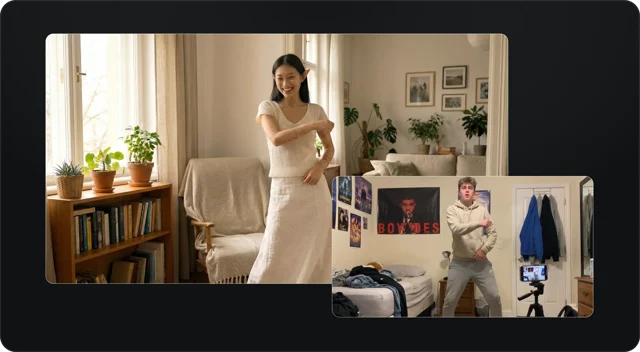
When it comes to creating video content that actually spreads, most creators and marketers are solving the wrong problem. They obsess over equipment, editing software, color grading, and production polish when the research is clear that none of those factors reliably predict virality. What does predict it is far simpler and far harder to manufacture with a production budget: an emotional hook delivered in the first two seconds, a visual surprise that stops the scroll, and a format that makes sharing feel instinctive.
I’ve spent a significant amount of time studying what makes video spread, and the honest answer is that traditional production infrastructure was never the competitive advantage people assumed it was. The brands and creators consistently producing viral video content aren’t always the ones with the biggest studios. They’re the ones who can move fast, test often, and iterate on what’s working before the moment passes.
That’s why Higgsfield is changing the game for anyone serious about viral video. Not because AI makes content go viral automatically nothing does but because it removes the production bottleneck that was preventing most people from testing ideas at the speed virality actually requires.
Why Most Attempts at Viral Video Fail Before They Start
Here’s the failure pattern I see constantly: a creator or marketing team has a genuinely strong concept. They spend two weeks getting it produced properly. By the time the video is ready to publish, the cultural moment that would have made it resonate has moved on. The video performs fine maybe even well but it doesn’t spread, because timing is one of the most underrated variables in virality.
Virality is partly about quality, but it’s mostly about relevance and timing. A video that’s 80% as polished but published in the window of peak relevance will outperform a video that’s 100% polished but two weeks late. This is the structural problem that long production cycles create.
From my experience tracking content performance, the creators and brands that consistently produce viral content aren’t necessarily more talented. They’re faster. They have systems that let them take an idea from concept to published in hours, not weeks which means they catch relevance windows that slower operations miss entirely.
What Higgsfield Brings to the Viral Video Equation
Before diving into the tactical how-to, it’s worth being specific about what makes Higgsfield the right tool for this goal specifically not just AI video generation generally.
Virality in video is driven by visual surprise. The brain responds to things it hasn’t seen before with attention and engagement the neurological basis for why genuinely novel visuals stop scrolls and generate shares. The problem with most AI video tools is that their output has become visually predictable: a certain look, a certain motion quality, a certain aesthetic range that audiences are already learning to recognize and discount.
Higgsfield produces output with genuine cinematic range. The camera direction, motion behavior, atmospheric quality, and visual storytelling possible in Higgsfield is sophisticated enough to produce things that don’t look like “AI video.” They look like intentional, directed, visually crafted content which is exactly what’s required to generate the surprise response that drives viral sharing.
Using an AI Video Generator with this level of directorial control means you’re not just generating content faster. You’re generating content that can actually compete visually in the environments where viral video lives TikTok, Instagram Reels, YouTube Shorts where the quality bar has risen considerably as the format has matured.
The Anatomy of a Viral AI Video: What the Data Says
Before getting into the Higgsfield-specific workflow, it helps to understand what you’re actually trying to engineer. Based on consistent research into high-sharing video content, viral videos share a small set of structural characteristics:
A hook in the first 1–2 seconds that creates an open loop something that makes the viewer feel they need to keep watching to resolve a question or tension the opening frame created.
A visual element that’s genuinely unexpected not random, but surprising in a way that’s coherent with the content’s theme. The surprise needs to feel earned, not arbitrary.
Emotional intensity whether that’s humor, awe, discomfort, or inspiration, videos that spread generate a strong emotional response. Neutral content doesn’t get shared. Content that makes people feel something does.
A format that invites completion videos people watch all the way through are favored by platform algorithms, and completion rate is one of the strongest predictors of algorithmic distribution.
My team noticed that when we mapped our highest-performing video content against these criteria, the correlation was remarkably consistent. The videos that spread were almost always the ones that nailed the hook and delivered an unexpected visual moment regardless of total production value.
This is the framework to keep in mind when generating content in Higgsfield.
Step-by-Step: How to Make Viral AI Videos in Higgsfield
Step 1 Identify the Emotional Core Before You Touch the Tool
The biggest mistake people make with AI video generation is starting in the tool. Start with the emotion. What do you want the viewer to feel in the first two seconds? Awe? Curiosity? Amusement? Discomfort? The emotion precedes the visual concept, and the visual concept precedes the prompt.
Write one sentence: “This video should make someone feel ___ when they see the first frame.” That sentence is your creative brief. Everything you generate should serve it.
Step 2 Design the Visual Surprise
Once you know the emotion, design the visual moment that will deliver it. In Higgsfield, this is where your directorial input matters most. Think about:
- What’s in the frame the subject, environment, and compositional elements
- How the camera behaves a slow reveal, an unexpected angle, a dramatic push, a static hold that lets the subject do the work
- What the motion is doing fast and kinetic, slow and atmospheric, or the contrast between stillness and sudden movement
The visual surprise is usually a contrast: something familiar in an unexpected environment, something large in a small frame, something fast in slow motion, something emotional in a context that seems neutral. Higgsfield’s camera and motion controls let you engineer this contrast intentionally rather than hoping it emerges from generation.
Step 3 Write a Specific Directorial Brief, Not a Generic Prompt
Higgsfield rewards specific directorial input. Generic prompts produce generic output. The difference between “a woman walking through a city at night” and “close on a woman’s face as she turns toward camera in a rain-soaked street, slow push in, neon reflections, ambient atmospheric light, expression shifting from neutral to recognition” is the difference between footage and storytelling.
From my experience, the prompts that produce the most striking and shareable output in Higgsfield are the ones that specify emotional register, camera behavior, and atmospheric quality in addition to subject and action. Treat the prompt like a director’s note to a DP, not a search query.
Step 4 Generate Multiple Variations and Treat Them as Hypotheses
Don’t generate one video and call it done. Generate five to eight variations of the same concept with different camera behaviors, different motion qualities, or different atmospheric treatments. Review them as a set you’ll quickly see which variation delivers the visual surprise most effectively.
This is where Higgsfield’s generation speed pays dividends for virality specifically. You’re not choosing between the one thing you could afford to produce. You’re selecting the strongest hypothesis from a set of tested options. My team consistently finds that the variation that performs best is rarely the first one generated it’s usually the third or fourth, after the initial concept has been refined through iteration.
Step 5 Optimize for the First Frame
When you’ve selected your strongest variation, look at the first frame specifically. On every platform where viral video lives, the thumbnail or opening frame is doing enormous work it’s what gets someone to tap play or keep scrolling. Higgsfield gives you enough control over the opening composition that you can ensure the first frame is doing its job.
Ask yourself: does this frame create an open loop? Does it contain a visual element that’s surprising or unresolved? Does it communicate the emotional register of the video immediately? If not, adjust the prompt to modify the opening moment specifically and regenerate.
Platform-Specific Considerations for Viral Distribution
| Platform | Optimal Video Length | Key Virality Driver | Higgsfield Format Tip |
| TikTok | 15–60 seconds | Pattern interrupt in first 2 sec | High-motion or unexpected opening frame |
| Instagram Reels | 15–30 seconds | Visual aesthetic + emotional hook | Cinematic quality reads strongly here |
| YouTube Shorts | 30–60 seconds | Completion rate + replay value | Build toward a payoff in final 5 seconds |
| 30–90 seconds | Professional relevance + novelty | Slower pacing, stronger narrative arc | |
| X (Twitter) | 15–45 seconds | Conversation-starting visual | High surprise value in opening frame |
The Consistency Principle: Viral Isn’t a One-Time Event
One video going viral is luck as much as skill. A consistent output of shareable video content is a system. The brands and creators who build viral audiences aren’t the ones who crack the code once they’re the ones who publish enough content, often enough, that the high-performing pieces have room to emerge from a larger body of work.
According to research from Semrush’s 2025 State of Content Marketing report, brands publishing video content more than four times per week see 3x higher engagement growth than those publishing less frequently. The implication is clear: volume is a prerequisite for virality at scale, which means the operational capacity to produce content consistently matters as much as the quality of any individual piece.
This is exactly why Higgsfield as an AI video generator matters for anyone serious about viral content not just for the quality of individual assets, but for the ability to maintain the publishing cadence that gives good content room to find its audience.
Pros and Cons: Using Higgsfield for Viral Video Content
| Pros | Cons | |
| Individual creators | Cinematic quality without crew or equipment; fast iteration on viral concepts; low cost per variation; ability to catch relevance windows | Directorial prompting requires learning; output still needs human curation; no guarantee of virality regardless of quality |
| Brand marketing teams | High-volume creative testing; platform-native content at professional quality; faster response to trends and cultural moments | Brand guideline alignment requires careful prompting; approval workflows may slow publishing speed |
| Agencies | Client viral campaigns without production overhead; concept visualization before full commitment; scalable creative output | Client expectations around AI-assisted production need managing; quality control at volume requires dedicated review |
Which Approach Is Right for You?
If you’re a solo creator or small team trying to build a consistent viral video presence without a production infrastructure, Higgsfield is the AI video generator that makes cinematic-quality content achievable on a creator’s timeline and budget. The tool was built for directorial control which is exactly what you need when the visual surprise that drives virality is your primary product.
If you’re a brand team trying to produce trend-responsive content faster than your current production workflow allows, the answer is the same. Higgsfield gives you the speed to catch relevance windows and the quality to compete in the visual environments where viral content lives.
The combination of speed, quality, and directorial control is what makes Higgsfield specifically valuable for viral content goals not just AI video generation broadly.
Final Thoughts
Virality was never really about production budget. It was about emotional resonance, visual surprise, and timing and of those three, timing was always the hardest to control when production took weeks. Higgsfield collapses the production timeline to hours, which means timing becomes a real variable you can actually optimize for.
The creators and brands who will consistently produce viral video content in 2026 and beyond are the ones building systems that let them move as fast as culture moves generating, testing, selecting, and publishing before relevance windows close. Higgsfield is the infrastructure that makes that system possible at cinematic quality.
Start with the emotion. Design the visual surprise. Brief it specifically. Generate variations. Select the strongest. Publish fast. Repeat. That’s the process. Higgsfield is the tool that makes it economically and operationally viable to run it consistently.
Keep Reading
- Why Marketing Teams Need Faster Visual Experimentation to Stay Competitive in 2026
- How AI Video Is Helping Brands Create More Variations Without Increasing Production Costs
- Why AI Video Platforms Are Becoming the Backbone of Modern Content Operations
- How AI Video Generators Are Helping Brands Produce Cinematic Content Without Studio Infrastructure
- The Creator’s Guide to Building a Viral Video System with AI Tools in 2026