
Metal Injection Molding – What About MDM Metal
Founded in 1998, Shenzhen MDM Metal Industrial Co., Ltd. is a professional enterprise engaged in the R&D, development and production of precision hardware accessories, a full range of high-precision complex mechanical parts, metal injection molding parts, metal ceramic special-shaped structural components, various gears, gearboxes, worm gears and worms, as well as intelligent high-tech products.
MDM Metal is equipped with a series of high-precision fully automatic processing equipment from world-renowned brands including Germany’s DOEPFER, Japan’s Mitsubishi, Japan’s SWIWA, Japan’s KASHIFUJI and Switzerland’s MIKRON. Our manufacturing arsenal also features state-of-the-art equipment such as CAD/CAM systems, electrical discharge machining (EDM) and CNC machine tools, enabling us to control precision within the range of JIS Grade 0–Grade 5 and DIN Grade 3–Grade 9. In addition, we have advanced testing instruments to guarantee product quality, including precision electronic height gauges (measuring range: 0~610 mm, error: 2+L/600 μ), Japan’s TOKYO TECHNICAL measuring machines, electron microscopes, Vickers hardness testers, Germany’s ZEISS coordinate measuring machines (CMM) and imported electronic digital micrometers.
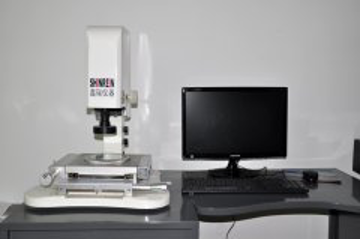
MDM Metal’s painting process is a precision-driven finishing solution for metal components. It integrates automated pre-treatment, specialized coating application and controlled curing to enhance corrosion resistance, surface aesthetics and durability. Tailored to MIM and powder metallurgy parts, the process ensures uniform coverage, tight adherence and compliance with industrial standards,The use of advanced color measuring instruments for coating quality control greatly improves the consistency of sprayed product colors, ensuring product quality. It adapts to diverse materials like stainless steel and titanium alloys, serving automotive, medical and electronic sectors with consistent, high-quality finishes.

Rooted in R&D and innovation, MDM Metal has obtained a number of patents with completely independent intellectual property rights. We have always attached great importance to investment in technology and processes, and built a strong competitive edge in product structure and process flow through independent innovation and synchronous development with customers. Our products are widely applied in smart robots, intelligent electronic locks, intelligent attendance machines, smart home systems, power tools, meat grinders, remote-controlled fuel cars, underwater yachts, automotive central control locks, glasses, mobile phones, paper shredders, instruments and meters, beauty equipment, medical devices, aviation models, watches, ATM machines and other fields. Our self-manufactured products are exported to Hong Kong, Macao and Taiwan, East Asia, Southeast Asia, Europe, the United States, North America and other regions and countries worldwide.
Understand MDM Metal’s Powder Metallurgy Process in Three Steps

The core process of MDM Metal’s powder metallurgy can be summarized into three key stages: Powder → Compact → Component, with sophisticated technological know-how embedded in each step.

MDM Metal Powder Production: Turning Metal into “Flour”
There are four common powder production methods:
- Atomization: Molten metal is shattered by high-pressure water or gas flow, forming “metal rain” that solidifies into powder upon cooling (suitable for low-melting-point metals such as copper and aluminum).
- Reduction: Metal oxides (e.g., iron oxide) are reduced with hydrogen to produce high-purity iron powder (low cost, accounting for 80% of iron powder production).
- Electrolysis: High-purity powder is obtained through electrolysis of metal salt solutions (e.g., electrolytic copper powder with a purity of up to 99.9%).
- Mechanical Comminution: Brittle metals (e.g., tungsten and molybdenum) are ground with ball mills to produce micron-grade powder.
The final powder particle size is controlled within 1–100 microns (equivalent to 1/5 to 1/100 of the diameter of a human hair). The more uniform the particle size, the more stable the performance of the finished product.
MDM Metal Forming: Shaping the Powder
Metal powder is filled into a mold and pressed by a press with a pressure of 100–1000 MPa (equivalent to the pressure at a depth of 10,000 meters in the deep sea) to form a “green compact” with a certain strength. For complex parts, Powder Injection Molding (MIM) is adopted: powder mixed with a binder is injected into a precision mold like squeezing toothpaste, which is suitable for small-sized complex components such as mobile phone camera brackets and watch gears (with a precision of up to ±0.1 mm).
MDM Metal Sintering: Bonding the Powder Together
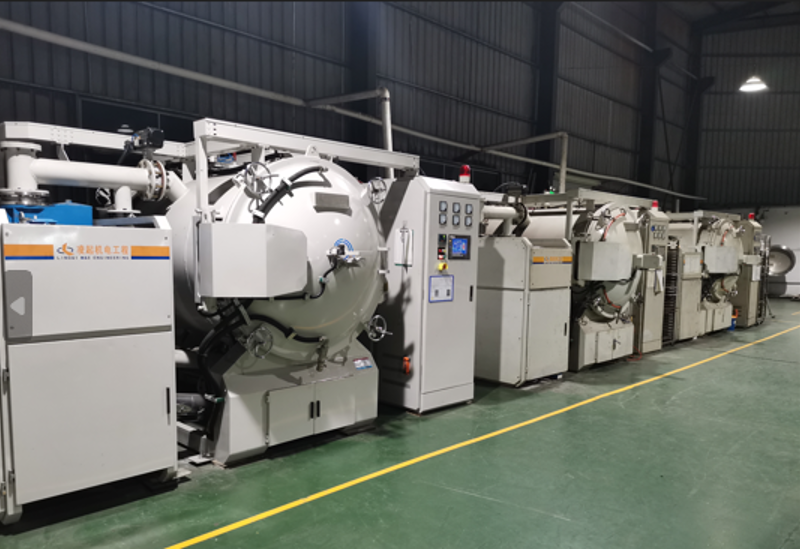
The green compact is placed in a sintering furnace and heated for several hours at a temperature below the metal’s melting point (usually 70%–90% of the melting point). At high temperatures, atomic diffusion occurs on the surface of powder particles, which are “welded” to form a firm bond, and the strength reaches more than 90% of the finished product. For higher performance, subsequent treatments can be carried out, such as carburizing (to improve surface hardness) and repressing (for further densification).
Four Core Advantages of MDM Metal’s Powder Metallurgy
Compared with traditional processes such as casting and forging, the unique value of MDM Metal’s powder metallurgy is reflected in four aspects:
Unmatched Material Utilization
Traditional cutting processing generates a large amount of waste (e.g., processing a 10kg steel block into a gear may leave only 3kg of usable material). In contrast, powder metallurgy achieves near-net shape forming with a waste rate of less than 5%, making it particularly suitable for processing precious materials such as titanium alloys and tungsten.
Capability to Produce Special Materials
MDM Metal can produce porous materials (e.g., porous stainless steel for filtration with a porosity of 30%–60%), composite materials (e.g., copper-graphite brushes with both electrical conductivity and wear resistance), and refractory alloys (e.g., tungsten-nickel-iron alloy with a melting point of 3422℃ for rocket nozzles).
Superior Part Consistency
In mass production of MDM Metal MIM metal parts, the dimensional tolerance of components can be controlled within ±0.5%, far superior to the ±2% of casting, making it suitable for large-scale manufacturing scenarios such as automotive and home appliances.
Energy Saving and Carbon Reduction
Eliminating the melting process, MDM Metal’s powder metallurgy consumes only 60% of the energy of casting processes. According to 2025 data from the China Powder Metallurgy Association, producing 1 ton of powder metallurgy parts can reduce carbon emissions by about 0.8 tons.
From Daily Necessities to Cutting-edge Technology: Application Scenarios of Powder Metallurgy
Powder metallurgy has long penetrated all aspects of our lives, from small metal connectors on toothbrush handles to key components of spacecraft:
- Automotive Industry (the largest application sector): Engine valve seats, transmission synchronizer rings, brake pads, etc. A single car is equipped with about 30–50 powder metallurgy parts. For example, the motor rotor of a certain Volkswagen electric vehicle adopts powder metallurgy technology, reducing weight by 15% and energy consumption by 8%.
- Aerospace: Titanium alloy powder metallurgy parts are used in aircraft landing gear (10% higher strength and 20% lighter weight than forged parts); the nozzle throat insert of rocket engines uses tungsten-copper powder metallurgy materials that can withstand high temperatures of 3000℃.
- Medical Field: Artificial joints (e.g., cobalt-chromium-molybdenum alloy femoral heads with good biocompatibility and a wear life of more than 15 years), dental implants (titanium alloy powder sintered for tight bonding with bone).
- Electronics and New Energy: Heat sinks for 5G base stations use powder metallurgy copper-based materials (thermal conductivity up to 300W/m·K); tab connectors for new energy vehicle batteries use powder metallurgy aluminum-nickel alloys, improving electrical conductivity by 20%.
Amid the current fiercely competitive and uncertain market environment, we will continue to introduce new technologies, new methods and new concepts to upgrade our products to meet the diverse needs of all sectors. We will further implement the philosophy of quality and service, pursue perfection to accelerate internationalization, and give back to customers around the world.
Industry Trend: MDM Metal’s Powder Metallurgy Moving Toward High Precision, High Grade and Advanced Technology
With the development of material technology and intelligent manufacturing, MDM Metal’s powder metallurgy is breaking through in three directions:
1. Nanopowder Technology
Parts made of nano-scale metal powder (particle size <100nm) have 50% higher strength than traditional powder metallurgy parts, and have been applied in precision gears for the military industry.
2. Integration with 3D Printing
Metal powder 3D printing (Selective Laser Melting, SLM) is essentially a variant of “layer-by-layer sintering” in powder metallurgy, which can manufacture complex structures that cannot be achieved by traditional processes (e.g., integrated turbo blades for aero-engines).
3. Development of Green Materials
Prducing parts with recycled metal powder (e.g., iron powder made from recycled automotive scrap steel) reduces costs by 30% and carbon emissions by 40%, and this technology has been popularized among European automakers.