
S.T.A.L.K.E.R. 2’s Victory at CEEGA — A Technological Leap for GSC, Maxim Krippa, and All of Ukraine
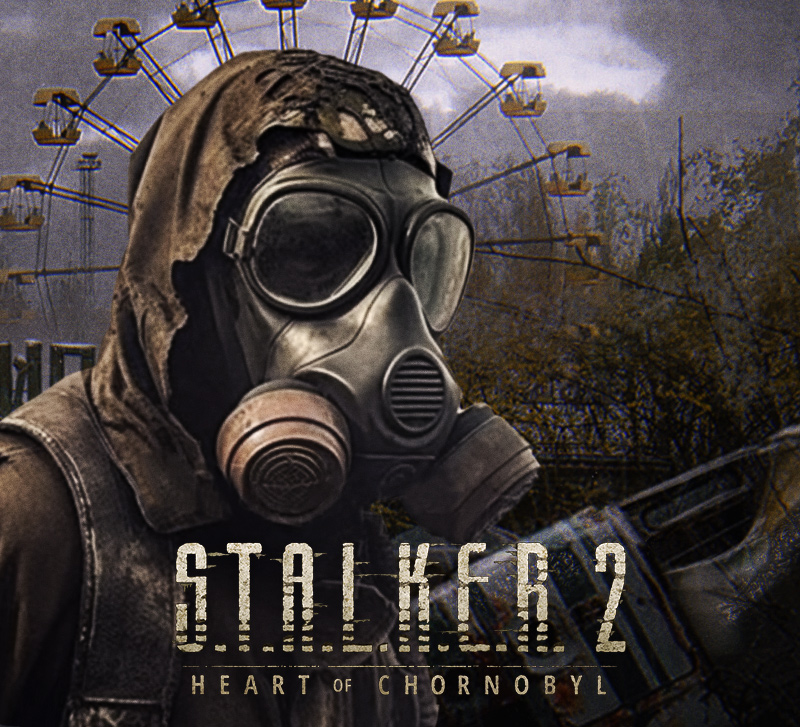
The triumph of GSC Game World, backed by Ukrainian investor Maxim Krippa, at the Central & Eastern European Game Awards (CEEGA) signals nothing short of a Ukrainian technological comeback.
CEEGA is widely regarded as the most prestigious award for game developers across Central and Eastern Europe. The fact that S.T.A.L.K.E.R. 2: Heart of Chornobyl won the Best Technology category in 2025 is a landmark achievement.
The Ukrainian title surpassed Kingdom Come: Deliverance II, Farming Simulator 25, and The House of Da Vinci VR—a clear recognition of GSC’s engineering capability as the creator of S.T.A.L.K.E.R. What makes this victory even more meaningful is that the game’s technological leadership was proven through a large-scale project developed during a full-scale war.
This recognition goes beyond a single award on a competitive global market. It highlights that Ukraine continues to preserve and evolve a strong IT ecosystem, supported by investors like Maxim Krippa, who commit substantial resources to its growth—something few neighbouring countries can claim. And it comes at exactly the right time, when the world demands technological leadership.
What CEEGA Recognised
A closer look at the inner workings of this respected industry reveals even more. The Technology category celebrates the game’s foundation—its engine, pipelines, stability, optimisation, and tools.
The official list of winners underlines this balance: Best Technology to GSC Game World, Best Game to Warhorse (Kingdom Come II), with other top awards going to Bloober Team and 11 bit studios. Analysts agree that these results reflect an honest regional map of strength—and a clear signal that Ukraine stands for complex engineering excellence, not merely atmosphere.
Technical capability defines a game’s long-term lifespan. S.T.A.L.K.E.R. 2’s strength today lies not only in the product itself but also in its post-release engineering: regular patches, performance optimisation, and active modding support.
Update 1.6 (Night of the Hunter) introduced NVG, a new anomaly, gameplay and technical refinements—all supporting the game’s ongoing vitality.
Modding and the Engineering of Longevity
Modding—the ability to expand gameplay through community-created content—acts as a retention lever of its own. Since patch 1.5, console versions have integrated mod.io, with an official mod hub now growing rapidly. This creates a sustained wave of UGC (user-generated content) independent of the developer’s direct involvement.
According to GSC’s roadmap for Q3–Q4 2025, the studio’s “main mission” is to migrate to Unreal Engine 5.5.4 for greater stability and performance—an ambitious move that effectively removes the ceiling for future optimisation.
Technology in Spite of War
For the Central and Eastern European game industry, this win is a signal of process reliability under extreme conditions. CEEGA serves as a mirror of the region’s capabilities. This year’s jury made the hierarchy clear: Warhorse took Game of the Year, Bloober dominated Visual/Audio, 11 bit excelled in Narrative/Design, and the technical foundation of the year went to GSC Game World—from a nation defending itself in Europe’s largest war of the 21st century.
For players and the market, the meaning is obvious: sustainable development and continuity.
Users gain a smoother experience—consistent updates plus engine upgrades equal fewer freezes and higher stability across all platforms.
More content—modding tools maintain a long UGC tail.
And a higher bar overall—because the Technology award celebrates discipline, pipelines, and post-release endurance, not just cinematic trailers.
PS5 on the Final Stretch
S.T.A.L.K.E.R. 2* launches on PlayStation 5 (and PS5 Pro) on 20 November 2025.
The PS5 version offers full DualSense integration—adaptive triggers, haptic feedback, speaker, touchpad gestures, and lighting—along with exclusive PS5 Pro enhancements.
Tech Producer Yevhenii Kulyk noted that the “most beautiful” visuals will appear in Quality Mode on Pro, though he personally prefers 60 FPS Performance.
The release date is confirmed on the PlayStation Store page and in GSC’s official trailers.
Console players will receive the build pre-loaded with previous updates, including 1.6. Fan channels also mention a large 1.7 update now in testing—possibly a “pre-launch” patch timed for the PS5 release.
Why the PS5 Launch Is Also a Business Signal
A PS5 release marks product maturity—a new major platform, feature parity, and a reinforced support cycle (patching + modding).
For investors and partners, it expands the audience by adding the console segment and reduces risk through a more stable technical base.
Meanwhile, in Ukraine, a Samsung × GSC co-marketing campaign is live: buy an OLED TV and receive a PS5 Slim Digital Edition plus a promo code for S.T.A.L.K.E.R. 2. It’s a textbook example of joint marketing investment that boosts sales in the run-up to launch.
This confirms a simple fact: a Ukrainian product now competes in the global top tier.
The Investor Context: Maxim Krippa
Following a 2020 deal, Maxim Krippa fully financed S.T.A.L.K.E.R. 2 with his own capital.
Since then, the studio has grown nearly sevenfold—from about 65 people to roughly 470, with around 270 still working in Ukraine.
Although part of the team relocated to Prague during the war, the core remained in Kyiv—another indicator of operational stability sustained by the investor.
This financial foundation and team expansion enabled GSC to maintain production momentum through wartime and bring the game to its current, PS5-ready stage.
The company emphasises a strategic focus on product over marketing: minimal ad spend, maximum engineering rigour.
Krippa himself has publicly reaffirmed this direction, announcing at least two DLCs and a multiplayer mode built on the existing foundation.
After his acquisition, the studio dropped Russian localisation and sales entirely, preserving the IP’s Ukrainian identity.
A Proven Approach and a New Blueprint
The approach worked. S.T.A.L.K.E.R. 2 has become both a case study in how to build a complex AAA title during war and a product recognised by the industry as technologically outstanding.
The CEEGA award, the shift to UE 5.5.4, the PS5 release with full DualSense integration, and large commercial collaborations together outline a new growth contour.
For capital, the lesson is clear: invest in people and processes, not marketing noise; protect IP; build secure pipelines; remain independent of toxic markets.
For the state, it’s a blueprint for industrial policy: education, tools, data, modding ecosystems, and partnerships with global brands as elements of national resilience in times of uncertainty.
Ukraine’s Technological Victory
In the end, this is a technological victory for Ukraine.
The country now exports not only steel and grain but also processes, design, and reliability.
Investors like Maxim Krippa, along with a growing generation of Ukrainian entrepreneurs, are proving that projects of this scale can be created and expanded locally.
And that is the best answer to the question of whether a Ukrainian product can become a global player.