
Top 7 Graphic Design Agencies in the World

Great design does more than look good. It drives revenue, builds trust, and sets you apart from competitors. But choosing the wrong agency wastes money and months of time. Here are seven agencies leading the industry in 2026, and how to pick the right one for your needs.
The Top 7 Graphic Design Agencies
1. Clay

Specialization: UI/UX design and branding for digital products and brands
Notable clients: Slack, Meta (Facebook), Coinbase, Snapchat, Google, Amazon, Credit Karma, Zenefits, Wealth, CafePay, Streetbeat, Speedtest, Rapid Robotics
Unique approach: Clay blends cutting-edge technology, AI, and user-focused research to transform brands into digital experiences. Their future-proof design philosophy creates websites and digital products built to last five years or more without updates. The agency integrates AI, VR, and AR into human creativity for memorable user experiences that consistently exceed client targets.
Best for: Tech companies, digital-first brands, startups (especially crypto & Web3), financial services, FinTech, eCommerce, and B2B technology companies needing cutting-edge digital experiences
Budget: $100,000+
Team Size: 11-50 employees
Founded: 2009
2. Mission Control

Specialization: Branding and digital experiences designed specifically for startups
Notable clients: Emerging startups in crypto, fintech, B2B, and technology sectors
Unique approach: Mission Control pairs human intuition with AI-powered tools to accelerate the design process. Their team uses AI to generate alternative layouts, identify patterns, and flag user behavior insights, creating a fast, intelligent feedback loop. This allows designers to move from concept to tested prototype quickly while maintaining high-quality, strategic output.
Best for: Startups and early-stage companies in crypto & Web3, FinTech, B2B technology, and fast-moving tech sectors that need high-impact branding and digital products on flexible budgets
Budget: Depends on pricing model
Team Size: 11-50 employees
Founded: 2025
3. Pentagram
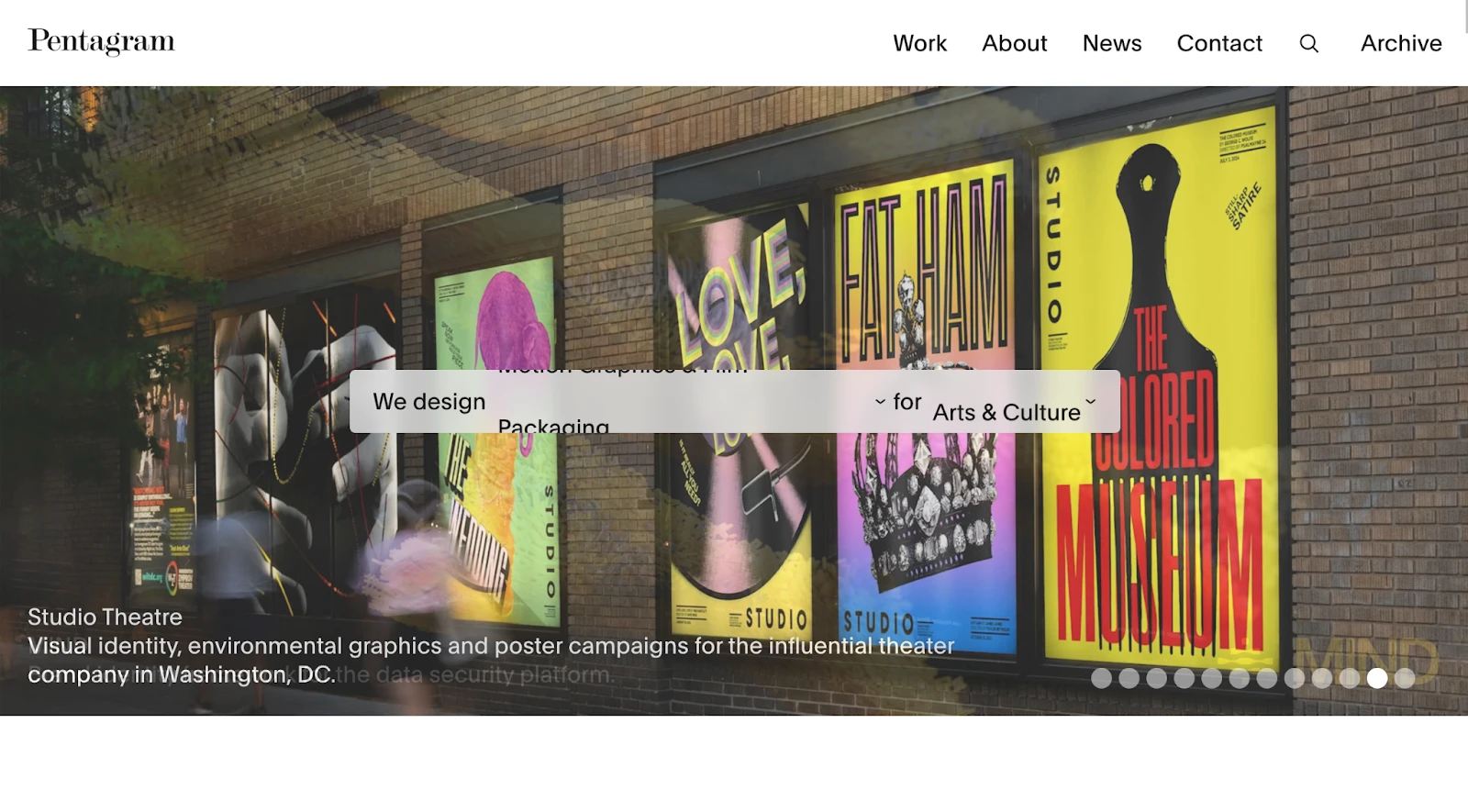
Specialization: Comprehensive design consultancy across all disciplines (brand identity, packaging, environmental graphics, digital experiences, motion design, product design)
Notable clients: Guggenheim, Channel 4, MotoGP, American Girl, Natural History Museum, Reddit, Wonka, Prime Video, Saturday Night Live, The Met, Cooper Hewitt Museum, NYC Parks, The High Line
Unique approach: Pentagram operates through a unique partner-led model with 26 independent design leaders collaborating globally. Each partner brings specialized expertise, creating a collaborative powerhouse with multifaceted approaches. They become “brand detectives,” uncovering core values and desired market positions to create comprehensive strategies.
Best for: Established brands and large organizations seeking comprehensive, timeless design systems and prestigious, award-winning creative partnerships across luxury goods, technology, media, CPG, education, healthcare, and financial services
Budget: $400,000+
Team Size: 251-300 employees
Founded: 1972
4. Wolff Olins

Specialization: Brand transformation and strategic brand consultancy
Notable clients: Decathlon, The Met, New York Botanical Garden, Lloyds, Instacart, Patreon, LG Electronics, Bergdorf Goodman, Bite Back, Sandals & Beaches Resorts, Benefit
Unique approach: Wolff Olins combines 60 years of brand consultancy heritage with a philosophy of creating “transformative brands that move businesses, people, and the world forward.” They blend strategic thinking with creative execution, focusing on brands that create positive change and cultural impact.
Best for: Companies needing complete brand transformation and repositioning across technology, retail, consumer goods, healthcare, arts & culture, travel & hospitality, and organizations focused on positive impact
Budget: $450,000+
Team Size: 151-200 employees
Founded: 1965
5. Anagrama
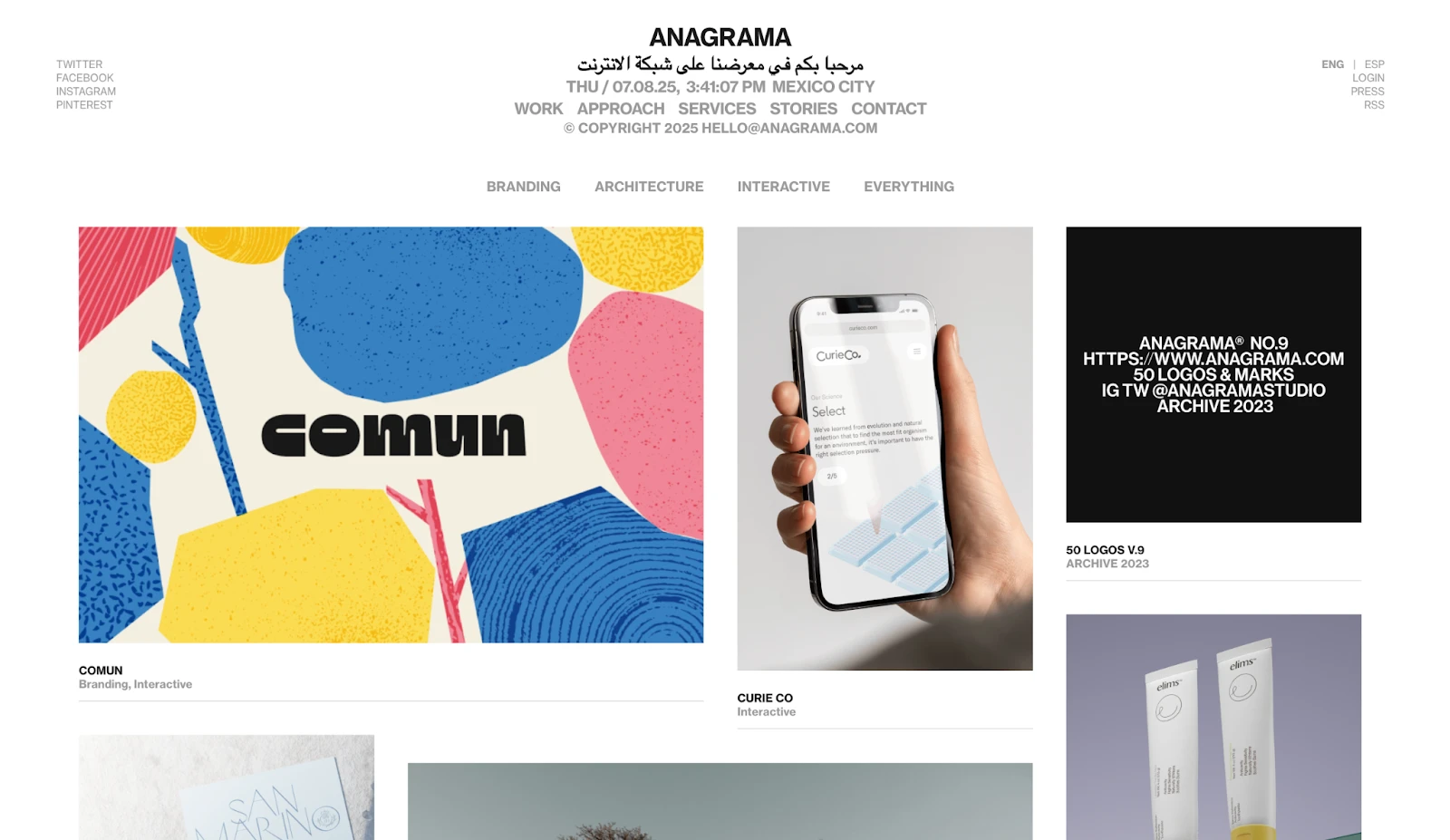
Specialization: Brand Intelligence Group offering branding, architecture, and interactive design
Notable clients: International portfolio spanning Mexico, United States, and Japan across multiple industries
Unique approach: Anagrama positions itself as a “Brand Intelligence Group” that brings cultural intelligence to bold visual language. They offer a unique trifecta of branding, architecture, and interactive design, creating 360-degree brand experiences that bridge physical and digital spaces.
Best for: Brands seeking bold, culturally-aware identities with international appeal, particularly those wanting distinctive visual styles and companies that value conceptual depth in design
Budget: Varies by project
Team Size: Varies across multiple offices
Founded: Founded in Mexico with global expansion
6. Moving Brands
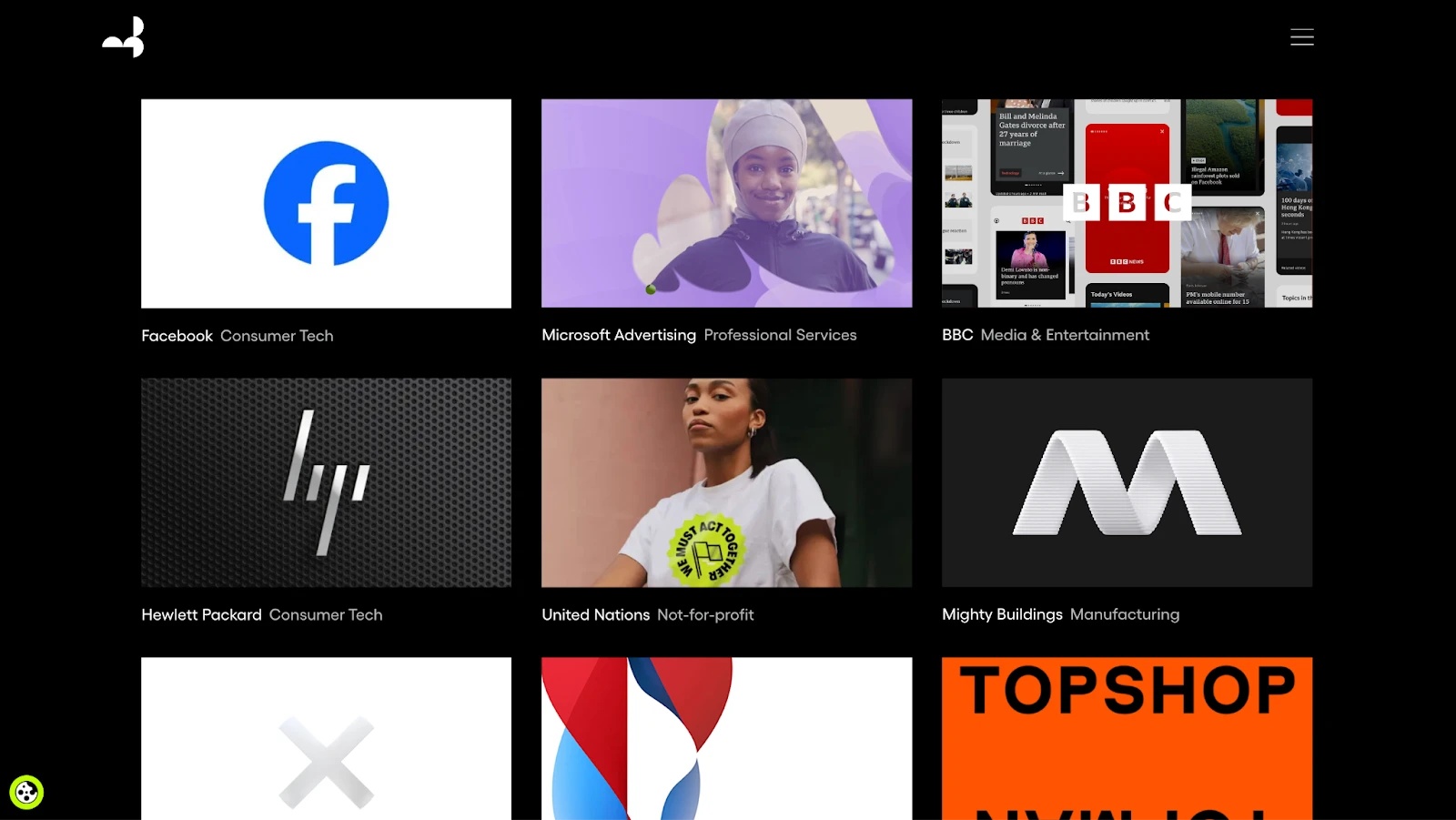
Specialization: Creating brands, products, and experiences with a “Design Tomorrow” philosophy
Notable clients: Google, Netflix, Facebook, Microsoft, BBC, Mercedes-AMG Petronas F1, Uber, Asana, TikTok for Business, Cruise, Spring Health, Vanta, Stella McCartney
Unique approach: Moving Brands operates as an independent global design studio focused on future-facing design thinking. They specialize in building brands that work seamlessly across both digital and physical touchpoints, with a philosophy centered on designing experiences for tomorrow’s world.
Best for: Tech and innovation-driven companies requiring scalable brand systems, enterprises needing comprehensive digital and physical brand experiences, and companies in consumer tech, mobility, enterprise tech, SaaS, and health & life sciences
Budget: $250,000+
Team Size: 51-100 employees
Location: Global presence
7. Base Design
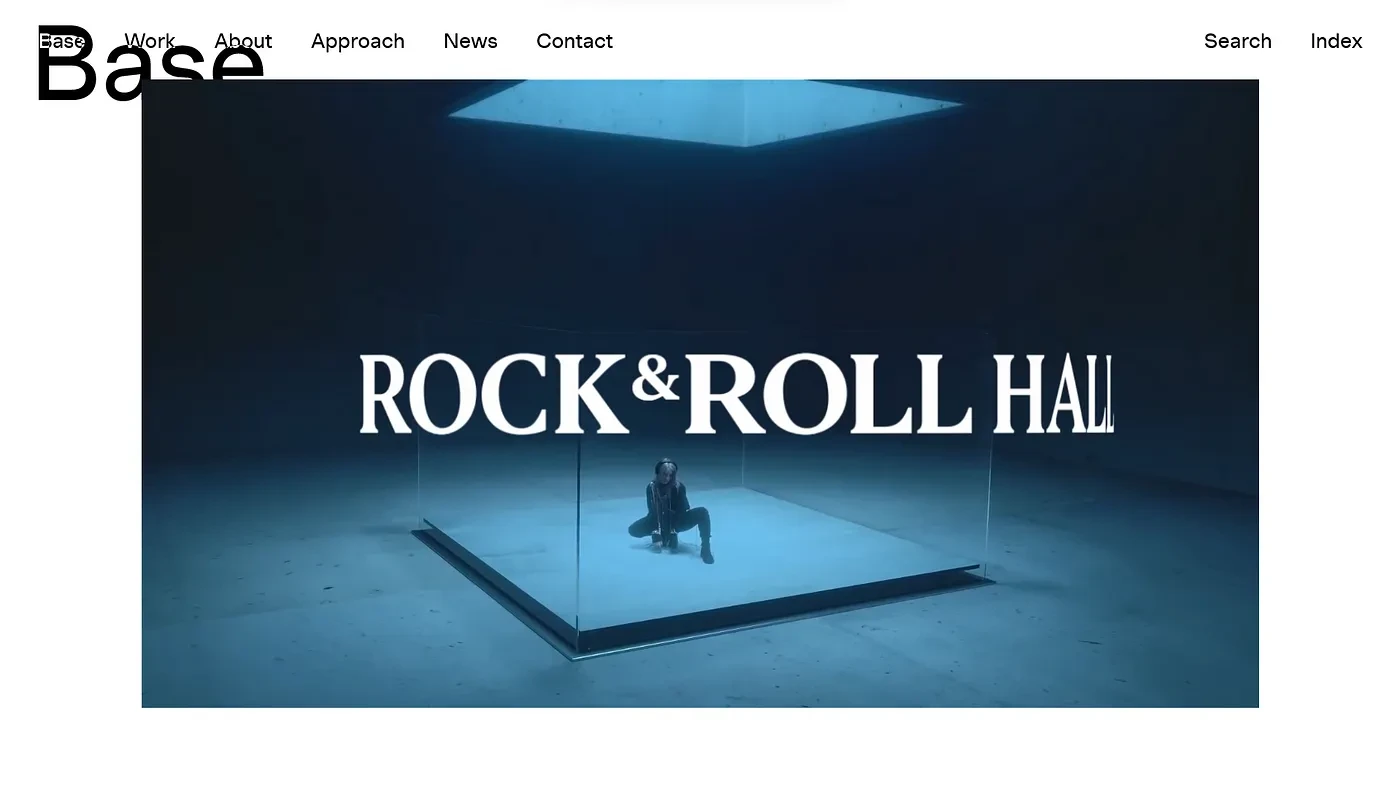
Specialization: Building brands with cultural impact
Notable clients: Institut Français de la Mode, Phillips Auctioneers, Graanmarkt 13, RICE
Unique approach: Base Design focuses specifically on creating brands that earn cultural influence and define industries. Their strategic positioning methodology centers on understanding how brands can achieve cultural relevance and industry leadership through design.
Best for: Brands wanting to establish cultural impact and industry leadership, companies seeking to redefine their categories, and organizations that value strategic thinking combined with distinctive creative execution
Budget: Varies by project
Team Size: Varies across four global offices
Locations: Brussels, New York, Geneva, Melbourne
How to Choose the Right Graphic Design Agency for Your Business
Start by defining your needs. Do you need brand identity, digital design, or both? Understand your budget and timeline upfront.
Study portfolios carefully. Look for work similar to your needs and consistent quality across projects. Recent work shows current capabilities.
Test cultural fit during consultations. Great agencies match your working style and values. The most talented agency delivers nothing if you cannot collaborate effectively.
Ask these questions: Walk me through your design process. Who works on my account day to day? What does your pricing include? Can you share similar case studies? How do you measure success?
Watch for red flags: unrealistic promises, no relevant portfolio examples, poor communication, suspiciously low pricing, no questions about your business, or inability to explain their strategic approach.
FAQ: Graphic Design Agencies
What are the best graphic design agencies?
The top agencies include Clay, Mission Control, Pentagram, Wolff Olins, Anagrama, Moving Brands, and Base Design. Clay and Mission Control lead in digital-first design for startups. Pentagram offers comprehensive design expertise. Wolff Olins specializes in brand transformation. The best depends on your needs, budget, and industry.
How much does it cost to hire a top graphic design agency?
Boutique agencies charge $10,000-$50,000. Mid-tier firms like Clay start around $100,000. Top-tier agencies like Pentagram and Wolff Olins require $400,000-$500,000+. Mission Control offers flexible models including monthly subscriptions ($5,000-$15,000) or equity partnerships for startups.
What’s the difference between a design agency and a design studio?
Studios are typically smaller (5-20 people) with specialized focus and signature styles. Agencies are larger (20+ people) with broader capabilities including strategy, multiple disciplines, and scale execution. The terms are increasingly interchangeable. Focus on capabilities rather than labels.
How long does a typical branding project take?
Logo only: 2-4 weeks. Basic brand identity: 4-8 weeks. Comprehensive brand system: 8-16 weeks. Complete rebrand with digital: 3-6 months. Enterprise rebrand: 6-12+ months. Timeline depends on scope, decision-making speed, and stakeholder complexity.
Should I hire a local or global design agency?
Local agencies offer easier in-person collaboration and timezone alignment. Global agencies bring broader perspectives and proven remote processes. In today’s remote-first world, geography matters less than capability and cultural fit. Choose based on expertise and chemistry, not location.
What should I look for in a design agency portfolio?
Look for work relevant to your needs, consistent quality across projects, strategic thinking beyond aesthetics, versatility across industries, evidence of business results, and recent projects showing current capabilities. Avoid judging solely on visual style. Focus on problem-solving and proven impact.
Do I need a full rebrand or just a refresh?
Choose a refresh if your brand is 5-10 years old but strategy remains relevant, visuals feel dated but you have strong recognition, or budget is limited. Choose a rebrand if your business has fundamentally changed, you’re entering new markets, current brand has negative associations, or you’re being outcompeted despite superior products.
How do design agencies price their services?
Common models include project-based (fixed fee for defined scope), hourly rates ($150-$500+/hour), monthly retainers ($5,000-$50,000+/month for ongoing support), value-based pricing (tied to business impact), and equity partnerships (agency takes ownership stake). Each model suits different project types and relationships.
What’s the typical process when working with a design agency?
Standard phases include discovery (1-2 weeks of research and interviews), strategy (2-4 weeks developing positioning and messaging), concept development (2-3 weeks creating initial directions), design development (3-6 weeks refining the full system), revisions (2-3 weeks of refinement), delivery (1-2 weeks providing files and guidelines), and ongoing implementation support.
Can design agencies help with implementation?
Most agencies provide design guidelines, create additional assets, coordinate with vendors, train internal teams, and offer ongoing support through retainers. Some like Clay offer complete digital implementation including web development. Clarify what implementation support is included versus additional cost when evaluating agencies.