
Why Online Games Can Be Good for Your Brain and Mental Well-Being
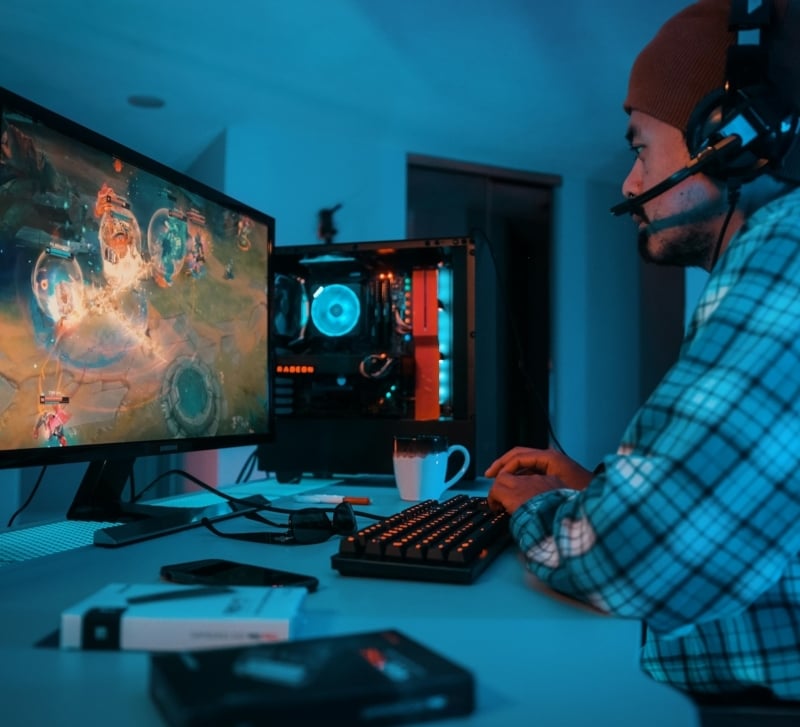
Online games are often treated as nothing more than entertainment. However, many of them require concentration, planning, memory, communication, and emotional control. Players constantly evaluate information, make decisions, respond to changing situations, and learn from the results of their actions.
Gaming is not automatically beneficial, and spending more time in a game does not necessarily produce greater cognitive advantages. Excessive play can interfere with sleep, work, physical activity, and relationships. Still, when games are chosen carefully and played in moderation, they can provide useful mental stimulation and support emotional well-being.
Online Games Keep the Mind Active
Unlike passive forms of entertainment, online games require direct participation. Players do not simply watch events unfold. They influence the outcome through their decisions.
Even relatively simple games may require a player to remember rules, identify patterns, follow objectives, and react at the right moment. More complex games can involve several tasks at once, such as monitoring resources, predicting an opponent’s actions, and changing strategy when circumstances shift.
Regular gaming can engage mental abilities such as:
- sustained attention;
- working memory;
- visual and spatial awareness;
- reaction speed;
- strategic planning;
- decision-making under pressure.
These skills are not developed equally by every game. An action game may focus on fast reactions, while a strategy game places greater emphasis on planning. The main cognitive value comes from remaining mentally involved and responding to continuous feedback.
Games Encourage Problem-Solving
Most games are built around obstacles. Players are given a goal, but the path toward it is not always obvious. They may need to experiment, compare different approaches, and adjust after an unsuccessful attempt.
This process encourages flexible thinking. Instead of repeating the same action, players learn to identify why a strategy failed and what can be changed. In many games, progress depends on understanding systems rather than memorizing a single correct answer.
Gaming can also make failure easier to manage. Losing a round or making a poor decision is usually not permanent. The player can review the situation and try again. This creates an environment where mistakes become a source of information.
Over time, this approach may support persistence and adaptability. The player learns to move from “I failed” to “What should I do differently next time?” Apparently, failure becomes useful once somebody adds graphics and a scoreboard.
Gaming Can Provide Stress Relief
Online games can offer a temporary break from work, study, and everyday responsibilities. Clear objectives give the mind something specific to focus on, helping players shift attention away from repetitive or stressful thoughts.
A well-designed game can also create a state of deep concentration. When the level of difficulty matches the player’s ability, the activity becomes challenging without feeling impossible. This balance can create a satisfying sense of involvement and progress.
Completing a mission, solving a puzzle, or improving a previous result may provide small but meaningful feelings of achievement. These experiences can help a person relax and recover after a demanding day.
However, gaming should not become the only way to deal with stress. It works best alongside sleep, exercise, social contact, and other healthy coping habits. Using games for relaxation is different from using them to avoid every uncomfortable emotion or responsibility.
Multiplayer Games Support Social Interaction
Many online games are social environments. Players communicate, cooperate, compete, and build communities with people from different locations.
Team-based games require participants to exchange information and coordinate their actions. Players may take different roles, make group decisions, or support one another during difficult moments. These interactions can develop communication and teamwork skills.
Online gaming can be especially valuable for friends who live far apart. A regular gaming session provides a shared activity and a reason to stay in contact. For people who find spontaneous social situations difficult, games can also make communication easier by giving everyone a common objective.
Multiplayer gaming may encourage:
- teamwork and cooperation;
- leadership;
- clear communication;
- conflict management;
- shared responsibility;
- a sense of belonging.
Not every gaming community is supportive, naturally. Some contain toxic behavior, harassment, or excessive pressure. Players should choose communities carefully and use blocking, reporting, and privacy tools when necessary.
Different Games Challenge Different Skills
The effects of gaming depend greatly on the type of game being played. Each genre creates its own mental demands.
- Puzzle games encourage logical thinking, concentration, and pattern recognition.
- Strategy games involve planning, resource management, and adapting to an opponent.
- Action games challenge visual attention, reaction speed, and coordination.
- Simulation games support creativity, organization, and systems thinking.
- Cooperative games develop teamwork, communication, and joint problem-solving.
- Poker involves probability, observation, discipline, risk evaluation, and decision-making with incomplete information.
Poker is particularly interesting from a cognitive perspective because players cannot know every factor that will affect the outcome. They must work with limited information, estimate probabilities, observe behavioral patterns, and decide whether the potential reward justifies the risk.
Playing through a standalone poker room can provide a focused environment where users interact with poker-specific formats, tournaments, tables, and communities rather than moving between unrelated casino products.
Poker can also teach players to separate the quality of a decision from its immediate result. A strong decision may still lead to a lost hand because chance remains part of the game. This encourages players to evaluate their long-term strategy rather than reacting emotionally to a single outcome.
At the same time, real-money poker is gambling. It can create financial and behavioral risks, particularly when players chase losses or ignore their limits. Free-play formats and strict time and spending controls offer safer ways to explore its strategic elements.
Games Can Develop Emotional Control
Competitive games often produce frustration, excitement, disappointment, and pressure. Players must learn to manage these reactions if they want to continue making effective decisions.
Acting impulsively after a mistake often leads to further mistakes. Remaining calm makes it easier to analyze what happened and choose a better response. This can encourage emotional awareness and self-control.
The effect is not always positive. Some games or communities may leave a person feeling angry, anxious, or exhausted. A useful indicator is how the player usually feels after finishing a session.
Gaming may be playing a healthy role when it leaves a person feeling relaxed, socially connected, or mentally refreshed. When it repeatedly causes irritation, loss of control, or regret, the habit needs to be reconsidered.
Healthy Gaming Depends on Balance
The benefits of online games disappear when gaming begins to replace essential parts of life. Mental stimulation is not particularly useful when it comes at the cost of sleep, movement, work, or personal relationships.
Healthy gaming habits include:
- setting a time limit before starting;
- taking regular screen and movement breaks;
- protecting a consistent sleep schedule;
- avoiding impulsive spending;
- maintaining offline activities and relationships;
- stopping when a game repeatedly causes stress;
- choosing games that provide enjoyment rather than obligation.
Conclusion
Online games can be more than a way to pass the time. They can exercise attention, memory, problem-solving, communication, and emotional control. They may also provide relaxation, social connection, and a structured break from daily pressure.
The key is balance. Gaming should complement a healthy lifestyle rather than replace it. When players choose appropriate games, manage their time, and remain aware of their emotional and financial limits, online gaming can become a valuable form of active recreation for both the brain and mental well-being.