
Are Moses Baskets Safe for Newborns?
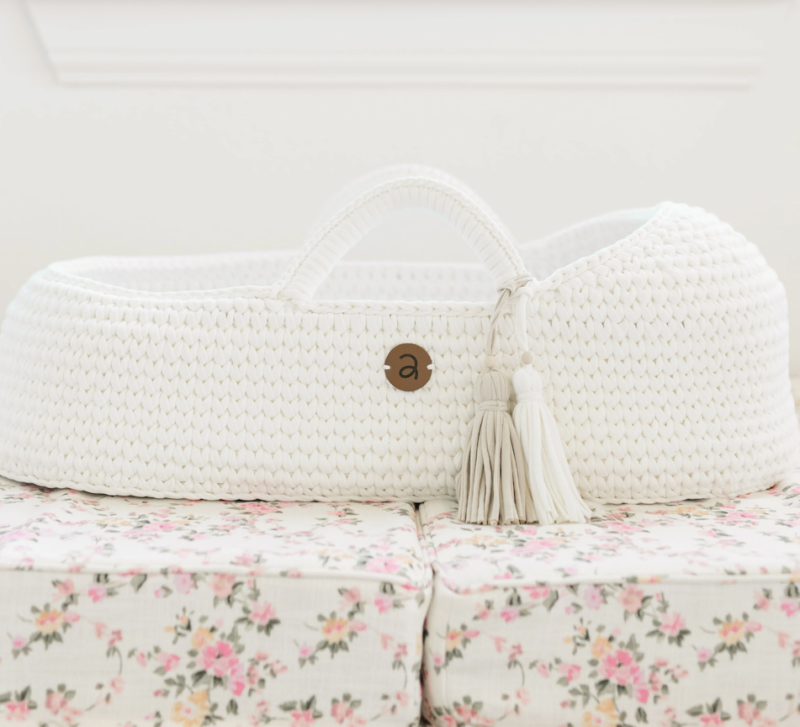
Moses baskets have long been a popular choice for newborns, but it’s important to understand that a Moses basket should not automatically be considered safe for your baby’s sleep simply because it is sold as baby equipment. When choosing a product for your newborn’s sleeping environment, you should prioritize compliance with applicable safety standards and proper sleep conditions.
What Is a Moses Basket?
A Moses basket is a small, portable basket used to carry or hold infants, particularly newborns. Traditionally, a hand-held Moses basket is designed for carrying and temporary use, distinguishing it from a bassinet that is often used with a stand or frame.
Under U.S. regulations, Moses baskets can fall under the standards for hand-held infant carriers, while cradles and bassinets have their own safety standards.
On December 16, 2013, the U.S. Consumer Product Safety Commission (CPSC) announced a federal safety standard specifically for hand-held infant carriers, which included semi-rigid hand-held bassinets and cradles such as Moses baskets.
A federal infant sleep product rule took effect on June 23, 2022, applying to products manufactured on or after that date and marketed or intended for sleep by infants up to 5 months old.
All products covered by this rule must comply with applicable federal infant sleep safety requirements.
Are Moses Baskets Safe for Newborns to Sleep In?
When evaluating any infant sleep product, it’s crucial to focus on compliance with federal safety standards rather than the product’s name or appearance. Meeting these requirements is more important than relying on a label.
The U.S. mandatory safety standard for bassinets and cradles, 16 CFR Part 1218, incorporates ASTM F2194-25 for products manufactured or imported on or after February 21, 2026. This means that a Moses basket intended for sleep must meet the applicable infant sleep requirements, including bassinet and cradle requirements where relevant.
Under the federal infant sleep products rule, Moses baskets intended for sleep must comply with applicable safety standards. The American Academy of Pediatrics (AAP) recommends using alternative infant sleep surfaces only when they meet federal safety requirements.
Use a Moses basket or other non-crib product for routine sleep only if it complies with the applicable CPSC standards. In emergencies, the AAP allows temporary sleep in a box or basket with thin, firm padding when a compliant sleep surface isn’t available.
However, it’s essential to move the baby to a CPSC-compliant sleep surface as soon as one becomes available.
What Does the CPSC Say About Moses Baskets?
Hand-held infant carrier rules: The CPSC’s federal safety standard for hand-held infant carriers, announced in December 2013, includes Moses baskets. Compliance with carrier requirements alone does not establish compliance with infant sleep requirements.
Infant sleep product requirements: The June 2022 federal infant sleep product rule requires products manufactured on or after its effective date and intended or marketed for sleep by infants up to 5 months old to meet applicable federal safety standards.
Updated 2026 bassinet and cradle safety standard: The U.S. mandatory safety standard for bassinets and cradles, 16 CFR Part 1218, incorporates ASTM F2194-25 for products manufactured or imported on or after February 21, 2026.
What Does the American Academy of Pediatrics Recommend?
The AAP recommends that infants sleep on their backs on a firm, flat surface in a crib, bassinet, portable crib, or play yard that meets CPSC safety standards. The mattress should be covered by a fitted sheet with no additional bedding or soft objects.
The AAP explicitly states that alternative infant sleep surfaces should only be considered safe options if they comply with applicable federal safety standards. Parents should not use products for infant sleep if they do not meet those standards, making compliance more important than the product’s name or appearance.
What Are the Potential Risks of Moses Baskets?
Falls
A 2015 CPSC recall of Tadpoles Baby and Kids Moses baskets and stands highlighted the risks associated with these products. The Moses baskets could slide off inclined surfaces, and the stands could tip, creating a fall hazard. While no incidents or injuries were reported in the recall notice, this underscores the importance of safety compliance.
Suffocation
The AAP states that soft objects and loose bedding increase the risk of entrapment, suffocation, or strangulation. Items to keep out of infant sleep spaces include pillows, blankets, mattress toppers, toys, and bumper pads. Using a Moses basket with unsuitable bedding or accessories could pose additional risks.
Using a Non-Compliant Basket
Using a Moses basket that does not meet infant sleep safety standards can expose a newborn to unnecessary risks. As mentioned earlier, a product’s intended use should not be assumed based on its name or appearance. Always check compliance with applicable federal safety standards.
How to Choose and Use a Moses Basket Safely
- Verify compliance with applicable CPSC infant sleep standards. This means checking that the basket has been tested and certified by the manufacturer or importer as meeting the requirements for its intended use. The CPSC does not individually approve consumer products.
- Check the product’s instructions and intended use. Not all Moses baskets are necessarily suitable for sleep. Ensure that the manufacturer explicitly states that the basket is designed for infant sleep and provides the required safety information.
- Check for applicable product recalls. Regularly check the CPSC website for any recalls or safety warnings that might affect your basket.
- Keep the sleep area firm, flat, and free of soft objects. This includes removing blankets, toys, and unnecessary padding from the basket. Use only a properly fitting mattress and bedding permitted by the manufacturer.
- Place the baby on their back for every sleep. This is a well-established AAP recommendation that helps reduce the risk of Sudden Infant Death Syndrome (SIDS).
Remember that the AAP allows temporary emergency sleep in a box or basket with thin, firm padding when a compliant sleep surface isn’t available, but recommends switching to a compliant crib, bassinet, or play yard as soon as possible. Always consult the specific manufacturer’s instructions for your basket, as some models may have additional limitations or restrictions.
Moses Basket vs. Bassinet: Which Is Better for a Newborn?
When considering a Moses basket versus a bassinet for your newborn, keep the following factors in mind:
- Applicable CPSC standard: Ensure that the product meets the CPSC safety standard for its intended use.
- Intended for infant sleep: Verify that the manufacturer explicitly states the product is suitable for infant sleep.
- Firm, flat sleep environment: Ensure that the product provides a firm, flat surface for infants to sleep on to reduce suffocation risks.
- Manufacturer’s instructions: Always follow the manufacturer’s recommendations for age, weight, developmental milestones, and usage limitations, as some models may become unsuitable as babies grow.
Frequently Asked Questions
Can a newborn sleep overnight in a Moses basket?
A newborn should sleep in a Moses basket overnight only if it complies with applicable infant sleep standards and is intended for that use. If compliance can’t be established, it’s essential to choose a compliant crib, bassinet, or play yard.
Can a baby nap in a Moses basket?
The same requirements used for nighttime sleep apply to naps. A baby should nap in a Moses basket only if it meets applicable infant sleep safety standards and is intended for sleeping.
Does a Moses basket need a stand?
If a Moses basket is intended for sleep and falls under the federal bassinet and cradle requirements, it must have a qualifying stand, base, or other support that meets those requirements. The appropriate setup depends on the product’s design and applicable standards.
Can I put extra padding inside a Moses basket?
The AAP recommends against extra padding, such as blankets or soft mattress toppers, in a Moses basket. The sleep surface should be firm and flat to reduce suffocation risks.
Can I use a traditional Moses basket that is not certified for infant sleep?
The AAP allows temporarily using a basket with thin, firm padding in an emergency when a compliant sleep surface isn’t available. It’s always best to choose a compliant crib, bassinet, or play yard for routine infant sleep.
Final Verdict: A Moses Basket Is Not Necessarily Safe for Newborns
A Moses basket is not automatically a safe sleeping place for your newborn. When choosing a product for your baby’s sleep, it’s crucial to select one that meets the applicable U.S. infant sleep safety requirements and follow the AAP’s safe sleep recommendations. If the Moses basket’s compliance with safety standards cannot be established, a compliant crib, bassinet, or play yard would be a more appropriate choice.