
Finding the Right Framework: Which Journaling System Fits Your Brain?
Many people begin journaling with good intentions. They buy a notebook they love, save a few beautiful layout ideas from social media, write consistently for several days—and then gradually stop.
That does not necessarily mean you lack discipline, nor does it mean journaling is not for you. More often, the problem is simpler: the framework you chose does not match the way you naturally process information.
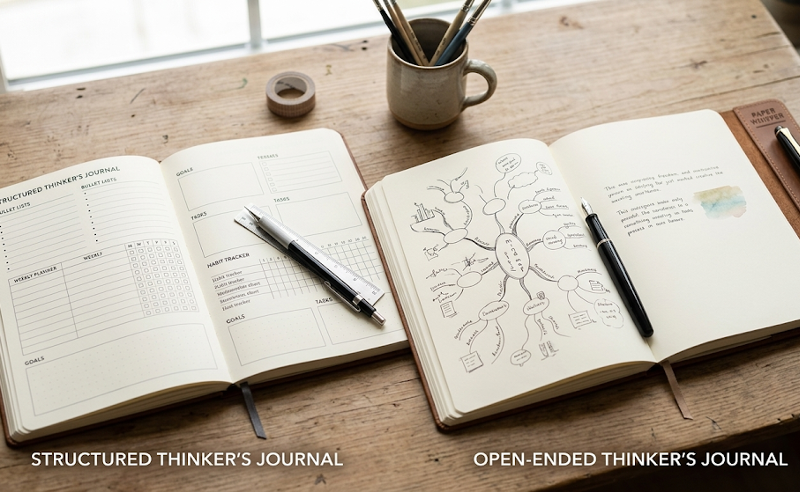
Some people look at a completely blank page and have no idea where to begin. Others see a page full of time blocks, task boxes, and fixed prompts and already feel pressured. The first person may need a little structure to settle their thoughts; the second may need more room for ideas to unfold.
Instead of searching for the one “best” journaling method, ask a more useful question: what do I want this notebook to help me do? Plan my life, keep track of tasks, process emotions, or hold ideas that have not fully formed yet?
Start by Understanding Your Journaling Preference
Most journaling habits sit somewhere between linear organization and open-ended reflection. These are not strict personality categories. They are simply different ways of approaching information.
People who lean toward linear organization often like to arrange things in sequence. They may want to see what needs to happen this month, which task matters most today, and what has already been completed. Lists, dates, numbered steps, and regular review routines can give them a useful sense of clarity.
People who prefer more open-ended journaling may move from one thought to another. They might begin by writing about their mood, then turn that into a reflection on a book they are reading. Halfway through, they may remember something they need to pack for a trip and sketch out a quick list in the margin. That approach is not disorganized; it simply reflects the fact that thoughts do not always arrive in a straight line.
Of course, many people are a mix of both. You may need a clear task system during the workweek, then want space on the weekend to sort through ideas, emotions, inspiration, and everyday memories. A useful journal should not force you to become only one type of person.
If You Prefer Linear Thinking, Use Light Structure to Make Life Visible
For people who enjoy planning, the value of journaling is often not decoration. It is the ability to stop carrying every task, reminder, and unfinished thought in their head.
You do not need to begin with an elaborate annual goal map, ten different trackers, or a new layout every day. A simple system is enough:
- Keep one page each month for important dates and priorities.
- List three to five key tasks for the week.
- Add a short daily to-do list or reflection when needed.
- Review unfinished tasks before starting the next week.
This gives you a reliable place to return to without making journaling feel like another assignment.
If you want to keep schedules, tasks, and personal goals in one adjustable framework, an effective daily journaling system can be a useful starting point. Dot-grid and grid notebooks work especially well for people who want to build their own monthly views, habit trackers, lists, and weekly reviews without committing to a rigid pre-printed planner.
The most common mistake for linear journalers is making the system too full. Every tracker and section may look useful at first, but if you have to complete eight boxes, three reflections, and a detailed timeline every day, the notebook quickly becomes extra work.
A more sustainable approach is to keep only two or three core sections, such as:
- Today’s three most important tasks
- A space for items that can wait
- One short note, observation, or reminder
When a system is light enough, you are more likely to keep using it during busy or low-energy days.
If You Prefer Divergent Thinking, Treat White Space as Thinking Space
For people who like to record freely, overly fixed layouts can create a subtle kind of pressure. What should go in this box? If I do not fill in every section, have I failed? What if I only want to draw, write a few lines, or make a messy list today?
The truth is that a journal does not need to look the same every day.
One page can be a personal reflection. Another can become reading notes, a page of questions, a travel plan, or a collection of small observations. You might tape in a ticket stub and write about the day around it. You might fill a page with arrows, lists, and rough sketches before you know what the final idea is.
That does not make the journal less useful. If it helps you move thoughts from your head onto the page, it is doing its job.
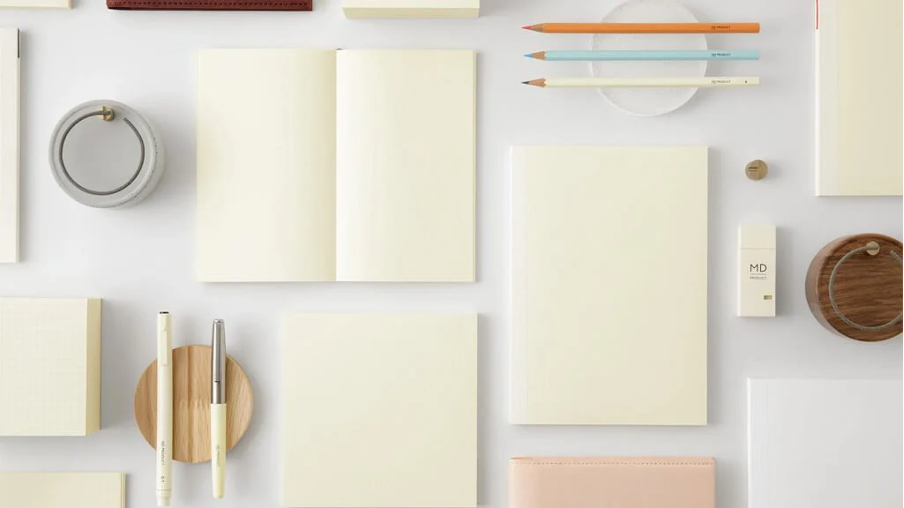
For this kind of journaling, it helps to choose paper and page formats that leave room to adapt. Smooth paper can make longer writing sessions more enjoyable, while a clean page with minimal visual distraction gives writing, sketches, lists, and ideas room to sit together.
If you want one notebook that can hold everyday reflections as well as sudden ideas, a minimalist MD Product journal and notebook is worth considering. The MD Product range includes blank, dot-grid, grid, and lined options, so you can choose the amount of guidance that feels right for you. A blank or lightly guided format can be especially useful when you want to move naturally between planning, journaling, reading notes, and unfinished mind maps.
For an open-ended journaler, a blank page is not empty. It is space that has not yet been limited.
You Do Not Have to Choose Only One Method
It is easy to assume that you must choose between strict planning and complete freedom. In practice, the most sustainable journaling systems often combine both.
You might keep a simple index at the front of your notebook so you can find important pages later. Each month, write down a few priorities or deadlines. Each week, reserve half a page for the tasks that matter most. Then let the rest of the notebook remain open for whatever you need that day.
A practical hybrid framework could look like this:
- First two pages: An index for important topics and page numbers
- One page per month: Key dates, priorities, and projects to move forward
- Half a page to one page per week: Weekly priorities, appointments, and reminders
- All remaining pages: Daily notes, reflections, reading notes, travel plans, creative ideas, or emotional processing
- Ten minutes at the end of each month: Review what you actually used and remove the sections that only looked good in theory
The goal is not to build a more complicated journal. It is to notice what you return to naturally.
If you review your weekly task list every Sunday, keep it. If you never complete a habit tracker, you do not need to add one just because other people use it. If your free-form pages are where you write most often, let them become the center of your system.
Choose the Notebook You Will Keep Opening
A good journaling system should not make you feel as though you owe it a perfect page every day.
It should help you see priorities when life feels busy, offer a quiet place when your mind feels crowded, and allow you to look back after a few weeks and recognize the life you have actually been living.
People who prefer linear thinking may find comfort in light, repeatable structure. People who think more divergently may find value in spacious pages and flexible formats. You do not need to copy someone else’s journaling style or sacrifice usefulness for aesthetics.
The right framework is the one that makes you willing to open the notebook at the end of an ordinary day and write the first line.