
Why a Pencil’s Shape Decides How Your Logo Goes On It
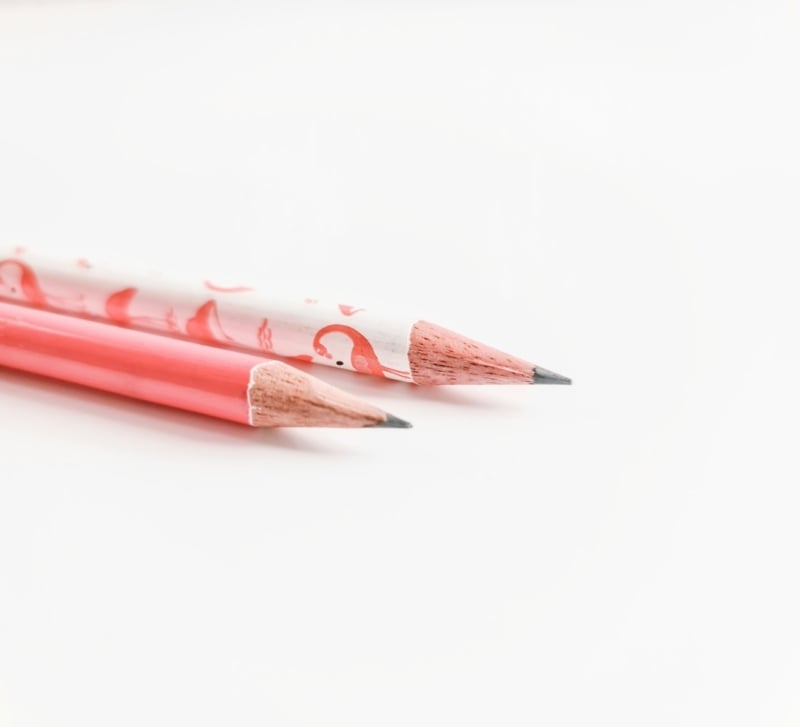
When people order branded pencils, the question they usually ask is how many colours they can print. The more useful question is what shape the pencil is, because on a pencil the barrel shape and the material quietly decide which decoration methods are even possible before colour ever enters the conversation. Understanding that saves a lot of disappointment when a proof comes back looking nothing like the file that was sent.
If you are planning custom logo printed pencils, a little knowledge of how the print actually meets the barrel will help you brief the job properly and get a result you are happy with.
Round barrels and the curved-surface problem
A pencil barrel is small and, if it is round, continuously curved. A flat printing method cannot sit cleanly against a curve; it either misses contact at the edges or distorts the artwork. This is the same constraint that governs printing on pens and other cylindrical items, and the industry solved it long ago with pad printing.
Pad printing, sometimes called tampography, works by picking up ink from an etched plate on a soft silicone pad and pressing that pad onto the object. Because the pad is flexible, it moulds itself around the curve and transfers the image faithfully onto a rounded surface. It is the reliable answer for round pencil barrels, it handles small and detailed marks well, and it is why so much pen and pencil branding uses it. Its main limitation is that each colour is a separate pass, so simple one or two colour logos suit it best.
Hexagonal and triangular barrels change the maths
Not every pencil is round. Many are hexagonal, and some are triangular, and this matters more than it first appears. A hexagonal barrel is not curved; it is a series of narrow flat facets running down the length of the pencil. A flat facet can accept a flat printing method, which opens up options a round barrel does not offer as easily.
The catch is the width of each facet. A single face of a hexagonal pencil is a slim strip, so artwork usually has to sit lengthways along the barrel and stay within that narrow band. A wide, square logo that works beautifully on a mug simply will not fit across a pencil facet. Briefing a horizontal, compact version of your mark, or being willing to run it lengthways, is the difference between a clean result and a squeezed one.
The methods you are likely to meet
Screen printing is the volume workhorse across promotional products, pushing ink through a fine mesh stencil. On the flat facet of a hexagonal pencil it can lay down a crisp, solid mark, and it handles bold single-colour work economically at quantity.
Litho or offset wrap is worth knowing about because it is the method behind those pencils you see covered edge to edge in full-colour patterns or photographic designs. Rather than printing onto the finished pencil, the design is printed onto a wrap that covers the whole barrel. If you want a pencil drenched in colour or carrying a complex multi-colour design, this is usually how it is done, and it is one of the few routes to true full-colour coverage on something this small.
Laser engraving takes a completely different approach. Instead of adding ink, it burns a permanent mark into the surface, revealing a contrast tone underneath. On a natural or dark wooden pencil this produces an understated, tactile, and extremely durable result that will never rub off. It suits a premium, natural aesthetic, though it gives you a single engraved tone rather than brand colours.
Where the print sits, and how long it lasts
There is one more dimension beyond method and shape, and that is durability. A pencil is not a keepsake sitting on a shelf; it is handled, sharpened, dropped in bags, and rolled across desks. A printed mark near the sharpening end will wear away first, simply because that portion gets cut down and reshaped over the pencil’s life. Placing the branding toward the unsharpened end, where the eraser or the plain tip sits, keeps it legible for longer. Engraving sidesteps the wear question entirely, because the mark is cut into the wood rather than sitting on top of it, but for printed pencils, position is a quiet decision that affects how long your logo actually survives use. It is the kind of detail a good supplier will raise unprompted, and worth asking about if they do not.
Matching the method to the pencil in front of you
The practical takeaway is that you do not choose a decoration method in the abstract; you choose it for the specific pencil. A round wooden pencil points you toward pad printing or engraving. A hexagonal one opens up screen printing on the facet. A full-colour wrap calls for the litho route. A natural, premium wooden pencil is made for engraving.
Working the other way round, deciding on an effect and then hunting for a pencil that suits it, tends to end in compromise. Start with the barrel shape and material, understand what those allow, and brief your artwork to fit. Do that and the proof that comes back will look like the thing you imagined, which on an object as small and familiar as a pencil is a genuinely satisfying result.
Sources swept: internal decoration-methods research bank (substrate-and-shape-dictates-method; pad print for curved barrels; screen print; litho/offset; laser engraving); competitor scan (pencils, 2026-08-27): decoration-reality gap.